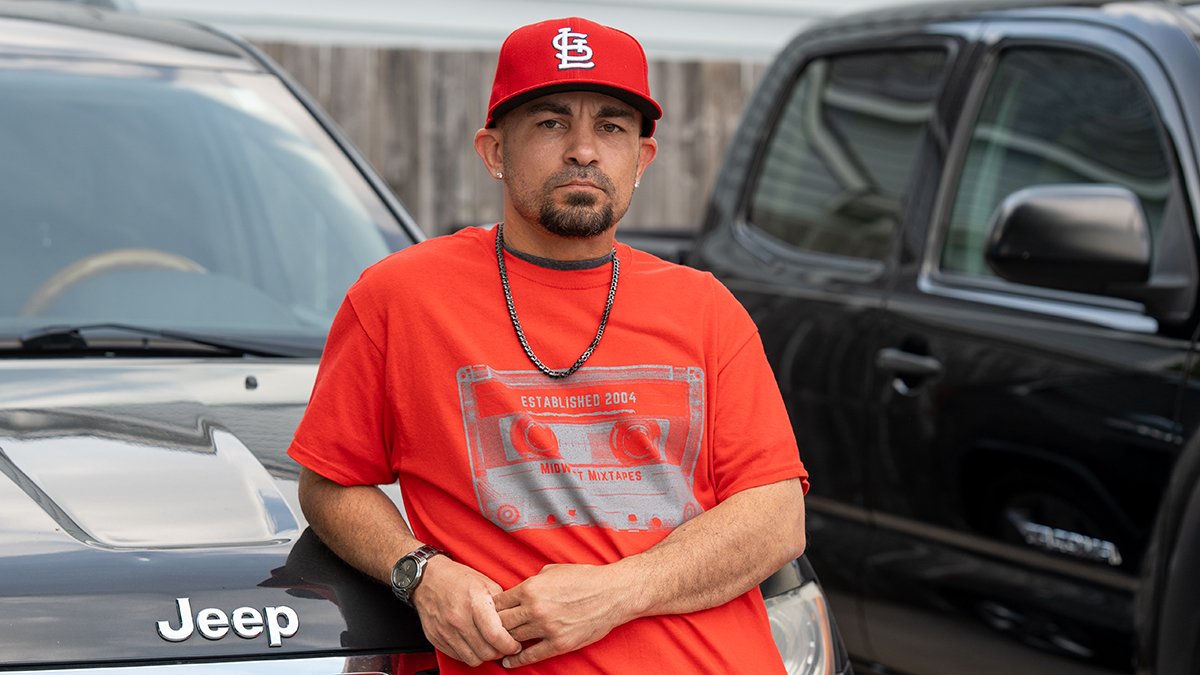
Midwest Mixtapes has become a key bridge for artists across the region, elevating voices often overlooked. Adam Murphy reflects on the platform’s origins, growth, and its role in shaping musical identity.
What originally sparked the creation of Midwest Mixtapes, and how did you envision its role in the regional music scene?
The platform was created by a gentleman named Mike Shep from the St. Peters, Missouri, area, just outside St. Louis. This was right after the 50 Cent mixtape wave. Before social media, people were using message boards, and Mike noticed the Midwest wasn’t being represented properly. He built something to fill that gap. I traveled a lot around the region, and we ended up meeting, and later he sold it. He didn’t realize what he had on his hands—but I did.
Midwest Mixtapes has become a major source for independent artists across the region. What criteria do you use when deciding what to feature?
Artists come with all kinds of budgets, and there are plenty I’ve never heard of until they reach out. Then there are artists with real buzz—like Peezy out of Detroit. I see him everywhere. DJs, industry folks, everyone is working his records, and his music is high-quality. That’s the biggest thing for me: quality. You have to have a strong, clean sound.
How did the rise of digital streaming change the way you discover and highlight talent?
Streaming has been around longer than people think. Back in the Myspace days — ’06, ’07, ’08 — it was already happening, just not in everyone’s face. I noticed fewer downloads on the site and more activity on platforms like Audiomack. Downloads became something only industry people or diehard fans did. So, I shifted my focus to pushing artists’ Spotify and YouTube pages through Midwest Mixtape.
What trends do you see among emerging Midwest artists that set the region apart?
We’ve always been a gumbo. If you ask me for an artist who would match someone like Benny the Butcher, I’ll point you to Babyface Ray or Peezy from Detroit. If you want something more Southern or bass-heavy, I’ll point you to St. Louis artists like King of the Dream. It’s a mix. Over time, Midwest Mixtape has helped artists from different cities realize they should work with each other. Years ago, someone from Cincinnati wouldn’t think to collaborate with someone in Kansas City or Minneapolis with Cincinnati. I wanted people to see we have a whole region worth tapping into.
Geographically, we’re huge. Cities are spread out, but they’re drivable. Missouri touches eight states. Our sound naturally blends into the South, the Plains, even the West. And of course, we’ve got Chicago—a major market. If you can make it in Chicago, you can really do something.
Do you consider Texas part of the Midwest or the South?
Texas is the South—no question. But they’re in their own world down there. When Slim Thug came out, he was independently selling hundreds of thousands of units. Those are million-dollar numbers.
Running a music platform requires trust. How do you maintain transparency and credibility?
I keep artists in tune with DJs and DJs in tune with artists. I try to be a bridge. But I also push artists to get back in the streets. When I take artists out of town, we do street-team work for hours. In Detroit, I had an artist stop at Kinko’s, where we printed posters together. That grassroots approach is still the foundation of the music business. It’s always been about the streets, no matter how digital things get.
Independent platforms are essential for breaking new music. What challenges come with keeping Midwest Mixtapes growing and sustainable?
When I moved to radio—103.7 The Beat in Rockford—I didn’t expect much. I just wanted to help the station with promotion. But the numbers we’ve gotten surprised me. So now I’ve been putting a lot of focus there: landing the right interviews, highlighting the best Midwest artists, and getting proper radio edits. The radio lane is becoming a major part of our expansion.
How do you balance telling local stories while still appealing to a national audience?
St. Louis had Nelly, and he hit a grand slam right out the gate. We’ve got industry connections here that help when artists are ready to work. Back in the mixtape era, people were traveling, meeting each other, and building real relationships. DJs talked across markets. You don’t see that as much anymore because DJs aren’t the first step like they used to be. But I do everything I can to keep artists and DJs connected—including through Midwest Mixtapes Radio, where I give DJs opportunities to submit mixes.
Whatís your core advice for artists who want longevity in todayís crowded landscape?
Own your name. Trademark it. Google it. See who else pops up, even with different spellings—you could be stepping on someone’s trademark and end up in court. And be ready for the long haul. If you’re not prepared to commit years to this, don’t bother starting. You’ll spend a lot of money—and that’s just on recording, not even marketing.
Looking ahead, what developments would you like to bring to Midwest Mixtapes to move the culture forward?
I’d like to do something similar to what Coast 2 Coast DJs did—traveling city to city—but focused on the Midwest. And I need to get up to New York. You all are the hub, the mecca. I troll New York music sometimes, but that’s just trolling. I know the role New York plays in hip-hop. If something dies in New York, it dies everywhere.
What motivates you most about the work you do?
Watching artists grow. Recently, I started consulting for an artist named Israel. He was locked up for 15 years, came home ready to work, and he’s already been to more cities with me than artists I’ve known for over a decade. Helping artists make legal money and do something positive—that’s what keeps me going.
Be’n Original