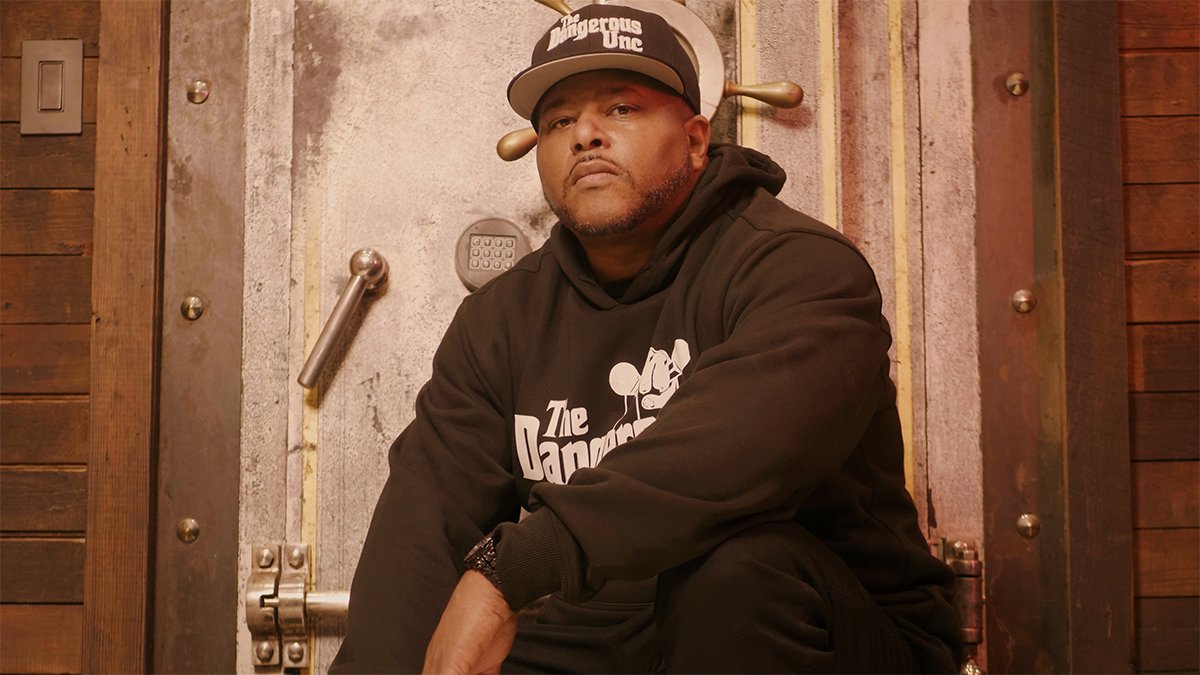
Blizm built his career by refusing to wait for permission. In 1999, when major labels controlled distribution and radio access, he launched Chainless Entertainment instead of pursuing a traditional deal. More than a decade later, he founded K-100 Radio to create space for independent artists seeking interviews and airplay. Working as an artist, producer, and engineer, he developed experience on both sides of the industry—in front of the mic and behind the scenes.
Now, after 15 years without a full-length release, he returns with The Dangerous Unc, a project shaped by age, experience, and a shift in priorities. The album embraces the title as a marker of maturity, perspective, and earned authority. In this interview, Blizm discusses ownership, visibility, mentorship, and how his definition of success has evolved over decades in hip-hop.
You launched Chainless Entertainment in 1999, at a time when major labels controlled access. What drove you to build your own infrastructure instead of pursuing a traditional deal?
Honestly, it was because the labels controlled all the access. Back then, you had two options: wait and try to hustle your way into a deal or build something yourself. I wasn’t from Atlanta. I didn’t have club connections when I moved there. What I did have was talent and work ethic. I didn’t want to wait on anyone. So, the decision was simple. Either you rock with the system, or you don’t. I felt like I had enough business sense and street savvy to put my own music out and start my own label.
As the founder of K-100 Radio, what gaps in the independent music ecosystem did you see in 2012 that others overlooked?
I had been an artist for over a decade before starting K-100 Radio, so I knew firsthand how hard it was to get FM radio play. Everyone in the industry knows how difficult it is—and how expensive it can be. There also weren’t platforms interviewing independent artists. I was trying to get interviews and media coverage myself and couldn’t find opportunities. There weren’t many magazines. Internet radio hadn’t taken off yet. Podcasts weren’t established. So, I decided to fill the gaps that frustrated me the most as an artist: radio play and storytelling opportunities.
I studied internet radio technology and realized I had enough background in audio and tech from school to build something. I invested in myself and created the platform I couldn’t find when I needed it.
How did stepping away from releasing albums to focus on K-100 Radio reshape your perspective as an artist?
It taught me patience—patience with platforms and with people in the industry. As an artist, you see the world from your own perspective. You don’t necessarily feel entitled, but you do feel like you’re the star or trying to become one. You expect recognition. Once you become a platform owner, you realize there’s a lot of talent out there. You learn protocols, relationships, and the power of networking.
When you’re receiving submissions and dealing with artists, you experience the other side of the conversation. That changes how you approach networking and media. Now, when I deal with platforms, I understand structure, communication, and professionalism much better.
The Dangerous Unc is your first full-length project in 15 years. What does the title signal about where you are in life and hip-hop?
The answer is in the title. The focus is on “Unc.” I’m in my late 40s. By today’s standards, I’m officially “Unc” age. But it’s not just age—it’s life position. I raised my kids. I’ve done well for myself. I’m comfortable. Instead of seeing “Unc” as negative, I embraced it. The “dangerous” part comes from my past. People who know me know I’ve lived through situations where I wasn’t someone to test. I’m still the same person at my core—just more mature and slower to react.
Knowledge also makes you dangerous. I’ve got over 20 years of experience in this industry. That carries power.
The lead single, “Clean Up Nice,” carries a grown tone. Who is the audience you had in mind?
The adult contemporary hip-hop listener. That’s someone who loves hip-hop but is at a certain stage in life. They’re not trying to be in the club every night. They understand putting on a suit or dress and enjoying a relaxed evening out. We still come from where we come from, but we’ve matured. The production reflects that. It has a stepping rhythm—something you can move to without it being chaotic. It’s for people who love hip-hop, still enjoy going out, but want music that matches where they are in life.
You operate as an artist, producer, and audio engineer. How does controlling the creative process influence this project?
I worked with several producers—Track Pros, ThatKidGoran, Fishing For Diamonds Productions (LoveLace), Buckroll, 1st Official, and prodm0rr1ss. But as the overall producer—meaning arrangement, recording, mixing, hooks, and lyrics—I shaped the final vision.
Controlling that process lets me tell my story exactly how I want. I don’t have to depend on someone else to translate my ideas. Even when I collaborate on beats, I still craft the record as a producer in the full sense of the word.
Over the decades, which role taught you the most about longevity in hip-hop?
Working behind the scenes. That’s where you learn the business. You see artists make small mistakes repeatedly—missing metadata, poor mixing and mastering, and incomplete rollouts. Those small details matter. When I step back in front of the mic, I know how to avoid them. I understand the infrastructure now. That knowledge gives you longevity.
Independent artists often struggle with visibility. Based on your experience building K-100 Radio, what strategies can emerging creatives use to maintain ownership and still reach audiences?
Go outside. K-100 didn’t grow because I sat at a computer. It grew because I attended events, interviewed people in person, and built relationships face-to-face. You can’t replace human interaction. A lot of artists think everything can be done online. It can’t. If you look at my rollout now, I’m outside again. That visibility comes from presence.
In what ways does The Dangerous Unc reflect growth rather than nostalgia?
You hear it in the messaging. I’m in mentor mode. On earlier projects, I was describing what I was actively doing. Now I’m talking to my younger self. I’m telling listeners what not to repeat. There’s nostalgia because I reference my past—songs like “Three of Us” explore multiple versions of myself—but the dominant tone is guidance. It’s reflection with accountability.
After decades in the industry, what does success mean to you now compared to when you first launched Chainless Entertainment?
Success is different now. Back then, I believed success meant fame—being a recognizable star. Now, the fact that the album is out, being played on FM and internet radio, and getting interviews—that’s success. I received a report showing 46 plays within the first few weeks. That matters.
I don’t need everyone to recognize my face in public. I want revenue and sustainability. I’d rather build wealth without sacrificing privacy. Releasing the project after all this time—that alone feels like a win.
Thank you for the interview.
I appreciate it. Anyone who wants to connect can visit chainlessent.com or search Blizm—B-L-I-Z-M—on social media.
Be’n Original