Although Domonique Matthews has spent a large portion of her life in the public eye, others have frequently shared her story. Growing up in Memphis, she experienced homelessness, illness, and financial hardship before becoming a mother as a teenager. She overcame single parenthood, several jobs, higher education, and major health issues like lupus and cervical cancer.
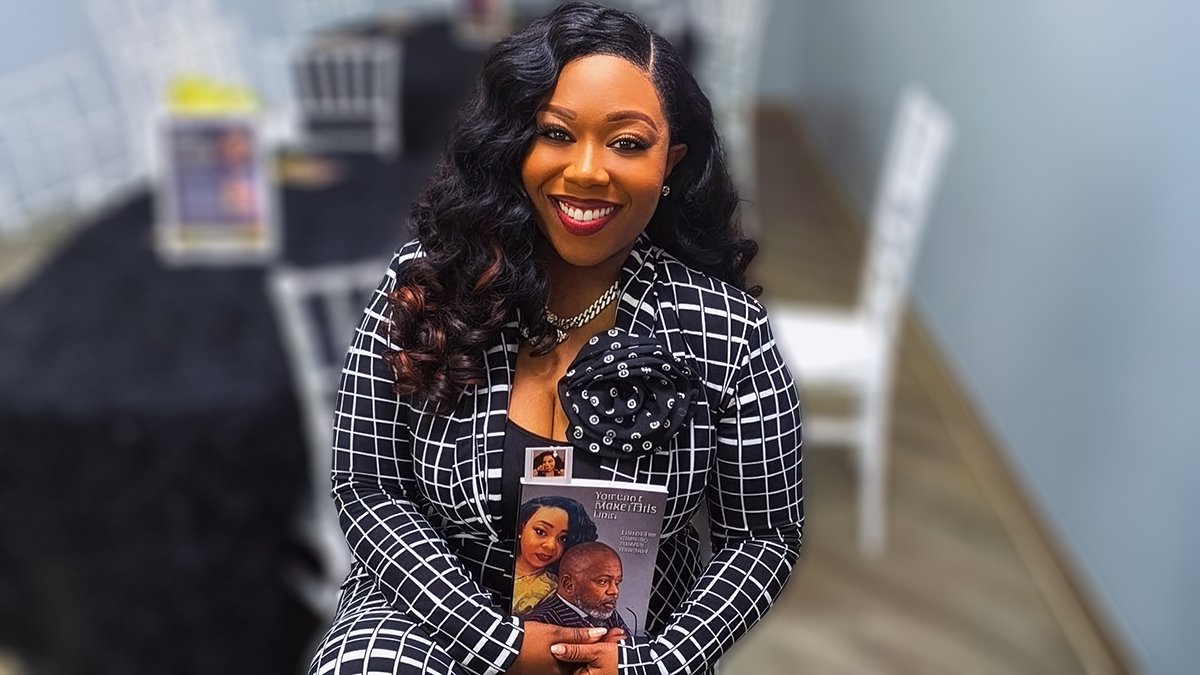
With her book You Can’t Make This Up, Matthews, who is well-known for her work in life insurance and finance, turns inward and shares her experiences with domestic abuse, stalking, depression, and grief. She discusses faith, boundaries, survival, and the choice to take back her story on her own terms in this interview.
You were raised in Memphis and became a mother as a teenager. How did that period shape the choices you made about education, work, and parenting?
When I became a teenage mother, I had no idea who I was or what I wanted to be. I was just trying to survive. People always said, ‘If you want a good job and a better life, you have to go to college.’ But at that time, I was homeless—living out of a hotel with my baby until my 18th birthday. I remember looking at my son’s father’s aunt; she seemed successful, a psychologist with money, and I thought, ‘Maybe that’s the path.’ So I chose psychology as my first major. Later, I realized it wasn’t for me. Growing up in Memphis, my favorite show was “First 48,” and that sparked something in me. That’s when I decided to enroll in criminal justice. My journey wasn’t perfect, but every step taught me that even in survival mode, you can still dream—and those dreams can lead you to purpose.
You earned a bachelor’s degree in criminal justice while working as a registered dental assistant. What led you to pursue those paths at the same time?
I earned my bachelor’s in criminal justice while working at a dentist’s office—not as a dental assistant, but as a babysitter. My dad’s girlfriend helped me get that job as a favor to him. It was a TennCare dentist, mostly serving kids whose insurance came through the state. They had these ladies driving vans through low-income neighborhoods, picking up kids to get their teeth cleaned. My job? Keep those kids under control and feed them what felt like a thousand peanut butter sandwiches.
To be honest, I hated that job. But while I was there, I watched. I saw how easy dentistry looked and how much money they were making. And I thought, ‘Wow… this could change everything.’ But I was so close to finishing my criminal justice degree that quitting didn’t feel smart. So I pushed through, graduated, and then enrolled in a dental assistant program. That’s what survival looked like for me—turning every struggle into a stepping stone. I didn’t have a roadmap, just grit and the belief that I could create something better for my child and me.”
Many people know you through your work as a life insurance broker. How did you enter that field, and what has sustained your career there?
My journey into life insurance began with a deeply personal experience. When my grandmother passed away, we discovered that the whole life policy she had borrowed against was no longer valid. Watching my father struggle to come up with $10,000 to give his mother a proper burial was heartbreaking—and eye-opening. It made me realize how many families, especially in the Black community, don’t know these critical details about life insurance. That moment sparked a purpose in me: to educate and empower others so they never face what my family did.
I dedicated nearly a decade to this mission, building a career in finance and running my own office with 68 agents under my leadership. Every policy I helped secure and every family I guided was part of something bigger—a commitment to financial literacy and generational security. What started as a tragedy became a calling, and that calling shaped the leader I am today.
You have survived cervical cancer and live with lupus. How have those health experiences changed how you approach daily life and long-term planning?
I’ve been living with lupus and in remission from cancer since my early 20s. Actually, I was just 18 when I fought cancer and around 20 when lupus entered my life. I won’t sugarcoat it—there have been some brutal days. Days when the pain was so heavy it felt impossible to move. But even in those moments, I remind myself that there are others fighting battles even harder than mine.
Lupus gave me more than pain—it gave me purpose. It gave me a voice to speak to other women who need hope when the flare-ups feel unbearable. And through it all, I hold on to one truth: God will never put more on me than I can bear. So after I’ve slept the pain away, waited for the swelling to calm, and taken those first shaky steps—I put on my makeup, lift my head high, and show up as the badass I know I am. Because strength isn’t about never falling—it’s about rising every single time
Your father was a public figure whose life and death drew wide attention. How did growing up in that spotlight affect your sense of privacy and identity?
I never had an issue figuring out my identity—I’m a Matthews!!! Confidence? My dad and I were born with it. But privacy? That’s something I’ve fought for my entire life. Sometimes it felt like my life was just a storyline playing out on my father’s stage. I’ve dealt with six stalkers. I’ve faced threats because of the backlash from my father’s troubles. And even now, trust doesn’t come easy. In the back of my mind, I’m always questioning people’s motives. That’s why I keep my circle small. That’s why I’m direct.
But here’s the thing—I survived it all. Every challenge, every shadow, every moment that tried to break me only made me stronger. My story isn’t about hiding—it’s about owning who I am, protecting my peace, and standing unapologetically in my truth
In your book, you discuss experiences with stalking, domestic violence, depression, and suicidal thoughts. What helped you decide it was time to share those parts of your life?
My book is me healing out loud. For so long, I’ve heard my story told wrong, twisted, misunderstood—and that lit a fire in me to set the record straight. To remind people that I am human. That my truth matters. Because when you stand in your truth, no one can shake you. No one can take that away. But this isn’t just about me. I carry every woman in these pages. Every woman who’s been silenced, misjudged, or broken will see herself in these words. This book is a mirror, a voice, a revolution. It’s proof that we can rise, that we can reclaim our stories, and that healing is power
One chapter recounts being held at gunpoint for several hours by a former partner. What do you want readers to understand about warning signs and personal safety from that experience?
When a man is controlling, insecure, and torturing your spirit—it’s not love. Love does not suffocate. Love does not shrink you. Love does not demand that you dim your light so someone else can feel big. The signs are there. The silence that feels heavy. The words that cut deep. There’s a constant need to prove yourself just to keep the peace. That is not love
As a single mother of a young child and an adult son, how do you talk with them about your past and the lessons you hope they carry forward?
Thank God I’ve been able to give my oldest son opportunities I never had—like going away to college, having the space to figure out life, and discovering who he wants to be. That’s a blessing I don’t take lightly. But I don’t sugarcoat the truth: I had him at 16. Before I released my book, I sat him down and read Chapter 2—the chapter about his birth. That night, he heard my first thoughts and feelings, the ones I had never spoken out loud. We stayed up until 2 a.m. talking, making sure he was okay, because my book is raw and detailed.
And then there’s my little one—still young, still innocent, just soaking up love without a care in the world. Two different seasons, two different stories, but both remind me why I fight so hard to live in my truth. My journey isn’t perfect, but it’s real. And that’s what matters.
You write about learning to set boundaries and accept people as they are. How did that shift change your relationships and decision-making?
This year, I took a lot of L’s. I didn’t just lose my father—I lost people I thought I loved. People I thought would always be there. And in the middle of all that pain, I started to see the truth: who was really there for me when I was at my lowest, and who was just there for the show. For most of this year, I’ve been emotionally drained—exhausted to the point where I had two choices: step away or die inside. So I chose myself. I chose life. I created boundaries—hard ones—with family, friends, and especially social media. Protecting my peace isn’t selfish. It’s a matter of survival.
Sometimes losing everything shows you what really matters. And this year taught me that my strength isn’t in holding on—it’s in letting go
What do you hope readers take away from “You Can’t Make This Up” about survival, accountability, and making peace with their own stories?
What I hope people take from my book is what my dad always called the naked truth. No filters. No masks. Just real life—raw and uncut. I pray that by exposing my truth, others will find the courage to tell their own stories and give God the glory for what they’ve overcome. And I pray people see my father for more than the mistakes. Not just as a monster or a cold-hearted man, but as a human—flawed, remorseful, and imperfect. Because redemption is real. Healing is real. And this book is proof that even broken pieces can create something beautiful.
This book is no fairy tale. If you think this book ends with a happily-ever-after, allow me to spoil it for you: it doesn’t. It ends with me losing my father.
Be’n Original