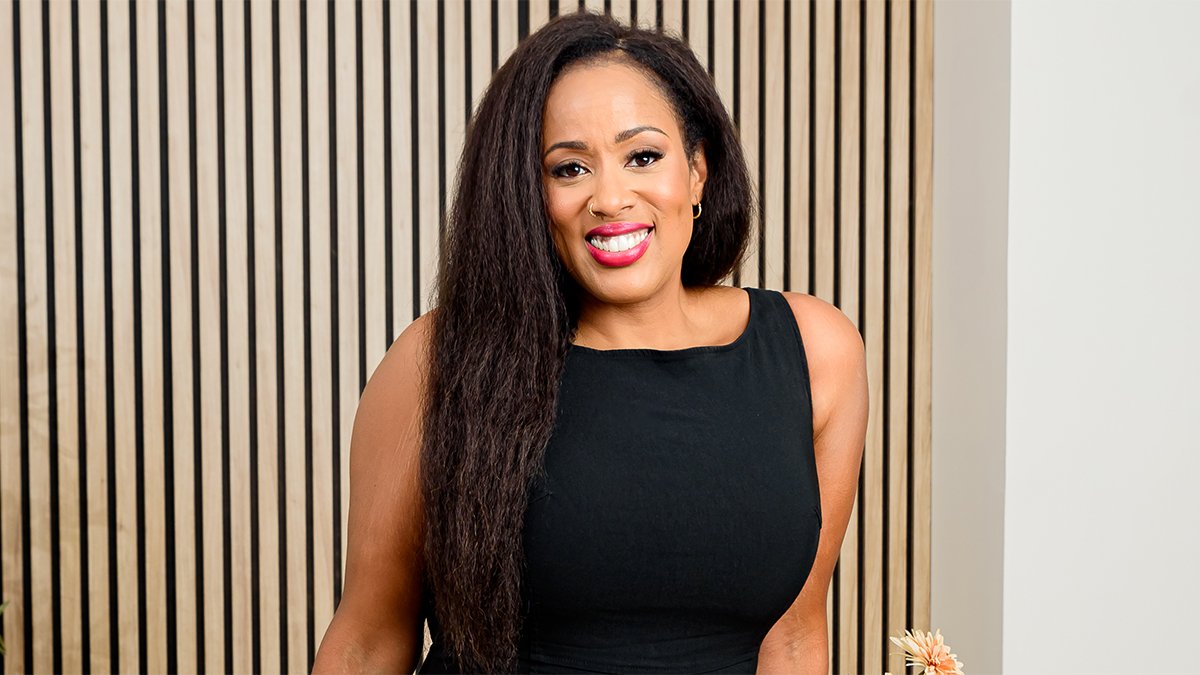
Audra Bolton-Ortiz, founder of The Bolton Group Public Relations, discusses how her early career in publishing and entertainment communications shaped her brilliant approach to client strategy.
How did your early work in communications shape the approach you use today at The Boltion Group Public Relations?
What’s peculiar, at least to me, is that my goal was to become a C-Suite executive at a company with a solid brand reputation. But I believe in intuition, and one thing led to another. I left HarperCollins to work with a top talent who had several Food Network shows because I wanted to be the right hand, not the left. And that proved to be a deft move. I was thrown into a different world, but I did some amazing work. I went from working on three books at one time and organizing a multi-sponsored tour, which led to an Emmy Award-winning show and more. Celebrity authors would come into publishing houses, and they had these PR reps from leading agencies, and, frankly, they were presented as better or more knowledgeable about PR than the people in the publishing PR department. That didn’t work for me. I know many dynamic PR professionals in publishing departments. What they don’t have, for the most part, is a roster of authors to bargain with. They don’t have the assets to say, “Hey, if you want to have my A-list client on your show, please throw my B-list or C-list client a bone. Or take my client now, and when we release this BIG project, you have first dibs.” Because I’ve worked directly with celebrities, in-house, and with major brands, I know how to position my clients.
What lessons from campaigns with companies such as Disney, Verizon, and Penguin Random House have most influenced your strategy work?
When you work on a campaign with companies like Verizon, Samsung, or Diageo, you’re a part of a team that interacts with the media consistently. You’re presenting a solid project that is, for the most part, perfect for the shared audience. The key is to ensure it is an offering of interest to new consumers. The more you work with companies that have assets beyond the average scope, the more you know what’s possible, and that is attractive to me. As a creative, I love limitless possibilities.
How do you measure success when extending the life of a brand or project beyond an initial launch or awards cycle?
I think there’s too much focus on the “here and now” rather than on scaling. Of course, it’s important to get traction for the project on the market. It’s equally important to have a plan for the next step. I believe the thought behind PR for our clients should be, “Where do we want this brand or personality to be in 5 years, and how are we going to get there?” Then you take the necessary steps to build the client for every project. When you have a goal, each media hit, each appearance, and every social media post has a purpose—they’re building blocks.
What differences do you see in public relations strategy between entertainment, publishing, and food and beverage clients?
I believe the most successful entertainment and publishing campaigns happen when publicists work in tandem with the sales and promotion departments. A-List media is nice, but the rest of the team needs to use those hits and convert them into sales. Food & beverage clients have an advantage because human beings have to eat and drink to live. We don’t think about it that way, but it’s true. So, chefs do best when they’re consistently presenting beautiful dishes or unique meal ideas to their audience. Also, working with brands can be a natural fit in the food and beverage categories.
How has your experience launching Emmy Award-winning television programs informed your work as an executive producer?
I’ve had my eye on executive producing for a few years now, and this is the first time I’m talking about it publicly. I didn’t put it together at the time, but I love being on set. You can’t really promote a show unless you have the chance to see how it’s put together—look at the talent and how they deliver their lines, and look at the food. Is it presented the way that it should be? Are all of the elements there? What’s on the shot list? Are the DPs getting what they need? Do you think there’s an audience for this, and are you excited to present the show to the audience? Do you believe in it? It can take years to get a show from paper to post to actual programming, but I’m excited about the journey.

What role does media training play in preparing public figures and creatives for sustained visibility?
You know the saying, “You only get one chance to make a first impression.” It’s quoted often for a reason. Media training can be daunting for some because people think, “All I have to do is talk, and I talk all the time.” They don’t want to be inauthentic. They think, “There’s nothing wrong with how I talk!” But there’s more to it than that. One of the goals of a good media coach is to help the client home in on the important parts of their message and to communicate that in a way that is clear to the audience. When musicians or public figures give an interview, they are speaking to a wide demographic. We all have little tics and idiosyncrasies, and we don’t want to lose that “thing” that makes each artist unique. We want to help them convey the message so that people get it and get them at the same time.
How do nonprofit partnerships, including work with God’s Love We Deliver and the Elton John AIDS Foundation, inform your perspective on purpose-driven campaigns?
I think every client should work with a nonprofit or not-for-profit organization. So much of the work that we all do is about showing that we’re the best. When a client works with a nonprofit that aligns with their vision, it can add much-needed dimension to their profile. They become a person who cares, someone who has something in common with their audience. It makes them relatable, but the client also benefits from the charitable work. I think it makes them less myopic—less “me” and more “we.” And it doesn’t take millions to give back either. I respect artists who are boots-on-the-ground.
What challenges do independent creators face today when trying to break through crowded media markets?
It’s always been a tough road for independent creators. Now, between the social media noise, major layoffs at media outlets, and AI interference, it’s become more difficult than ever. One of the main things to do is to be nimble. Don’t be afraid to take the small gigs. Small victories add up, especially when you’re building a following.
How has your identity as an Afro Latina influenced the way you approach representation and storytelling in your work?
I go to work as my whole self. I am the daughter of an immigrant from Central America and an African American from the South. But it’s even more fun when I work with other Afro-Latinas. I do feel less alone because I remember when it was taboo or viewed as me wanting to be someone other than Black when I infused my culture into my everyday life. Now, people understand that Black people are not a monolith; we are multidimensional, and there’s room for all of us.
What advice do you give brands and talent seeking to build relevance and audience trust over the long term?
It can take a lot of time to build an audience and their trust. It takes significantly less time to lose it. Both clients and PR practitioners need to be patient, diligent, and have foresight to build a profile. Either the good work that you do daily builds relevance and trust, or it doesn’t.
Be’n Original