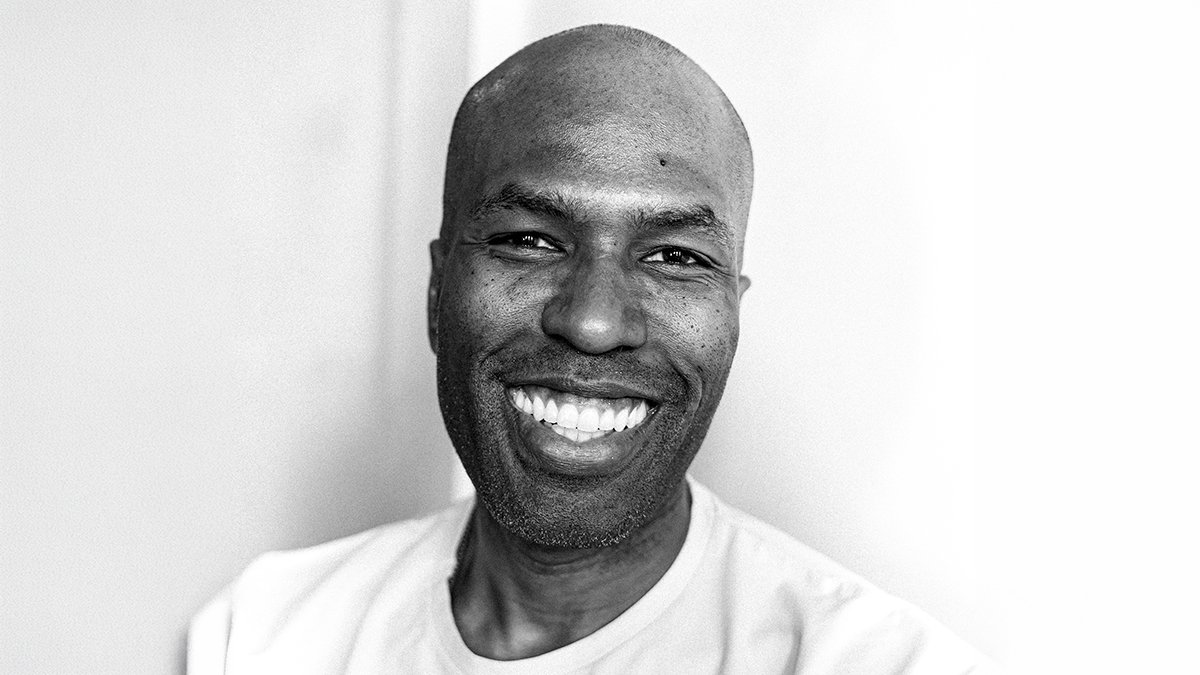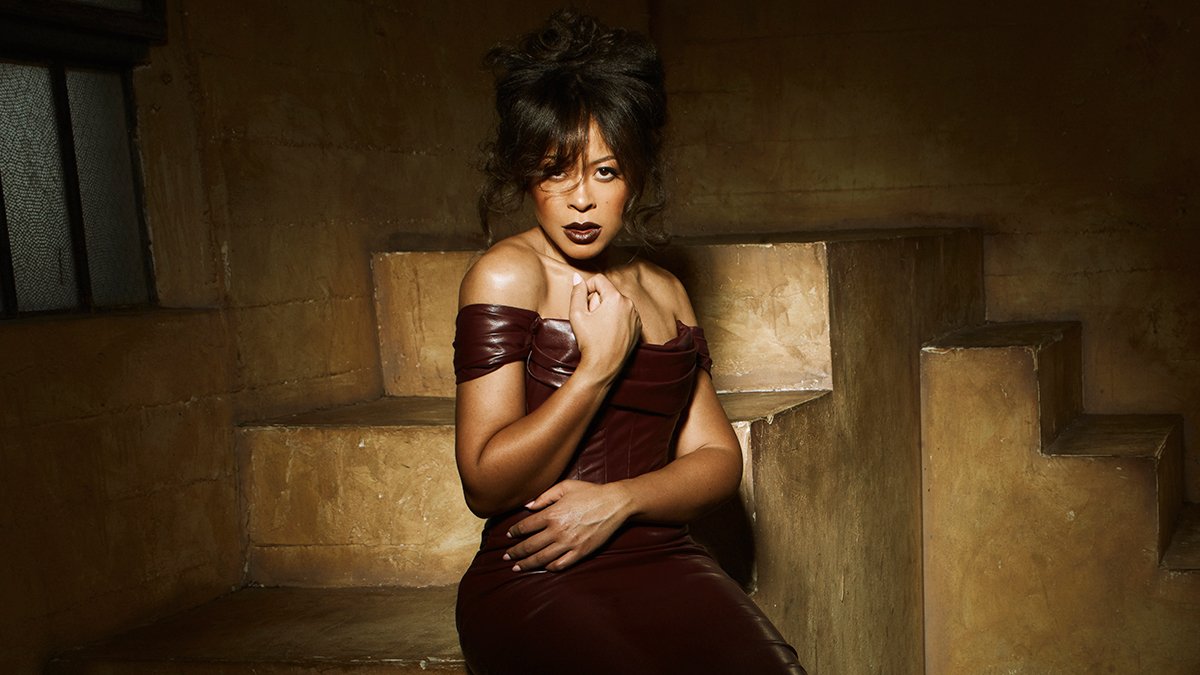

Jazz legend Nnenna Freelon discusses her book, “Beneath the Skin of Sorrow,” in which she employs a musical structure to process grief following the passing of her sister and husband, architect Phil Freelon.
Your new book is described as part love story, part homage to jazz, and part guide to creative practice of bereavement. How did you arrive at this powerful blend of themes?
This book was an unplanned gift born from necessity. After losing my husband in 2019, my sister six months later, and then facing the isolation of COVID, I found myself alone in ways I’d never known. Writing became my survival tool—a way to navigate the storm of grief while honoring the joy and gratitude that still lived beneath it. As a jazz artist, I naturally structured it like a suite: four movements that mirror the nonlinear journey of loss, each named after jazz standards that reflect different emotional landscapes. It’s not just about sorrow; it’s about the creativity that blooms in life’s cracks.
The book is organized like a jazz suite, with movements like Round Midnight and Stolen Moments. How did this musical framework shape your storytelling?
Jazz teaches us that structure and freedom can coexist. Each movement—Round Midnight (the darkness of early grief), Stolen Moments (adjusting to widowhood), A Love Supreme (transcendence), and Time Traveler (reflection)—acts as a container for poems, stories, and even recipes. Just as a jazz musician interprets standards, I wanted readers to experience grief not as a straight line, but as a series of improvisations. The format honors how memory works: in flashes, in melodies, in the spaces between notes.
With such profound losses in quick succession, when did you realize writing could be your path through grief?
I didn’t have that clarity in the beginning. I only knew I had to put words on paper to keep breathing—to anchor myself when my identity as a wife and sister had been rewritten overnight. My husband, Phil Freelon—born in 1953, the brilliant architect of record for the Smithsonian’s African American Museum—was one of those good men who leave too soon. His stamp wasn’t just on blueprints; it was on my soul. The design world lost a visionary, but I lost the one truly great love of my life. I didn’t want to go into a whole long story about his life on this call, but to get a context of the depth of what I lost, he was a good man, Ben. Writing became how I kept him close, how I honored the 40 years we built together. It was like fumbling in the dark until, gradually, the writing began illuminating my way forward. Now I see: grief and love are two sides of the same coin. The creative act itself became proof I could still make something, even when so much had been taken.
I love the way you speak of your husband. We should all aspire to be so revered when we’re gone.
He represented the best of us. He really did. Losing him was the hardest thing I’ve ever experienced. I’m proud that I’m at a point in my life where I can write about it—write about our love, our big love, our three children, our six grandchildren. Not to make it perfect, but we went through our challenges like all couples do, and it was a good marriage. A part of me—a big part of me—will always feel his loss. I don’t care how long I live. I will always be grateful for our time together. I have a full-size hole in my heart. I just do. I’ve learned to grow around it. My heart is still beating, and it beats with the knowledge that I’ve lost someone very, very special.
That’s profound.
I know this has happened to you: you plan something, apply for a job, and don’t get it. You feel disappointed. Then something better comes along, and you realize that was the reason—you were meant for something else. Sometimes we’re in the middle of things, unsure of the path. Not everything we don’t know needs knowing. This book grew from following that purpose. I didn’t set out to write a book. I’m a jazz musician, a singer. Why would I? Yet it poured out of me in response to a moment in my life. And now I stand in awe: “Damn, Nnenna, did you write a book?” Yes. Of course I did. I didn’t intend to do it, but it happened. That’s the truth.
You’ve said your inner melody went silent during your time of grief. What helped you begin to hear it again?
I think the profound quiet I experienced—both inside and out—came from living alone in the middle of COVID. You couldn’t go see anyone, and you didn’t know what it was. It was a whole thing, unfolding in incremental steps, bit by bit, as I began to quiet my mind, to stop the mental chatter. And it was scary. The silence seemed so loud. I thought I might be annihilated by my grief. I was very afraid. But something inside that stillness became the beginning of my healing. It’s a mystery. I can’t say it was one moment or another. But it felt like surrender. You’re going to be all right, girl. You’re going to be all right. Just go somewhere and sit down. Just sit down. You’re going to be fine. I’m a person who deals with stress by getting busy. I run around doing a million things, trying to distract myself from what I’m feeling. But in this situation, I had to stop. I had to go somewhere and just sit down.
Your book Beneath the Skin of Sorrow is a companion to your album Beneath the Skin. How do these two art forms converse?
They’re siblings born from the same seismic shift in my life. The album expresses through melody what the book articulates in words—like how Widow’s Song on the record reappears as lyrics in the book. For the audiobook, I’ll bridge them further by singing those songs a cappella where they appear. Music bypasses the intellect to touch raw emotion, while writing allows reflection. Together, they offer different doorways into the same house of healing.
You draw a brilliant parallel between jazz improvisation and grieving. Can you expand on that?
Improvisation is the art of responding to the unexpected—just like grief. There’s the original “melody” (the life you planned), but when loss changes the key, you must invent new phrases moment by moment. Some days you play legato, soft and flowing; other times it’s staccato, just getting through breath by breath. The magic lies in trusting the process. You might start with a standard like, “God never gives you more than you can bear,” but when that falls flat, you write your own truth. That’s jazz. That’s survival.
What do you hope readers grappling with loss find in your reflections?
Permission—to grieve messily, to laugh mid-sob, to honor their unique rhythm. This isn’t a manual with steps; it’s an invitation to explore your own creativity as a salve. Flip to any page and you might find a poem that cracks you open or a recipe that comforts (yes, there’s pound cake in there!). Mostly, I hope they feel less alone. Our culture treats grief like a problem to solve, but it’s really a language to learn.
Dr. Maya Angelou was a mentor. How does her wisdom resonate in your work?
Auntie Maya was my North Star. She taught me that artistry requires rigor—not just in craft, but in how we move through the world. When I waver, I hear her say: Tell the truth, but tell it slant. Her ability to alchemize pain into beauty showed me that our stories, however painful, are sacred. Now, when I write or sing, I imagine her nodding from the ancestors’ choir, reminding me that vulnerability is power.
Might there be more books after this?
[Laughs] If you’d asked me three years ago, I’d have said no. But this process taught me that creativity defies plans. There’s a cookbook whispering to me—stories of my grandmother’s “pinch of this” recipes, my father’s stewed chicken, all the love baked into those meals. Like grief, cooking is improvisation with what life gives you. So who knows? Maybe next time we’ll talk about collard greens and chord changes.
Be’n Original