
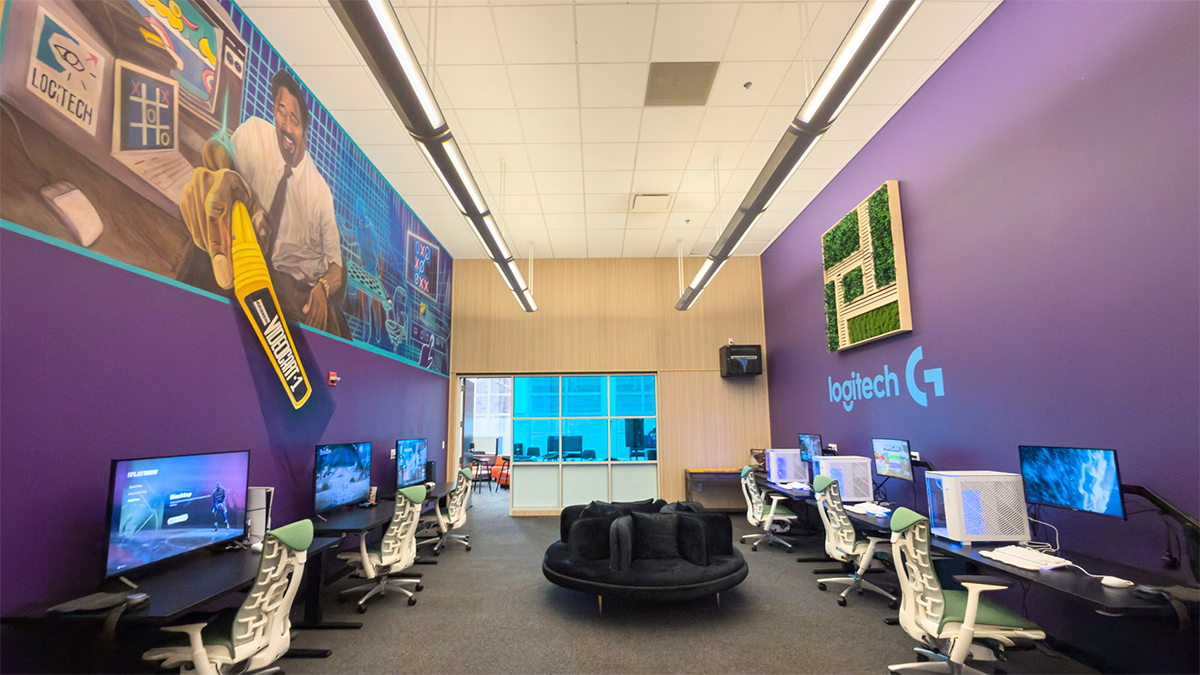
The new “Everything But the Game” room honors Black gaming pioneer Jerry Lawson and gives students hands-on access to gaming technology as they explore careers in design, branding, and marketing.
A controller can tell you a lot before a game even starts. How it fits in your hands. Where your fingers land. Whether it feels comfortable after an hour of play.
Those details are part of someone’s work. So are the colors of a headset, the shape of a racing wheel and the packaging that makes a product stand out.
For emerging creatives, learning to recognize that work can change how they see an activity they already enjoy.
That is the opportunity taking shape inside the new “Everything But the Game” gaming room at Pensole Lewis College of Business & Design (PLC Detroit), the only HBCU in Michigan and the only design-focused BCU in the nation.
Logitech and the college unveiled the room before a packed crowd Nov. 12, expanding a partnership that began in 2023. Current-generation consoles, gaming PCs, racing simulators and Logitech equipment fill the space.
PLC Detroit dedicated the room to gaming pioneer Jerry Lawson, the Black engineer who led the Fairchild team behind the Channel F, the first home video game console to use interchangeable game cartridges. His work helped change home gaming and paved the way for future gaming systems.
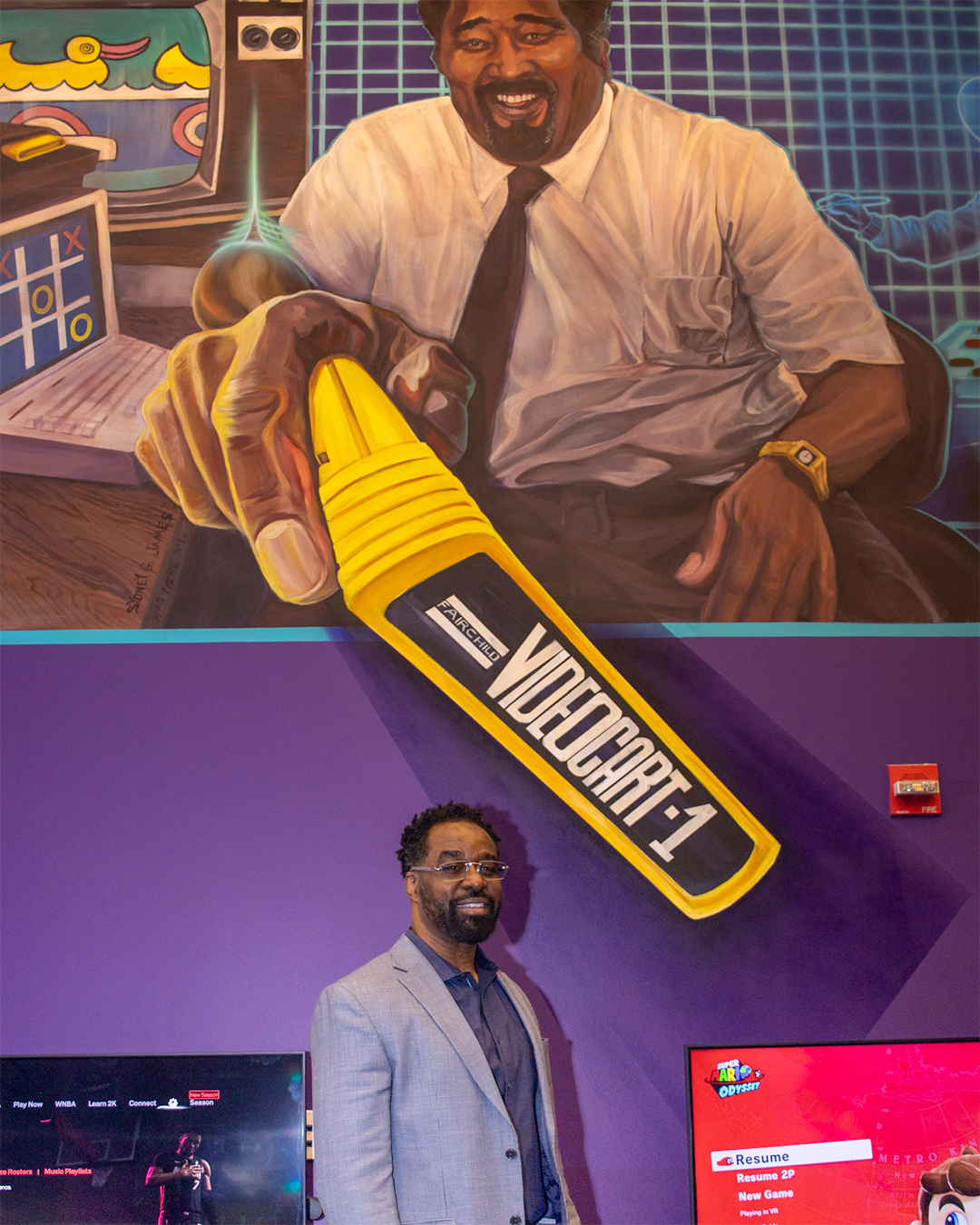
Detroit painter and muralist Sydney G. James created the life-size mural honoring Lawson. Her depiction of him reaching through a digital world connects the room’s contemporary technology with one of the people who helped make its evolution possible.
The room brings those elements together around a question: What could happen when students start looking at gaming through the eyes of a designer?
Putting a name to creative instincts
Someone can spend hours gaming and never think about the people who developed the products around the experience. A player may know exactly what makes a mouse comfortable or why one headset feels better than another without considering the careers behind those choices.
PLC Detroit and Logitech want to make those connections easier to recognize.
In a video interview about the gaming room, D’Wayne Edwards, president of PLC Detroit, described connecting what people naturally do each day with opportunities to create and earn a living. He wants students to understand that “you could actually get paid to do it and/or create.”
That possibility takes more than an interest. It takes skills, practice, and exposure to how the work happens.
The room complements the partnership’s eight-week Logitech Industry Certificate Program, which is delivered online. Participants explore industrial design, color and material design, brand design, packaging and graphic design, and product marketing.
Those five disciplines give students different ways to explore the same industry.
An interest in how objects work can lead toward industrial design. An eye for texture, finish and color can become a starting point for studying materials. A creative who enjoys visual storytelling may find a connection to branding or packaging, while someone curious about consumer choices can explore product marketing.
The program’s “Everything But the Game” brief asks students to pay attention to those possibilities.
“We want to focus on everything but the game to make the experience even better,” Edwards said.
The program explores the technology people use and the settings in which they play. At the college, the room gives students access to gaming equipment they can examine as they consider how design influences the experience.
Getting closer to the work
At PLC Detroit, the relationship between learning and industry experience is central to that approach.
“We don’t believe students should have to wait until they get a job to experience the industry,” Edwards said. “They should be solving real problems, working with real brands and learning what it takes to bring ideas to market now. That’s what this partnership with Logitech provides — access, experience and a real opportunity to understand where their creativity can take them.”
A racing simulator gives students something tangible to consider. How does a person interact with the equipment? What makes the controls feel natural? How do the different parts contribute to the experience?
A headset raises another set of questions about fit, materials, and appearance. Its packaging introduces the challenge of communicating what it offers to someone who has not tried it.
These are ways to begin looking at a finished product as a series of decisions. Learning to explain those decisions, question them and develop alternatives is part of moving from an opinion toward a design idea.
A legacy with something to say
The Lawson dedication brings gaming history into the space where students will develop their own ideas. PLC Detroit selected whom to honor; Sydney G. James developed the artistic interpretation.
In her life-size mural, Lawson’s hand extends a game cartridge toward the viewer. The image gives his story movement, drawing the person looking at it into an imagined encounter with the inventor.
“I approached the Jerry Lawson design from a historical fantastical approach,” James said.
She wanted the image to draw people into the encounter.
“I want the viewers to feel like they’re wearing VR glasses creating the mural themselves,” she said. “By having his hand foreshortened breaking through the digital realm to gift us the first game cartridge, it creates a visual ‘full circle’ dialogue.”
For Anderson Lawson, Jerry Lawson’s son, who attended the opening as a special guest, the dedication carried personal meaning. He was deeply grateful for PLC Detroit’s recognition of his father and impressed with James’ mural.
His message asked students to see more than an accomplishment from the past.
“To the students, when you look at the mural of my father, don’t think of someone who is just a pioneer in the gaming industry. I want you to feel inspired. Inspired not only to consume the future, but be someone who creates it,” Lawson said.
From playing to creating
A student may enter the room knowing which controller feels right or which headset they prefer. Learning to explain why, can be the beginning of something more: an idea to sketch, a problem to solve or a career to explore.
“Everything But the Game” gives students a place to make those connections, with equipment to examine and industry experience to help develop their thinking.
A controller may be familiar to a student long before industrial design is. “Everything But the Game” helps connect the two, giving emerging creatives a place to explore how an interest in gaming could become a direction for their work.
Photos by Liliandria Knox