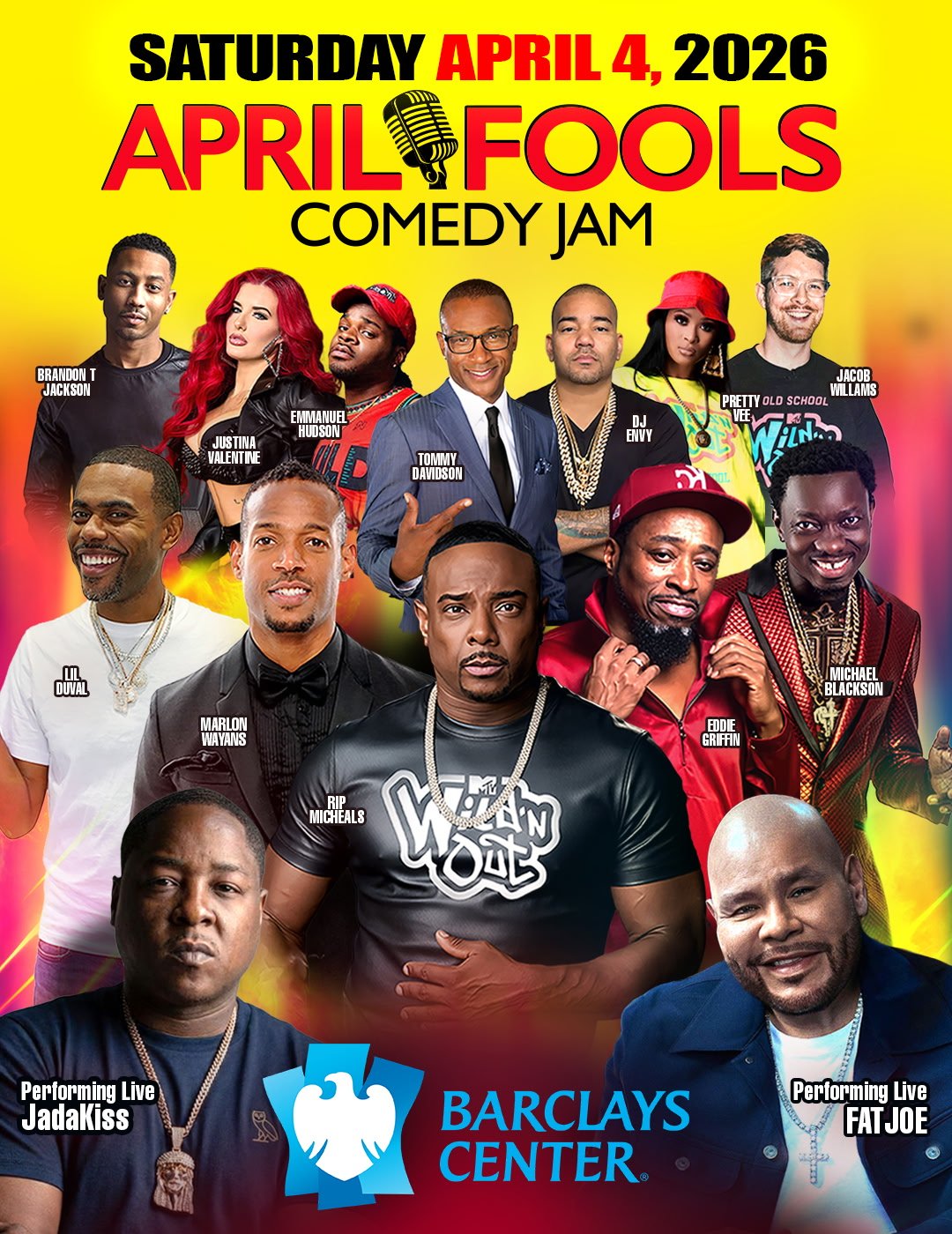
Rip Michaels has made a name for himself by turning stand-up into arena-level shows that combine music, comedy, and culture into one big event. He has focused on ownership, connecting with audiences, and expanding beyond traditional comedy spaces by helping to shape the Wild ‘N Out tour model and starting shows like April Fools Comedy Jam (April 4th at New York’s Barclays Arena) and Fall Back in Love.
Now, as he manages a serious health battle and awaits a heart transplant, Michaels continues to produce, perform, and plan the next phase of his business, including global touring and entry into the festival space. In this conversation, he reflects on resilience, risk, and the mindset required to move from small stages to building a platform at scale.
After experiencing a heart attack, how has your perspective on success and longevity in entertainment changed?
I wouldn’t say I’ve fully survived it yet because I’m still not out of the woods. I’m on medication, receiving IV treatment, and I have an at-home nurse. I’m also on the heart transplant list, so at this point, I need a new heart to keep going.
That said, it opened my eyes. Getting a second chance gives you a different outlook on life.
You’re launching the April Fools Comedy Jam tour in major venues. What does scaling to that level represent at this stage?
From the beginning of my career, I always wanted to build with others. I wanted to show what we could do as a unit. With April Fools Comedy Jam, I’m bringing together comedians I grew up watching—people like Bill Bellamy, Michael Blackson, and Eddie Griffin—along with newer talent. These were my idols, my version of Michael Jordan or Kobe. The goal is to create something strong enough to sell out arenas nationwide.
It’s the same approach with Fall Back in Love. I take artists and comedians I admire and build experiences people can enjoy together. I keep ticket prices accessible and make it family-friendly. There’s nothing better than seeing different generations enjoying the same show. Scaling to this level has been a blessing, and it shows the fans are responding.
You helped develop the Wild ’N Out tour model. What gap were you trying to fill?
At the time, I was working with Nick Cannon on Wild ’N Out and his stand-up special. We saw Katt Williams perform, and Nick said one of his dreams was to sell out arenas. I told him we could make that happen. I took the TV format and expanded it into a live experience. We added music, games, and stand-up segments to create a full show. Early on, no one believed it would work. People thought it was just a TV concept and wouldn’t translate.
We started small—about 1,500 seats in Queens. That turned into multiple shows, then more cities. Still, the industry didn’t take it seriously. So I bet on myself. I sold my cars, invested everything, and booked arenas across the country. One by one, we sold them out. In D.C., I did two arenas in one night—Show Place Arena and Capital One Arena. That moment proved the model worked. From there, it kept growing.
The mix of stand-up and concert energy is more common now. How do you keep innovating?
I’ve always seen myself as an arena comic. Most comedians don’t headline arenas without major backing, so I stayed close to the audience and paid attention to what they wanted. I adjust constantly.
With Fall Back in Love, I mixed R&B and comedy—Monica, then a comedian, then Brandy, then another comedian. It keeps the audience engaged the entire time. Now we’re moving into festivals. I want to create all-day experiences that bring people together. That’s the next step.
What are the biggest challenges of bringing interactive comedy to arenas versus clubs?
Scale is the biggest challenge. Making 17,000 people laugh at once is very different from a club setting. In clubs, you might have 3,000 seats. In arenas, you’re dealing with massive crowds, fast pacing, and multiple performers. Everyone may only get 15 minutes, so the show has to move quickly.
The diversity of the lineup becomes important. You’re blending styles and audiences to keep the energy up from start to finish.
How important is ownership and controlling your brand as you expand?
Ownership is everything. The most valuable lesson I’ve learned is understanding when a deal doesn’t make sense and having the ability to walk away from it.
A lot of these major touring companies offer deals that look good up front, but when you break them down, they’re structured to take more than they give. You’ll see things like cross-collateralization, where they’re essentially giving you money upfront, but it’s really just a loan against your own success.
I’ve had situations where the split was 50-50, but it wasn’t truly equal. They handle marketing and production, but then they also keep revenue from ticketing fees, food and beverage, and parking—things that add up. At the same time, they want access to your mailing list and your audience, which means you’re giving up control of your own fan base.
For me, that never made business sense. I built this from the ground up, so why create something just to hand over half of it without real equity in return?
Owning my brand taught me to value what I’ve built. It gave me the confidence to say no. I’m not in a position where I have to take every deal. If it’s not structured fairly, I’d rather keep control and grow it myself.
Because at the end of the day, when you own it, nobody can take it from you. And that freedom is what allows me to keep building, expanding globally, and moving at my own pace.
What does resilience look like for you right now?
It’s been tested. I’ve had to slow down. I’m in and out of the hospital, and I have EMTs backstage now. I can’t perform the way I used to until I get a new heart. But I’m still here. While I was in the hospital, my publicist, Alyse, passed away, and I watched her funeral over Zoom. That puts things in perspective.
As long as I have breath, I’m going to keep creating and performing. Whether it’s one more show or ten, I’m going to give everything I can.
What mindset shift do emerging comedians need to reach arena level?
Dream bigger. When I started, my only goal was to get on Def Comedy Jam. I didn’t think beyond that. Now I see how limited that thinking was. Today, I’m thinking about stadiums and global tours.
Comedians coming up should push past limits. There are no real barriers anymore. You can build from your phone and reach arenas. So dream bigger, build the right team, and stay committed.
Thank you for your time. I’m praying for you.
Thank you. I appreciate that. Have a great day.
Be’n Original