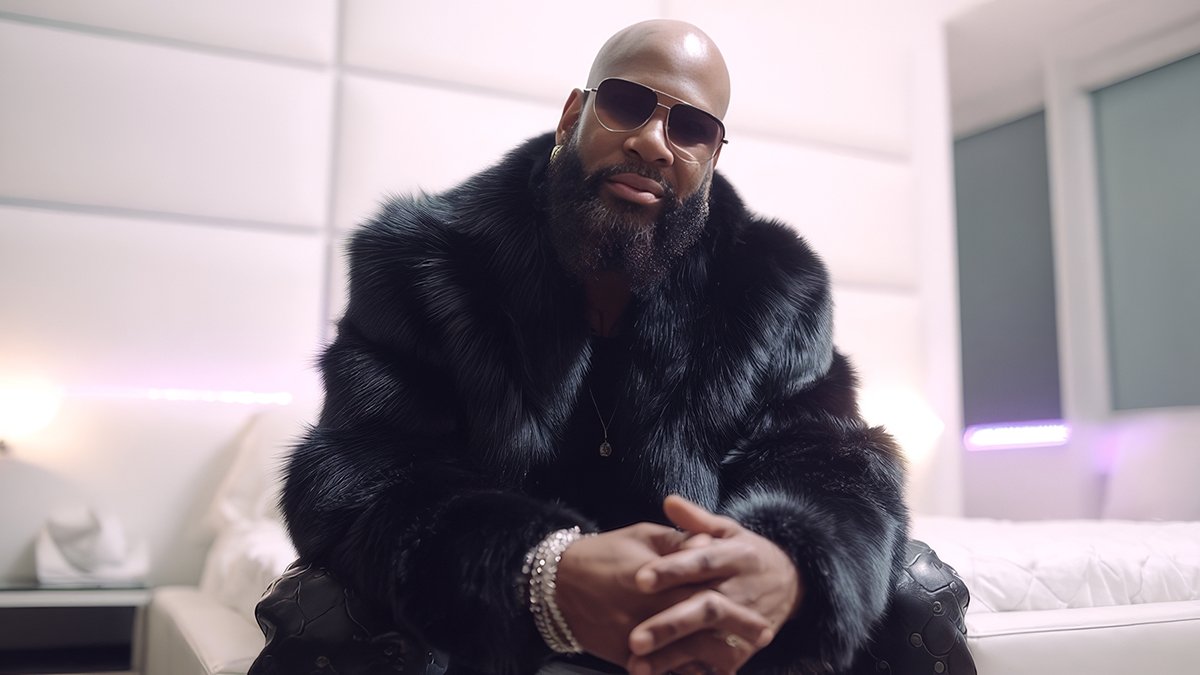
Renowned producer, songwriter, and artist Deezle has been a powerhouse behind countless hits for years. Now, he is boldly stepping into the spotlight with fresh music and an expansive vision. In this compelling conversation, he passionately explores his growth, his purpose, and the exciting next chapter of his career.
You’ve shaped major hits behind the scenes for years. What inspired you to step forward now as both an artist and producer with “My Hands On Your Body”?
My career as a producer started because I could not afford to buy beats. I was an artist first, but as a teenager, I did not have thousands of dollars for production and studio time. I was already a musician, so I decided to make my own beats. They were terrible at first, but I had ideas. Once I was able to learn from strong producers, I started to understand the quality of drum sounds and the details that matter in production. Then I was mentored by Donald Harrison, a legendary jazz musician. My production level rose once he came into my life.
I took time away from being out front so I could build real credentials and become someone artists could depend on for tracks. That happened. I earned Grammys and ASCAP awards, sold more than 75 million records, had billions of streams, and had 56 No. 1 records as an engineer, producer, songwriter, and artist. Then I said, “It is time for me again.” I never stopped recording my own music. I had been quietly releasing songs for years and letting people get used to seeing me as an artist. Then I decided to invest in promotion. “My Hands On Your Body” was the first record where I really put money behind the campaign, radio, and PR. A few weeks ago, it reached No. 32 in the Top 40, which was strong for my first push. And the next one is going to be No. 1.
Your new single leans into a sleek R&B sound. How does that track reflect where you are creatively at this stage of your career?
I performed at French Quarter Fest in New Orleans and did 20 original songs that most of the crowd had never heard. By the end of an hour and 20 minutes, they were still there with us. What people are learning is that “My Hands On Your Body” is one lane, but I am not one genre. I call myself a multi-genre artist. I am not only R&B, rap, hip-hop, rock, or pop; I am all of them.
I like all kinds of music because there are different sides of me. So people are going to get variety from me. I have friends from different countries, cultures, and languages, and I am open to making music with all of them. At the end of the day, it is all music. It is like playing with Legos. It is just pieces.
With credits spanning Lil Wayne, Drake, J-Lo, Chris Brown, and Nicki Minaj, what lessons from those collaborations are guiding your own artist-run?
The main lesson is the same thing: it is all music. All of those artists do different types of songs. They are not boxed into one sound. When I first worked with Nicki Minaj after she came to Young Money, the records had more East Coast hip-hop energy, but they also had melodic and pop elements. Now she can make huge pop records and still deliver rap records at a high level.
Lil Wayne was the same way. “Lollipop” was a game-changing pop-rap record that still felt street. Then a song like “Mrs. Officer” used jazz chords and jazz influence. I brought things I learned from Donald Harrison and applied them to what people called a rap record. That freedom to blend styles matters.
You have three Grammys and more than 75 million records sold tied to your work. How do you define success now compared with when you first entered the industry?
Success now goes back to why I started doing this in the first place: to have fun. If it is fun, it is working, and people are enjoying it, that is success. At French Quarter Fest, people heard songs they did not know and had a really good time. We covered different sounds and gave them a full experience. Afterward, people stopped us and said the set was incredible and different. That means something to me.
You’re producing and appearing on Mac Phipps’ first full-length project since his release in 2021. What made this project important for you to be part of?
First, he asked me. Second, he said he only wanted one producer and wanted it to be a co-release between the two of us. This is not just me producing his album or appearing on it. It is our project together. It is similar to when an artist and producer come together as equal partners and build one body of work.
His story carries themes of resilience, injustice, and redemption. How did those themes shape the sound and direction of the album?
The content has emotional weight, whether it is joy, gratitude, pain, or reflection. I also do film scores, so I think cinematically. When someone can tell a strong story, I hear scenes. The music has to match the feeling and support what the lyrics are delivering. Mac has years of material and ideas. Based on the subject matter, I decide how the track should feel, what instruments to use, and whether the energy should be aggressive, calm, uplifting, or intimate. The sound follows the story.
You’ve supported organizations like Son of a Saint, the Louis Armstrong Foundation, the Jazz and Heritage Foundation, and the Trombone Shorty Foundation. Why has community work remained a priority?
I came back home about three years ago and started working with different organizations. I saw young people who needed more support. There are talented people in New Orleans everywhere. You can walk outside and hear someone practicing trumpet at a high level. But business knowledge is different. In cities like Los Angeles or New York, there are more generations of people who understand the industry, deals, production, and how to move.
I wanted to bring back what I learned around the world and share it with young people and with my peers. A lot of hard lessons I learned came from not having guidance. I made deals years ago that I would never make now. I know my value now. If I can help someone avoid those mistakes, that matters.
Your career has balanced commercial success with hometown loyalty. How have you stayed grounded while working at the highest levels of the business?
I love myself, I am grateful for my gifts, and I enjoy the opportunities I have had. But I do this because it is fun. I never used music to chase status. Music was always music to me. Because of that, it is easy to stay cool. I like being around good people, having conversations, playing cards, and enjoying life.
Awards and wins came from dedication to the craft. They were never about feeling above anyone else. I know I am strong at what I do, but leadership is about helping the people around you become stronger too. That is how I look at it.
Looking ahead, what do you want this next chapter to show people who may not know your full story?
I want people to understand the depth of what I do. As a songwriter, artist, producer, humanitarian, creator, author, and designer, there are many layers to me. I want people to take a deeper look because I know they will find something that connects with them. There is something for a lot of people in what I create. I even have pop-punk songs people have not heard yet. I like bending styles and finding new rooms by staying open.
Be’n Original