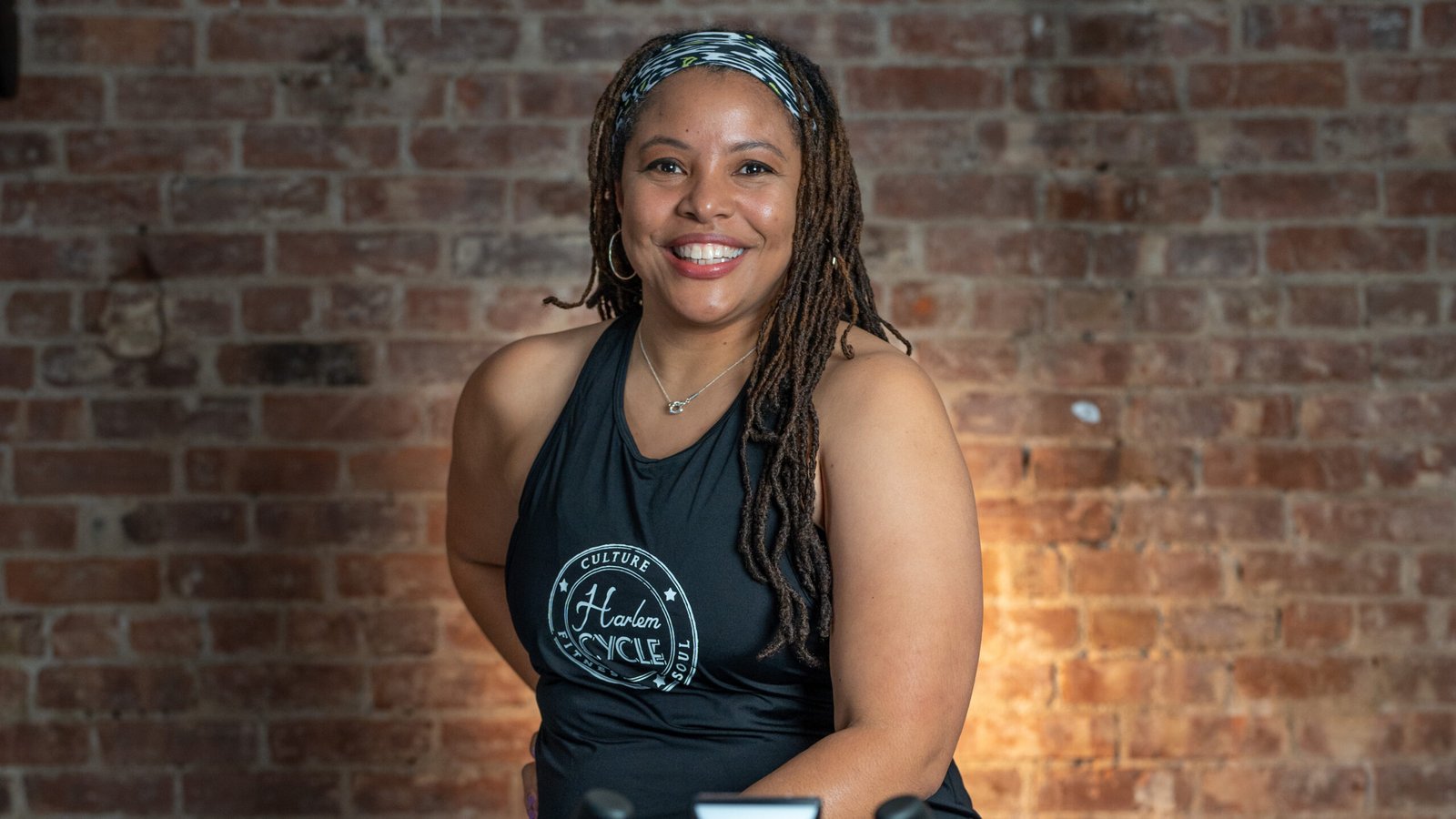
Tammeca Rochester launched Harlem Cycle nearly a decade ago to provide fitness and address health needs in Harlem. She discusses how the studio fosters wellness, community, and empowerment.
What inspired you to launch Harlem Cycle, and what community need were you trying to address?
I started Harlem Cycle almost 10 years ago—we’re coming up on our 10-year anniversary in April. It began as something very personal. I was looking for a cycling space that spoke to my culture and that tapped into community in a deeper way. I saw something missing in the market and something I personally needed at that time in my life. I also recognized that in Harlem, our community needed cardiovascular workouts. We were a community that was plagued by cardiovascular disease, yet there were very few options for cardio-based fitness.
At the time, there were only two yoga studios in the neighborhood. It didn’t make sense to me that the community that needed these resources the most didn’t have accessible options. I wanted to create something different from what I was seeing downtown—something that truly connected with the community and reflected our culture.
Harlem Cycle has hosted more than 12,000 classes since 2016. What impact are you most proud of?
For me, it’s about the day-to-day impact. I love seeing people walk into our studio and leave feeling a little stronger and a little happier. We also hear directly from our clients about how the studio has impacted their lives—not just through physical health changes, but also through their social lives, their emotional wellness, and how they feel about themselves. Hearing those stories about how we’re affecting people’s lives is what keeps us going.
How do you make Harlem Cycle a space that centers wellness for Black communities?
One way is by making sure our instructors come from the community. We have an instructor training program where we train individuals to become instructors, and we look for people who want to be part of something meaningful—people who want to help change lives. Interestingly, about 80% of our team started as clients. They went through our instructor training program and became instructors themselves.
Representation matters. Making sure our community sees itself reflected in our leadership and instructors is a big part of creating that welcoming environment.
What message did you hope people took away from your TEDxHarlem talk?
I wanted people to understand the importance of community. My TEDx talk was really about the idea that if we can’t help our neighbors, then what are we here for? It’s about making sure we’re always giving back and remembering that service to others should be part of everything we do.
Through TRG International, you support youth in South Africa and beyond. What challenges are you working to solve?
Through TRG, our focus has been on entrepreneurship and teaching soft skills to orphans who didn’t have the family structure that many of us grow up with.
We help them learn things like how to open a bank account, how to speak in public, and how to navigate the world professionally. These are skills that many people receive naturally from family support systems, but these young people often don’t have that foundation. Our goal is to help them start from the same baseline many of us take for granted.
How did your time at Colgate-Palmolive prepare you to run your own ventures?
When I started at Colgate, I was a process engineer on the personal care team. I worked with an outstanding group of engineers, and it’s still one of my favorite work experiences. One thing engineering teaches you is that all problems can be solved. That mindset has stayed with me. When people ask what I did before entrepreneurship, I always say I was an engineer—because engineers solve problems.
As a business owner, something new comes up every day. The question becomes: How do we solve this problem now, and how do we put processes in place so it doesn’t happen again? That problem-solving framework came directly from my engineering background.
As a board member of Start Small Think Big, what barriers do diverse founders face most often?
I joined the board of Start Small Think Big because I saw the impact the organization was having by providing free legal services to small businesses. Many small business owners simply don’t have the capital to handle things like legal paperwork—waivers, employee handbooks, and contracts. All of that costs a significant amount of money.
There’s already a huge barrier to entry just to open a business. First comes the paperwork, then financing, and often the challenge of simply getting people to listen to you. Making sure small businesses have access to legal support is incredibly important.
What did programs like the Famous Amos Initiative and the Mastercard Digital Doors Program mean for your growth?
Those programs helped through grants and peer networking opportunities. One of the most valuable things for me as a small business owner has been building a network of other small business owners. They’re the people who truly understand what you’re going through day to day. Those programs create opportunities for partnerships, learning, and support among entrepreneurs, which can be incredibly valuable.
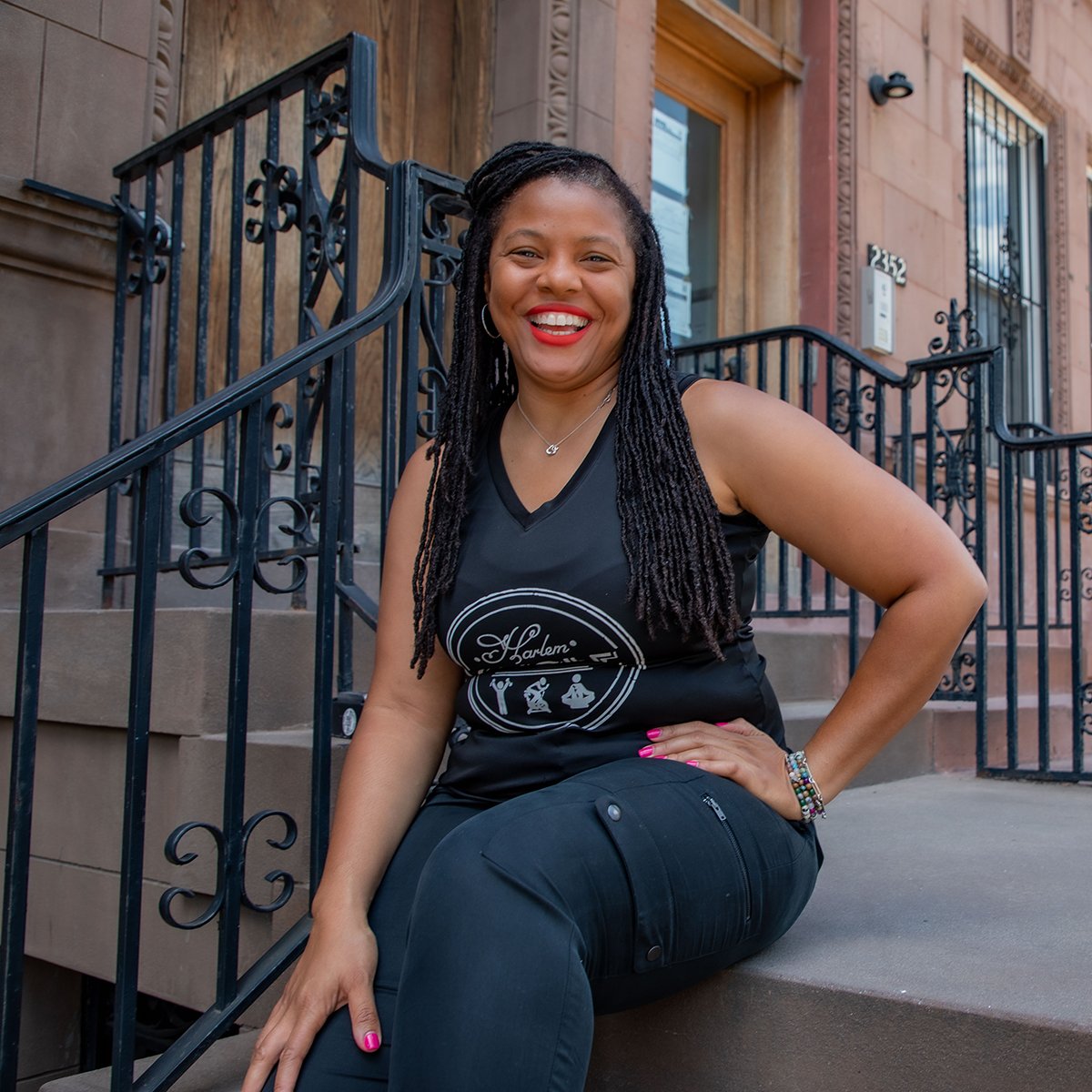
How did your studies at Spelman College, Georgia Tech, and NYU Stern shape your approach to leadership?
There’s a saying: you can always tell a Spelman woman, but you can’t tell her nothing. Spelman gave me the foundation to love being a strong Black woman and to never quiet my voice. It taught me to stand confidently in who I am. At Georgia Tech, where I studied mechanical engineering, I strengthened my problem-solving skills. It was also the first time I found myself in very diverse environments. Thankfully, my Spelman experience prepared me not to shrink myself in those spaces. Later, at NYU Stern, I gained the business fundamentals for entrepreneurship—understanding P&Ls, financial management, and the mechanics of running a business.
When I was a pre-law major, the dean of business once told me, ìOne day you may be a lawyer, but whoís going to run your business?î
Exactly. My sister is a lawyer, and I tell her the same thing—you need a business manager. You can’t run a business and practice law at the same time. At some point, you have to choose.
Finally, how have your Jamaican roots and immigrant journey influenced your work in wellness and entrepreneurship?
You can probably tell I’m Caribbean-born when you come to Harlem Cycle—we have soca classes and reggae rides, and the music reflects that culture. But beyond that, being an immigrant, especially from the Caribbean, comes with a strong sense of responsibility. I know there are millions of people behind me who are watching and hoping for opportunities.
I carry that with me every day. I’m not just here for myself—I’m here for my community and for those who are looking to see what’s possible. I take that responsibility seriously, and I try to help pave the way for others.
Be’n Original