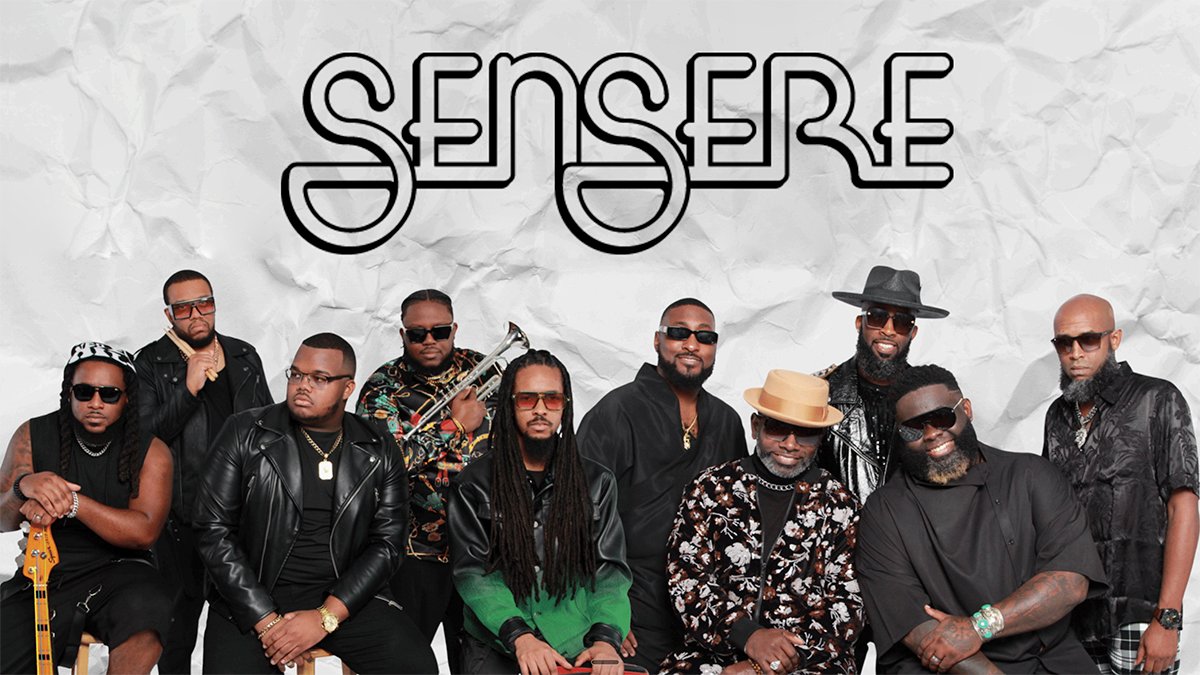
Sensere, a gospel group, views music as more than just performance. They see it as a process of building discipline and faith happening in real time. Their sound mixes gospel, funk, rock, and soul, combining the precision of a big band with the intuition of a smaller group. This balance has helped them thrive for over ten years, creating a growing catalog. Central to their work is a production approach focused on vision and execution. Bandleader James Wright explains that he envisions the music before it’s created, assembling it piece by piece with different voices and instruments. Vocalist Brian Williams emphasizes that consistency is key to maintaining their sound and identity over time.
Following a No. 1 gospel radio record and a project backed by Fred Hammond, Sensere is moving into its next phase with a broader target. The group is not stepping away from its foundation. It is pressing outward, carrying that base into larger spaces, new collaborations, and a wider audience. Members Wright and Williams reflect on their journey, discussing their experiences, current endeavors, and aspirations for the future.
James, as bandleader and producer, how does the vision for Sensere begin at the composition stage, and how is that vision translated across an 11-member ensemble?
James Wright: One thing I take very seriously is hearing God when it comes to the music. I believe that as producers, no matter the genre, we can almost see the finished product before it’s complete. With Sensere, I’ve always had a clear vision for how the music should sound and how the imagery should come together. When you’re working with an 11- or 12-member band, that vision extends into production, arrangement, and presentation. I believe God gives me each part—what the trumpet should play, what Brian or Levi should sing, what the band should contribute. It’s about being in tune.
We pride ourselves on being students of the music—understanding why we play certain notes, where we place them, and how to choose the right moments. That mindset guides everything I do in producing and writing.
Brian, after more than 16 years with the group, how has the vocal approach evolved alongside the band’s shifting sound?
Brian Williams: The vocal approach has definitely evolved. As time goes on, we experiment—we get in the lab, start building, and new ideas come together. It doesn’t take away from individuality, but it does shape how we blend. We describe Sensere’s sound as a “stew.” There’s funk, neo-soul, rock—different influences coming together. Each song brings out something different in each vocalist. Sometimes we end up singing in ways we didn’t even realize we could.
James has a strong sense of direction as a producer. He’ll guide us—“sing it like this”—but without removing our individuality. That process pushes us to grow vocally in ways we didn’t expect. It’s been a great experience.
Your latest project, Fred Hammond Presents Sensere: The Soul of Future Worship, Vol. 2, includes guidance from Fred Hammond. James, what production decisions were influenced by his involvement?
James: We can start with the album cover—he chose that from several versions. He was very hands-on. I initially reached out to him after hearing Silk Sonic use Bootsy Collins as a narrator. I thought that, in gospel, Fred Hammond could fill that role for us, especially given his history with Commissioned. After I sent him the album, he was very honest. He approved all the songs and said, “This is good.” When I asked if he would endorse the project, he agreed.
The influence came naturally because some of the music was inspired by the kind of records he’s done before. When he heard it, he recognized where we were coming from and wanted to support us. His endorsement helped position us—like being introduced by someone with credibility. That carries weight.
“That’s God… LaLaLa” reached No. 1 on gospel radio. Brian, what did that record demand vocally, and how did delivery shape its impact?
Brian: That moment was unexpected. James and our manager wrote the song, and James urgently called us into the studio. When we heard it, we immediately understood the assignment. We’ve developed a workflow where once we hear the music, we lock in and execute. But more importantly, we internalize the message. The song has meaning, and we have to understand that to deliver it effectively. And that connection, for us and for our listeners, was what made the performance impactful.

Working within a large band requires structure. What role have each of you played in executing arrangements at a high level?
James: As a leader, it’s not easy. You have to lead by example. My team sees my growth as a producer, and that sets the tone. We rehearse every week. That’s something many groups don’t do anymore. We stay ready so we don’t have to get ready.
There’s also an understanding of competition—not in a negative way, but in terms of maintaining a standard. Whether we’re opening or closing, the level can’t drop. That mindset keeps us sharp.
Brian, longevity can challenge consistency. What has sustained your commitment over more than a decade?
Brian: Consistency is everything. If you want something to last, you have to stay committed—even when results don’t come quickly. A lot of people quit because success doesn’t happen overnight. But consistency, combined with belief in what you’re doing, creates longevity.
If you’re just repeating something without belief, that’s a habit. But when you believe in it, consistency has purpose—and that’s what sustains you over time.
With so many elements in your production, how do you preserve clarity without crowding the mix?
James: It starts with checking egos at the door. Everyone focuses on what’s best for the song. From a technical standpoint, you can’t have everything in every track. Sometimes less is more. You have to manage frequency space carefully. Not every instrument or voice needs to be present all the time. It’s about placement—playing at the right moment and making each part count.
We aim to create music that connects with listeners, not just musicians. That balance shapes how we arrange and mix.
You’ve shared stages with major artists. What lessons have you carried forward?
James: One of our biggest learning experiences was performing at Jazz in the Gardens early in our career. Seeing the technical side—soundchecks, stage management, production standards—was eye-opening. We saw the level of excellence in R&B and pop and brought that back into what we do. It taught us professionalism, preparation, and attention to detail.
I also learned a lot from a bishop I played for. He emphasized excellence in everything. That mindset shaped how we operate—from performance to presentation.
Looking ahead, how do you define the next phase of Sensere?
Brian: We always put God first, but we don’t limit ourselves. Our goal is to create music that reaches a wide audience while staying true to our foundation. We see growth in festivals, collaborations, and expanding beyond traditional gospel spaces. We have new music coming, including a single featuring Teddy Riley.
The goal is to reach more people without compromising who we are.
Be’n Original