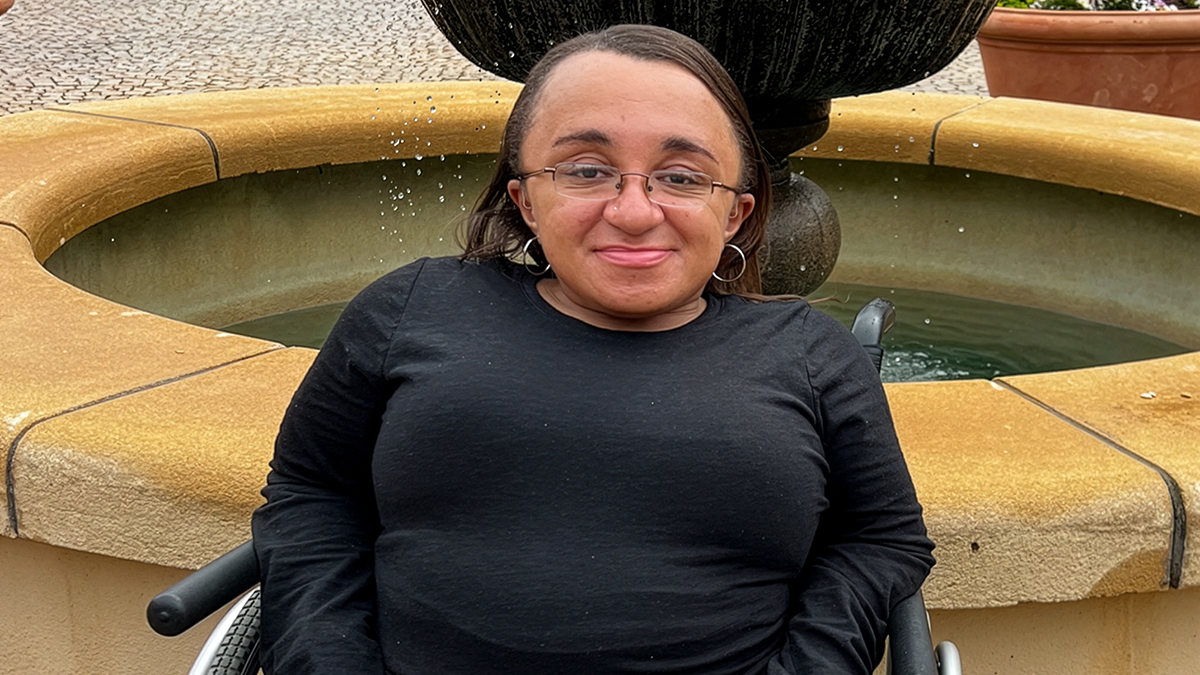
Vilissa Thompson, LMSW’s Ramp Your Voice! Conference 2026 is an important space that focuses on the diverse experiences of Black disabled individuals. It goes beyond just discussing challenges and instead celebrates Black disabled joy, strength, and leadership. By uniting various leaders, artists, and advocates, the conference creates a shared space for storytelling and connection. It proudly showcases our presence and highlights the brilliance that comes from embracing our humanity and creativity.
The Ramp Your Voice! Conference was created to center Black disabled voices and experiences. What gap did you see in existing advocacy, leadership, and disability spaces that made this conference necessary?
There aren’t many spaces exclusively for us to commune and showcase who we are. I wanted to create something that displays our talents: a more holistic approach for a conference setting. My intention is clear—we are a diverse community, and we deserve to embrace that.
One of the conference’s goals is to shift narratives about Black disabled people by highlighting joy, power, and leadership. Why is it important to move beyond conversations that focus solely on barriers and challenges?
We are more than the barriers and challenges thrusted upon us in/by society. It’s a selfish desire of mine to know who is a part of this community; each time we host this event, I learn of new people whose gifts and voices wow me. Black disabled people aren’t just the statistics we know of; we’re a powerful group of people in this world.
Black disabled leaders often drive social change while facing chronic underfunding and exclusion from decision-making spaces. What structural changes would you like institutions, funders, and policymakers to make to address this imbalance?
In an anti-DEI political climate, it is imperative now more than ever for funders, institutions, and policymakers to support marginalized people’s bodies of work. Complicity from these entities by refusing or being fearful to boldly and publicly support such work is a mark of cowardice. Those like myself who dare to steadfastly continue creating and debuting work that spotlights ALL people will remember those who were spiritless in showing solidarity. I know who my true allies/co-conspirators are; those are the individuals and entities that will have my support whenever this political climate shifts. And trust, a shift will happen.
The conference aims to create a national stage for Black disabled brilliance. What are some examples of leadership, innovation, or expertise within the community that you believe deserve greater recognition?
What deserves greater recognition are the ways we can show up outside of speaking on the disparities we face. We have Black disabled people whose creativity knows no bounds. This conference intentionally centers the essence of Black disabled women, femmes, and MaGes (marginalized genders) persons because we will not get to any form of liberation and freedom without them. There’s not enough highlighting the non-men and non-cishet folks in the disability community in general, much less disabled Black non-men and non-cishet people. This space is an example of not just the importance of doing so, but that it’s crucial so that we ALL feel represented in disabled storytelling and creativity.
This conference brings together leaders, artists, professionals, students, and allies. What opportunities emerge when Black disabled people from different generations and sectors are able to connect in one space?
I love learning about people and what they do that makes their heart sing. There’s nothing greater than seeing a person be “in their bag.” I also want to offer a diverse viewing of Black disabled folks across the diaspora because I know there’s so much we can learn from each other. We may be in different parts of the globe, but there’s connective tissue that binds us as a people that we mustn’t forget exists. This conference is my small way of gently reminding us of this truth.
Creativity and artistry are central themes of the event. How do art, storytelling, and cultural expression help advance disability justice and social change?
Art, storytelling, and cultural expression are the way we as a people have survived on this planet; it’s our way of boldly declaring, “I was here. We are here. “Art, in all its forms, is a sustaining force that defies time and barriers. And sometimes, our art is the one thing we can fully control and own. I am amazed at the creativity and expressiveness of our speakers and performers and am humbled to be a witness to their human essence. Also, art, and the mere act of creativity, are profound parts of the social movements seen in this country and abroad. Art is the recordkeeper of our human experience and existence; without it, what would we have to adequately learn from the past as we live in the present?
The conference aims to create a national stage for Black disabled brilliance. What are some examples of leadership, innovation, or expertise within the community that you believe deserve greater recognition?
What deserves greater recognition are the ways we can show up outside of speaking on the disparities we face. We have Black disabled people whose creativity knows no bounds. This conference intentionally centers the essence of Black disabled women, femmes, and MaGes (marginalized genders) persons because we will not get to any form of liberation and freedom without them. There’s not enough highlighting the non-men and non-cishet folks in the disability community in general, much less disabled Black non-men and non-cishet people. This space is an example of not just the importance of doing so, but that it’s crucial so that we ALL feel represented in disabled storytelling and creativity.
As the founder of Ramp Your Voice!, how has your own advocacy journey shaped the vision and programming for this year’s conference?
I enjoy meeting new people and learning from them, which is how the idea for the conference was birthed. For this year, I want us to remember the past as we live in the present. I’m a history nerd; I love learning about the stories and people who existed decades and centuries before me. There’s a lot of answers and reminders in reviewing history and the people of that timeframe that I geek out about; we just have to be wise enough to catch those gems of inspiration and lessons learned. Remembering those who came before us, those who have transitioned into the ancestral realm, and those who are still here continuing the mission of the movement, all have a place to live in our psyche, and honestly – should be in our consciousness. Learning of Black disabled leaders of the past means that I can speak their names and take a bit of their focus/mission with me as I create my own impact. That’s what this year’s theme and programming reflect—realizing that we each have something of value to give that is undeniably valuable in these times and for the next course of history that will unfold beyond us.
The event seeks to build a stronger pipeline of Black disabled leadership. What advice would you offer to young Black disabled people who want to become advocates, organizers, creators, or community leaders?
Dare to speak AND live in your truth. Learn of the Black disabled leaders across social movements—their impact can act as a blueprint for you to carve out your own lane in this space and time. Importantly, remain curious by seeking knowledge wherever it may appear. No one knows everything, but one can always be open to learning new information or updating what they may already know when presented with new data. Lastly, find your people who get you, beyond the work. This work is important, but you’re more than any title(s) you possess or are given. Explore yourself, explore the world around you, and be open to discovering things about yourself you didn’t know needed to bloom.
The conference will contribute to a living archive of Black disabled stories and expertise. Why is documenting these experiences important, and what can future generations learn from them?
We live in a time where disabled people have the full ability to create more authentic stories than ever before. That ability alone reshapes the ableist narratives that have persisted for decades—even centuries—about what it means to be disabled in society. Events like the Ramp Your Voice! Conference pushes back on these outdated descriptions and paints a truer, newer record that will be a testament of who we are and how we lived in this moment. Again, that recordkeeping will be instrumental for the future generations to have—in both their learning and movement-building capacities necessary for their respective time periods.
Looking beyond June 5, what would success look like for the Ramp Your Voice! Conference, both in terms of immediate impact and its long-term influence on disability advocacy and social justice movements?
We hope that the day spent together offers a sense of respite for our attendees. Living in a time where so much chaos can occur on any given day, it’s nice to have healthy “escapes” or reminders that things can, and should, be different. That there’s more to this human experience than hardships; there’s hope, creativeness, and community to be soaked up by us all. I want this body of work to influence us all to gather together, however we can, because we need each other. Communal spaces—online and in-person—are how we will survive and thrive, and this event is a gentle nudge for us to create and be a part of these kinds of offerings.
Be’n Original