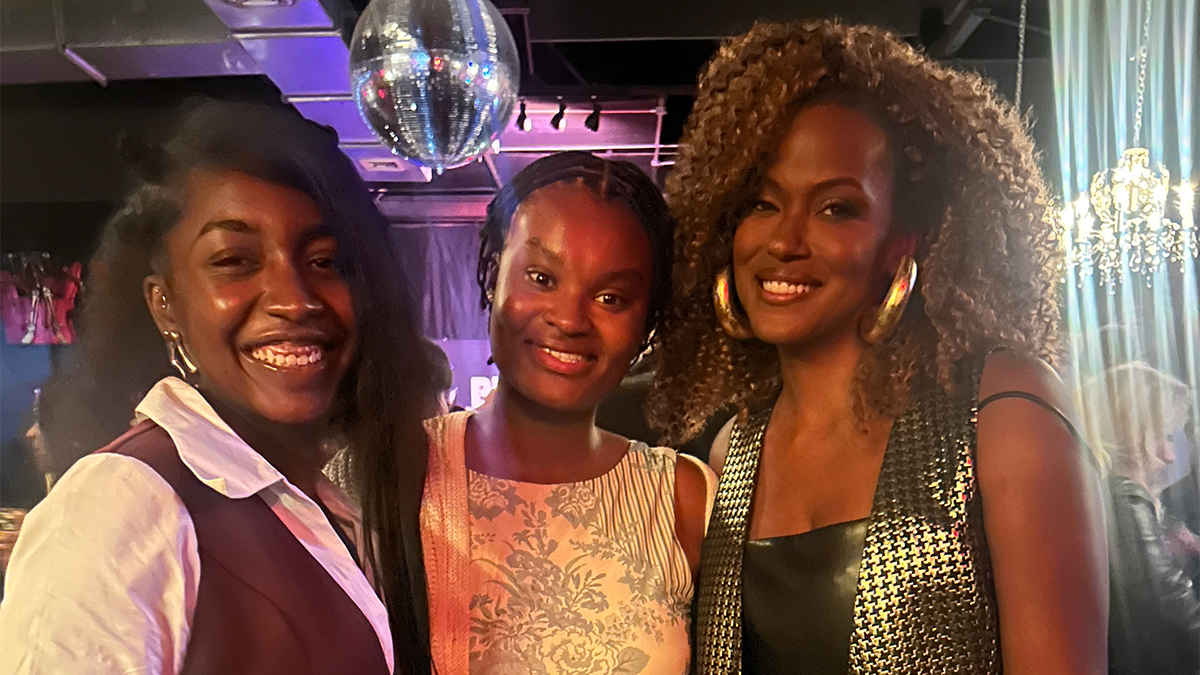
“Out of every five, you’re the fifth.”
A wise man once used this phrase to explain how deeply the people around us can influence who we become. Look at the circle you move in, the conversations you entertain, and the things the people around you consider possible. Their influence can become part of your own perspective. Birds of a feather, as the saying goes.
That thought felt especially relevant at the 19th annual Bushwick Film Festival, where filmmakers, actors, and creatives gathered to celebrate independent storytelling. Held October 7–11 under the theme “Make Time for Your Dreams,” opening night carried a particular kind of electricity. The room was filled with people who had taken an idea seriously enough to give it a life of its own.
For founder and festival director Kweighbaye Kotee, that journey began with a love of film nurtured by her parents. When she moved to New York, the idea of starting a film festival followed. She shared the vision with friends, who helped her find the space, time, funding, and filmmakers needed to make it happen.
The early days required resourcefulness. Kotee recalled receiving a handwritten film submission accompanied by the means to play it, something that proved difficult to obtain. Rather than let the obstacle stop the process, she found a way to make it work. Nearly two decades later, the festival has grown to feature nearly 100 films, with submissions representing more than 60 countries. Its Netflix-presented opening night reflected how far that original idea has traveled.
Kotee’s parents, husband, and members of the Bushwick community were among the supporters gathered to celebrate her work. She received a proclamation during the event, recognizing the impact of the festival she built. The evening also honored actress, director, and producer Cassandra Freeman, known for playing Aunt Viv in Bel-Air, with the Creative Impact Award.
A New York City commissioner spoke about the city’s creative potential, expressing pride in its people and optimism about bringing film projects back to New York following the disruption of COVID-19. The remarks added another layer to the evening’s message. A festival can celebrate finished work while also reminding a city what it offers the people who want to create there.
Freeman’s own work beyond the screen reflected the importance of giving artists room to grow. She spoke about Creatricity, a platform designed to connect creatives with resources, collaborators, and opportunities to develop their ideas. Through the platform, artists can exchange knowledge, pitch projects, receive constructive feedback, and explore practical support, including health coverage and mobile service. With membership listed at $139 per month during the event, the concept addresses an independent creative’s challenge of sustaining the work while managing the demands of everyday life.
The importance of connection became especially apparent outside the formal program. A happy-hour gathering promised a chance to meet fellow festival attendees, but an incorrect address listed online complicated the experience. The bar was largely occupied by locals rather than festivalgoers, and only one person encountered there was participating in the festival. She was an independent animator preparing to screen her film on Sunday. The conversation was worthwhile, even if the gathering fell short of its intended networking potential.
It was a small disappointment in an otherwise inspiring experience. Being in the same place does not automatically create community. Meaningful connection requires intention and opportunities for people to exchange ideas beyond a quick introduction. The distinction matters, particularly in creative industries where a conversation, collaboration, or introduction can help move a project forward.
Still, the festival made a compelling case for what happens when people invest in an idea and find others willing to invest alongside them. Kotee’s friends helped her get the festival started. Her family and community showed up to celebrate how far it had come. With the assistance of friends and collaborators, Freeman is building a platform around the resources artists need to sustain their work. These are different expressions of the same principle: creative ambition grows when it has support.
Kotee is already looking toward the festival’s 20th year, with plans to expand and take the experience to another level. It is a fitting next chapter for a vision that began with an idea shared among friends and grew into an international platform for independent storytelling.
The environment we occupy and the people in our circle do not determine our futures, but they can influence what we imagine for them. Expanding that circle introduces new perspectives, possibilities, and versions of ourselves we may not have considered. The right community does more than witness a vision; it can help bring it to life.
Na’ilah Burston