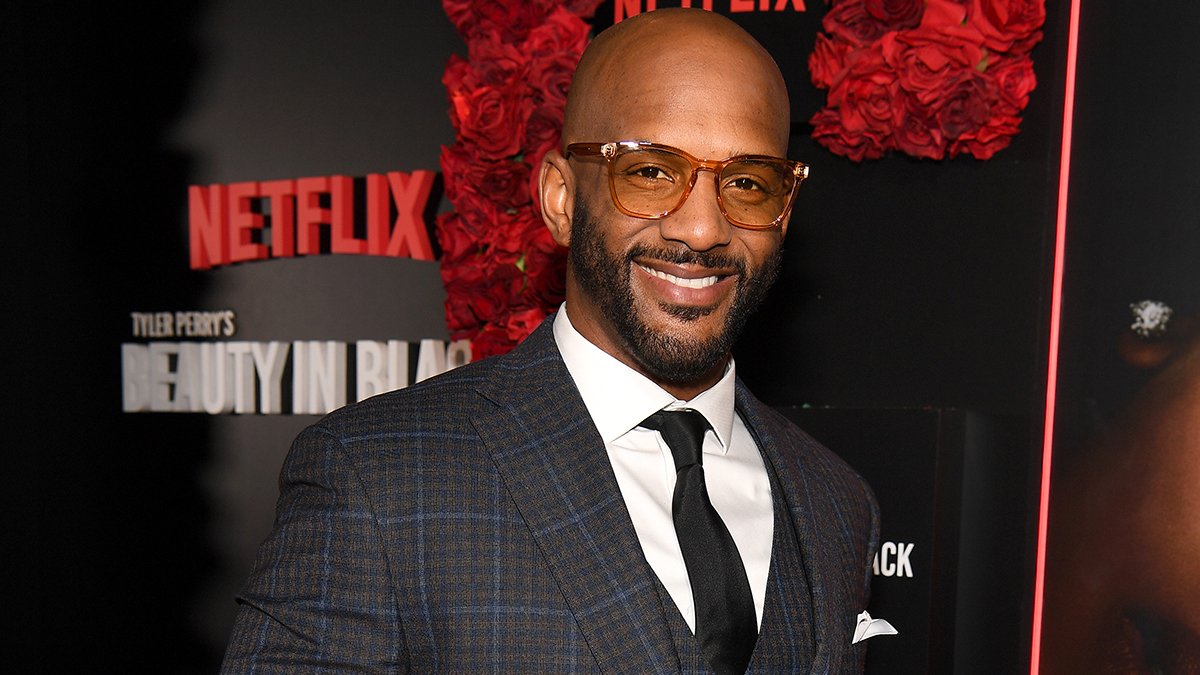
George Middlebrook has spent more than a decade building his career from the ground up. In this conversation, he reflects on why this chapter is the true beginning of his journey.
You’ve portrayed a range of characters over more than 15 years. How did growing up in Detroit and your early experiences in sports influence your approach to acting and stunt work?
I believe life experience is the best teacher. Growing up in a rough neighborhood in Detroit, playing football and other sports, and attending inner-city public schools—you go through a lot. It gave me layers.
I also grew up in church. Both my parents were preachers, so I’m a preacher’s kid. That added even more layers to my personality and my life experience. All of it gives me something real to draw from when I portray characters.
In Beauty in Black, your character is part of a story that blends power struggles with darker themes like trafficking. What drew you to the project, and how did you prepare for the weight of those storylines?
What drew me to the project was Tyler Perry. He gave me my first speaking lines on TV back in 2014 on Have and Have Nots. About two years ago, I ran into him on set, and he said, “I’m working on this Netflix show, and I’ve got something for you. I want you to audition.”
When Tyler Perry tells you he has something for you, you listen. Then he explained how big the project was going to be. Every actor is waiting for that one big opportunity. I feel like this is mine. It feels like the beginning of a new chapter in my career. Working with Tyler Perry and Netflix drew me in, and then the script was the icing on the cake.
What has it been like collaborating in that creative environment? What have been the biggest challenges and rewards?
Working with Tyler Perry is a once-in-a-lifetime opportunity. He’s one of the most successful filmmakers in history, and he owns the largest studio in the world.
There haven’t really been creative challenges. The biggest challenge has been adjusting to the visibility—getting recognized everywhere, navigating fame, and managing imposter syndrome. When you come from humble beginnings, sometimes you wonder, “Do I really deserve this?”
My career didn’t start in the spotlight. I worked my way up—extra work, production assistant, stand-in, stunts. I came up the hard way. So now the adjustment is being more mindful, being aware that people are watching, and moving with intention.
As someone who does stunt work in addition to acting, how do you balance those two skill sets?
It all goes hand in hand. A lot of guys like me who come from sports backgrounds want to be action stars. I’ve trained in stunts for years and worked with different stunt coordinators. On Beauty in Black, I wanted to do my own stunts, but Tyler Perry doesn’t want anyone getting hurt. He’ll say, “I know you’ve got experience, but we’ve got stunt doubles. Go sit down.”
Some cast members get to do their own stunts — you’ll see more of that in part two. But at this stage in my career, I’m learning to let the professionals handle it. I’ve had surgeries. I’m getting older. If this platform is pushing my career forward, I need to protect myself.
The family’s cosmetic empire serves as a backdrop for tension around legacy and survival. In your view, what does “beauty” represent in this series beyond appearance?
The beauty I see is in Kimmie’s journey—from humble beginnings to taking over the empire. She moves to Chicago, works in a strip club, and then her life changes when Horace steps in. There’s beauty in transformation. There’s beauty in being in the right place at the right time. It could have been anyone, but Horace ran into Kimmie. That gives people hope. Your life can change at any moment. Be present. Let God work.
How do you maintain authenticity when your character’s moral center is tested?
I stay locked in. I keep the script in my hand constantly. I’ll read it over and over again — maybe not 250 times, but that’s the mindset. If I’m reading eight hours a day, it becomes second nature. I don’t plan how I’m going to say lines. I follow more of the Meisner technique—I respond to the environment and the other actors. Preparation for me is repetition. I write my lines down. I put in extra work because I don’t have a photographic memory. I work hard so I can be present and natural in the moment.

With the show renewed for season two, how has your understanding of the character evolved?
In season one, I appeared in two of the eight episodes in part one and six of the eight in part two. When I saw the season two scripts and realized I was in 15 of the 16 episodes, that meant something. It showed production saw my value. I’m learning that my character is loyal but sometimes makes mistakes. He’s devoted to Jules, even when things go wrong. I didn’t even know his first name at one point — so there’s still more being revealed. Each season adds depth. I’m discovering new layers through interviews, backstory, and watching the show unfold.
You’ve also worked with major brands like the NBA and Delta. How do those experiences influence your craft?
I see it all as preparation. Commercial work is great, but film and television are my favorite. I also enjoy voiceover work. Collaborating with brands expands visibility. I’m connected to a lot of people, and I value that network. Everything I’ve done feels like part of a larger plan. Each experience contributes to who I’m becoming as an artist.
How do you decompress and stay grounded?
The gym. Spending time with my two daughters. Rest. Studying. I like staying busy. When we shoot Tyler Perry productions, we move fast. You can film months of content in a short period of time. So sometimes filling the rest of the year becomes the challenge. I’m always looking forward to the next project.
What types of roles are you most interested in exploring next?
Hero stories. Stories about people who help others. I’ve played villains, cops, firefighters — different authority roles. But I want to tell stories that inspire. I want to help tell stories from the Black community that show strength, resilience, and purpose.
If there’s one thing readers might be surprised to learn about you, what would it be?
I’m really a big teddy bear. I grew up in church. I played the trombone. I’m a father. I also run an event company called The Deadside Experience. We help launch nonprofits. One of my main clients is Nate Cannon, and we organize back-to-school giveaways, Christmas events, Easter programs, and outreach at churches and hospitals.
I love helping people — almost to a fault. I tell people I give my money away because I believe the more you give, the more you’ll receive. I want to see everyone win.
Be’n Original