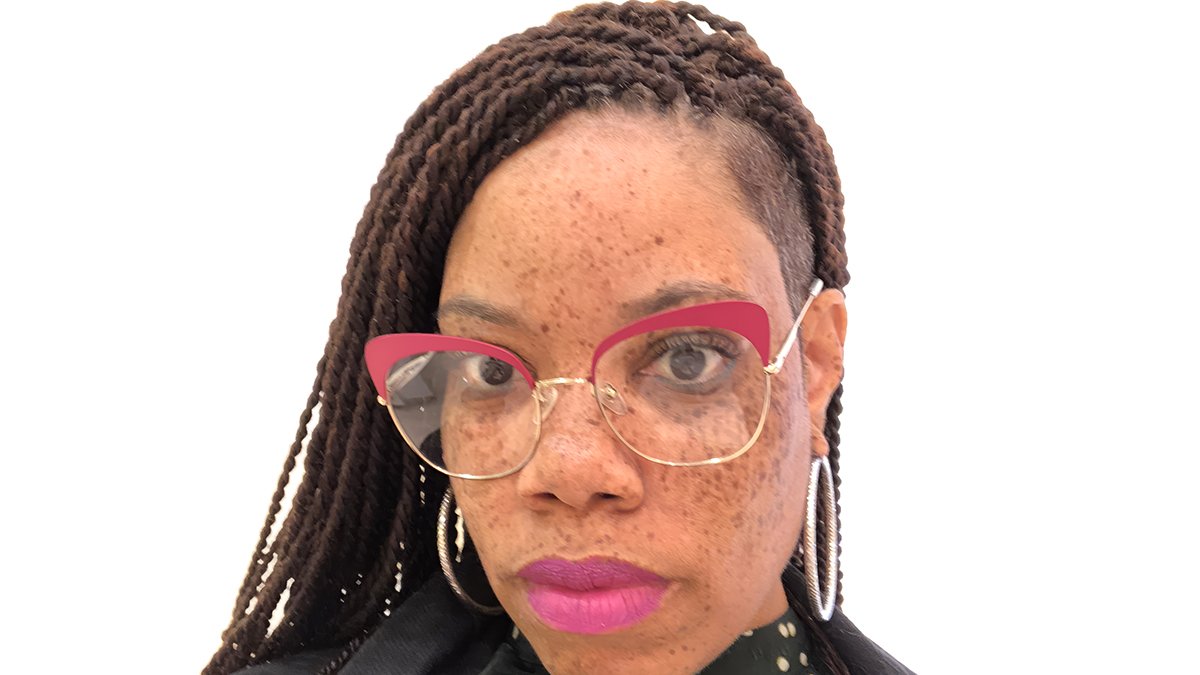
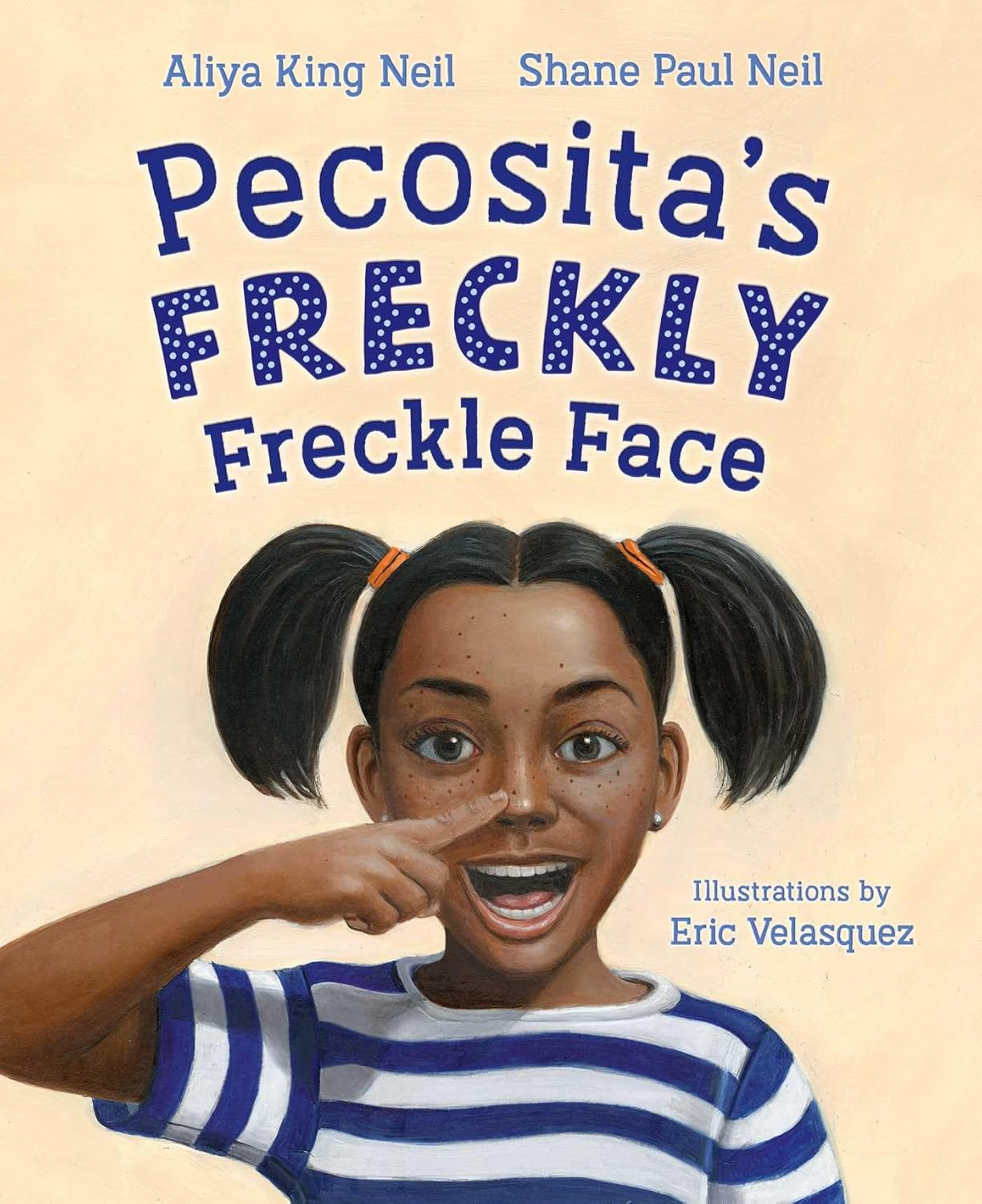
Aliya King Neil, an acclaimed author and journalist who has won the Southern Book Award, shares insights about her newest picture book, Pecosita’s Freckled Face, which tells an empowering tale of a young girl with freckles as she embarks on a heartfelt journey toward self-acceptance and love.
Aliya, what sparked the idea for Pecosita’s Freckled Face, and why center the story on a child embracing her freckles?
My publisher, Deneen Milner—this book is from Deneen Milner Books, an imprint of Simon & Schuster—has always loved my freckles. She’d say, “You should write something about freckles.” I didn’t always love mine. I was teased as a kid. Now, freckles are trendy, and people compliment them. I joke, “Where were you in 1977 when I needed you?”
In college, my Latina dorm neighbor called me “Pecosita,” a playful term for a girl with freckles. That nickname stuck. When I told Deneen the story, she said, “That’s it. That’s the book.”
Pecosita stands firm when classmates tease her. How did you approach portraying resilience?
That’s a great question. It actually goes back to my editor. The first version of Pecosita was very sad. It was basically a young girl saying, “People tease me all the time. Maybe one day I’ll get them to stop.”
My editor said, “Let’s rethink this.” She wanted Pecosita to love her freckles from the start. She said the character should love herself and understand that sometimes people will be mean, but that shouldn’t change how she feels about herself.
So the book became much more empowering than my original draft. My editor asked me to think about my own daughters. If they had freckles, how would I want them to see themselves? That shift made the story stronger, and I’m really glad we made it.
You co-authored with your husband. How did that collaboration shape the story?
In the six years we’ve been together, I can’t think of many creative projects I’ve done without him in some way. This is just the first time it’s formal and visible on the cover. We’ve done podcasts together, YouTube projects, columns, and a lot of creative brainstorming. Working together is just part of our rhythm.
He has a way of grounding me. If I get overwhelmed by one part of a project, he helps me step back and refocus. That’s also how our relationship works in general. I’m the one who sometimes needs to be grounded, and he’s really good at helping with that.
As an award-winning journalist, did your reporting background influence the picture-book narrative?
Honestly, it didn’t influence it as much as you might expect. Writing a children’s book is incredibly different from anything else I’ve done. From the research process to writing at the right reading level, it’s a completely different skill set.
I’m also very fortunate that Eric Velasquez illustrated the book. He’s incredible, and he really helped bring Pecosita to life. Beyond storytelling itself, there isn’t much overlap between journalism and children’s books. It’s like being a figure skater and then being asked to compete in the luge. They’re both Winter Olympic sports, but the training is completely different.
Writing novels, ghostwriting books, and writing picture books are very different disciplines. It’s honestly surprising that I can jump between them, but I enjoy the challenge.
You’re one of the best writers on Earth, so if you can’t do it, who can?
Thank you. I appreciate that. I’m only recently learning to accept something my agent told me years ago. He said most writers focus on one lane—biography, novels, ghostwriting, investigative journalism, or children’s books. Most people don’t do all of them. At the time, I didn’t know how to take that, but I’m starting to embrace it now.
What conversations do you hope families have after reading it?
When I sign copies, I’ve been writing the message “Always love yourself.” I hope families can use the book as a starting point for conversations. Maybe the difference isn’t freckles. Maybe it’s being left-handed, tall, short, or something else entirely. Whatever it is, how do we learn to lean into it instead of hiding from it?
Those are conversations I’ve had with my own daughters. You might not always be able to change how kids see themselves, but you can open the door to those discussions.
How intentional were you about drawing parallels to issues like colorism and self-image?
That’s something I thought about a lot, and I think the illustrator did too. I’m a light-skinned Black woman, but I knew the character might have a slightly deeper complexion. That balance matters because freckles are often associated with lighter skin, especially among Black girls.
Our illustrator asked me for photos of myself and my daughter to help shape the character. I noticed that he drew inspiration from us, but also deepened the character’s complexion while still showing freckles. I believe he did that intentionally because the conversation around colorism is real. It required thoughtfulness and care.
What challenges did you face writing for children?
The biggest challenge was the word count. My first draft was thousands of words, but a picture book needs around 500 words total. I had to figure out how to tell a complete story with character development in that space. Writing for children is almost like writing poetry. Kids respond to rhythm. They don’t need a lot of words—they need flow and feeling.
In some ways, it’s like writing song lyrics. You have a limited number of lines, and everything has to fit into that structure. Since poetry isn’t something I usually write, finding that rhythm was difficult. Learning to write concisely while maintaining musicality in the language was the hardest part.
The book sits alongside titles like I Am Enough, Skin Like Mine, and Freckle Juice. How does your story contribute to conversations about belonging and self-worth?
I loved Freckle Juice as a kid, but that story was about wanting freckles, not embracing them. Today, children’s publishing includes more “matter-of-fact Black” stories—depicting Black kids living their lives without focusing on trauma. Pecosita fits in that space: lyrical, personal, and joyful.
If a child who feels different reads this book, what do you hope they carry forward?
I hope they see their differences as special. Traits that feel unusual can also be what makes them unique and valuable. If Pecosita helps a child feel proud of their freckles—or anything that makes them different—then we’ve succeeded.
BE’N ORIGINAL