Sylvia Moy helped shape Motown history, but her name is often absent from conversations about the label’s most influential figures. A songwriter, producer, and trailblazer, Moy broke barriers for women in the music industry while contributing to the careers of artists who would become household names. Yet despite her accomplishments, her story has remained largely overlooked.
Journalist, author, and historian Dr. Margena A. Christian is working to change that. Drawing on years of research, interviews, and archival material, Christian examines Moy’s legacy, her fight for recognition in a male-dominated industry, and her role in helping guide Stevie Wonder through a pivotal period in his career. In this conversation, Christian discusses the challenges Moy faced, the lasting impact of her work, and why she believes Moy deserves a permanent place in the story of Motown and American music.
As a journalist who has spent decades telling the stories of influential Black figures, what was it about Sylvia Moy’s story that immediately convinced you it needed to become a book?
What convinced me was how little information I could find about her. There were claims that she was Motown’s first female songwriter-producer, and there was also the claim that Stevie Wonder was once being considered for release by Motown. I had never heard either story before.
Coming from journalism at Ebony and Jet, where everything was documented, I assumed there would be records. If anyone had documented Sylvia Moy’s accomplishments or Stevie Wonder’s early struggles at Motown, I expected to find them there.
Instead, I found almost nothing about Sylvia Moy and very little about Stevie Wonder nearly being let go. That raised a lot of questions. Why was so much of her story hidden? Why was she credited as a producer, yet her name wasn’t attached to the work in ways that reflected her contributions? The deeper I looked, the more I realized there was a story that had not been fully told.
During your years of research, what surprised you most about Sylvia Moy as an artist, producer, and woman navigating the music industry?
What surprised me most was that she made history as a producer, yet she never received formal producer credit for the work that established that legacy. To understand why that matters, you have to look at Stevie Wonder’s career. When he recorded “Fingertips, Part 2” at age 11, it became a major hit. Audiences loved his harmonica playing, but he wasn’t known as a singer yet. As he got older and his voice began to change, he went several years without another hit.
The music industry is a business. If you’re not producing hits, concerns arise. Through my research, including a recording of Sylvia Moy herself, I learned that she volunteered to work with Stevie when other producers declined. She asked for the chance to write and produce a hit for him and argued that if she succeeded, he should remain with the label.
That song became “Uptight (Everything’s Alright).” She received songwriting credit; Stevie remained at Motown, but she never received producer credit for the role she played. To me, that’s remarkable. Her contributions helped change music history, yet many people still don’t know her name.
Your book explores the sexism Moy encountered throughout her career. How do the challenges she faced compare with those faced by women in the music industry today?
In many ways, the challenges remain the same. Sylvia faced a double burden. She was a woman and a Black woman working in a male-dominated industry. Most female songwriters at the time often worked with husbands or male writing partners. Sylvia wrote independently. There were very few women producers, very few Black female songwriters, and even fewer women who were both songwriters and producers. What she accomplished was unprecedented.
Today, we still see similar disparities. Studies continue to show that women make up only a small percentage of producers, and women of color represent an even smaller percentage. Alicia Keys has spoken about it. Lady Gaga has spoken about it. Women continue to fight for recognition in spaces where they remain underrepresented.
What are your thoughts on the fact that many of those dynamics still exist today?
The music industry remains heavily male-dominated. A producer is often viewed as the person in charge, the quarterback of the team, and there are still people who question whether women belong in those leadership roles. Yet many women do everything. They write, arrange, direct, and shape the creative vision, but they don’t always receive proper credit. Sometimes their contributions are minimized or attributed to others.
When you’re outnumbered, it becomes difficult to fight those battles. Some women leave the industry altogether because they’re exhausted by the struggle. That’s why I have so much respect for women like Missy Elliott and Alicia Keys, who have continued to assert themselves and claim their place. But there are many others whose contributions remain overlooked.
As someone who interviewed many of the biggest names in entertainment during your years at Jet and Ebony, how did writing a full-length biography differ from your previous journalistic work?
Journalism and biography require different muscles. In magazine journalism, you often have a strict word count. You focus on what happened and why it matters. With a book, you have to immerse readers in the story. You have to show them the world and the people involved.
This wasn’t my first book. In 2018, I wrote Empire: The House That John H. Johnson Built. In 2019, I co-authored Wally, Where’d You Get Those Glasses? My Life Through the Lens of Parliament, Pendergrass, and Prince. Those experiences helped prepare me, but this project felt like a blend of investigative journalism and scholarly research. It drew on both worlds.
Throughout your conversations with Motown veterans, family members, friends, and scholars, what common themes emerged about Sylvia Moy’s impact on music and culture?
The overwhelming theme was that she was brilliant and deeply respected. People consistently described her as professional, thoughtful, and extraordinarily talented. They talked about her ability as a songwriter and her calm presence in an environment that could be intense and fast-moving.
Several people told me that working with her felt almost angelic. She wasn’t loud, but she was effective. She fought for recognition, believed in the importance of songwriting credits, and continued pushing forward despite being vastly outnumbered. She was one of the first women to work alongside male songwriters and producers consistently as both an in-house songwriter and producer. That alone makes her a significant figure in music history.
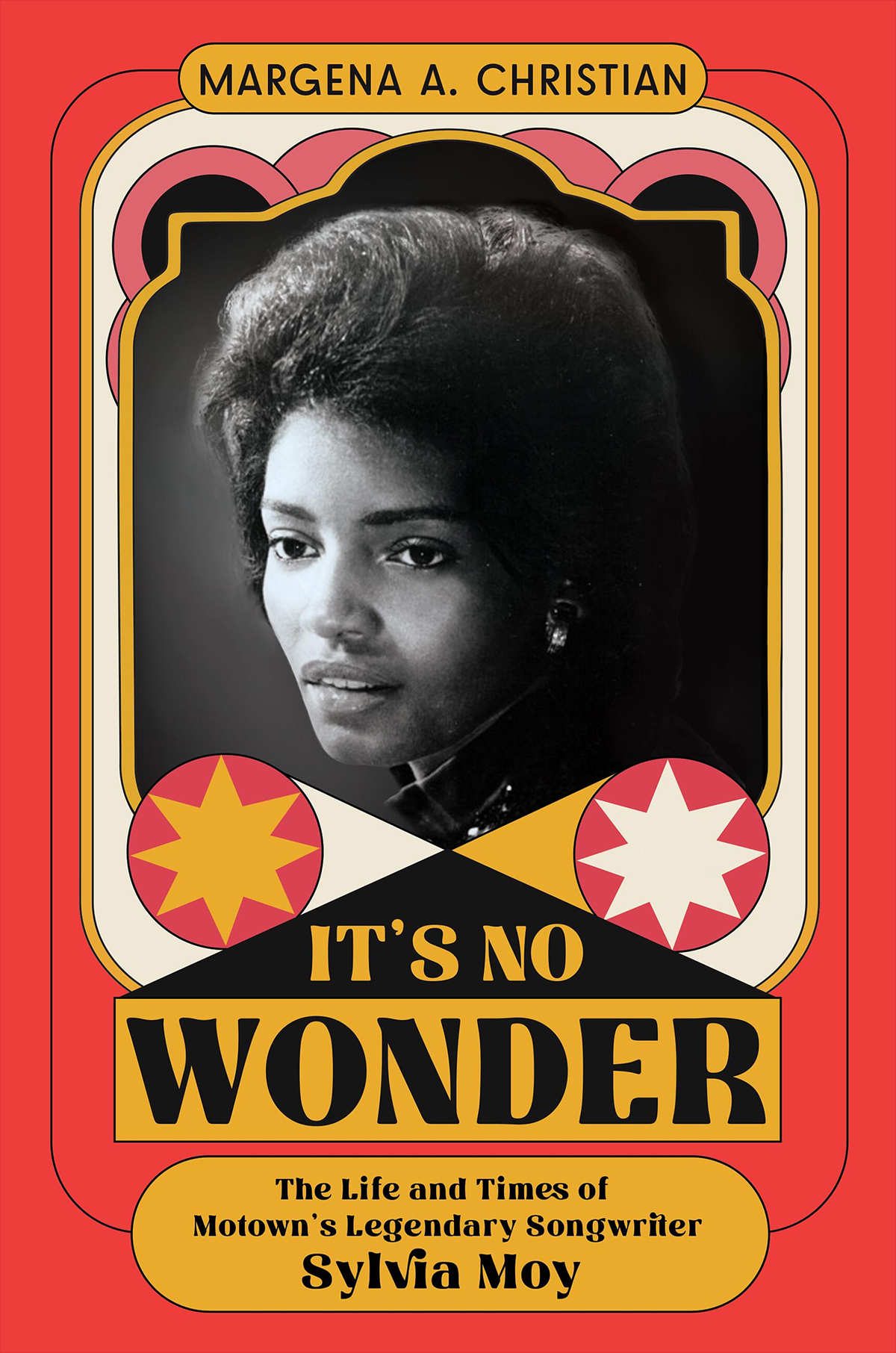
Now that you’ve completed Sylvia Moy’s story, what’s next for you?
I’m a Stage 4 ovarian cancer survivor, and I’m interested in exploring creativity, resilience, and what happens when people face significant challenges but continue moving forward.
I also have another historical figure in mind—a woman whose work shaped music in important ways, yet whose story still hasn’t received the attention it deserves. That’s something I’m considering for the future.
Black Music Month celebrates the artists and creators who have shaped American music. Why is Sylvia Moy’s story especially important during this observance?
Black Music Month is important, but these stories should be told year-round. Everyone knows Stevie Wonder. Far fewer people know Sylvia Moy, even though she played a crucial role during a pivotal moment in his career.
Her story is about more than one artist. It’s about women in music. It’s about women who opened doors for future generations while receiving little recognition themselves. She should be remembered not just during Black Music Month, Women’s History Month, or Black History Month. Her contributions deserve recognition every day.
Have you experienced any pushback regarding the story that Stevie Wonder was nearly dropped by Motown?
Absolutely. Some people who worked at Motown told me it never happened. Others told me it absolutely did. I heard conflicting accounts from people who were there. What ultimately mattered to me was finding Sylvia Moy’s own account. I located a recording in which she discussed the situation herself. That became an important piece of the puzzle.
Whether people agree or disagree, the fact remains that she stepped forward during a critical moment and changed the course of music history. That’s the story that deserves attention.
How did you navigate telling this story while dealing with the fact that Stevie Wonder remains one of the most beloved figures in music history?
That’s exactly why this story matters. People don’t want narratives that complicate the legend. But acknowledging Sylvia Moy’s contributions doesn’t diminish Stevie Wonder’s greatness. In fact, Stevie himself has often spoken about a time when people didn’t believe in him. He understands that journey.
The reality is that nobody succeeds alone. Every great artist has people who help them reach their full potential. Recognizing those contributions doesn’t take anything away from the artist. It gives us a fuller understanding of how greatness is built.
Some people may worry that highlighting Sylvia Moy’s role somehow diminishes Stevie Wonder’s accomplishments. What do you say to that?
It doesn’t diminish him at all. Nobody would argue that acknowledging Quincy Jones diminishes Michael Jackson. Nobody would argue that recognizing Jimmy Jam and Terry Lewis diminishes Janet Jackson. Success is collaborative. Stevie Wonder’s achievements remain extraordinary. Sylvia Moy’s contributions are also significant. Both things can be true at the same time.
There was a period when she helped guide and support him. He learned from her, just as all great artists learn from people around them. Recognizing that history enriches our understanding of both of them.
Is there anything else you’d like readers to take away from Sylvia Moy’s story?
I want people to remember her name. Women are still fighting for their place in many industries. Sylvia Moy didn’t simply earn a seat at the table. She built opportunities for herself in a field where very few women had access.
When people talk about Motown’s great songwriters and producers, her name deserves to be part of that conversation. People know Stevie Wonder. They should know Sylvia Moy, too.
Be’n Original | Photo Credit: Jason McCoy