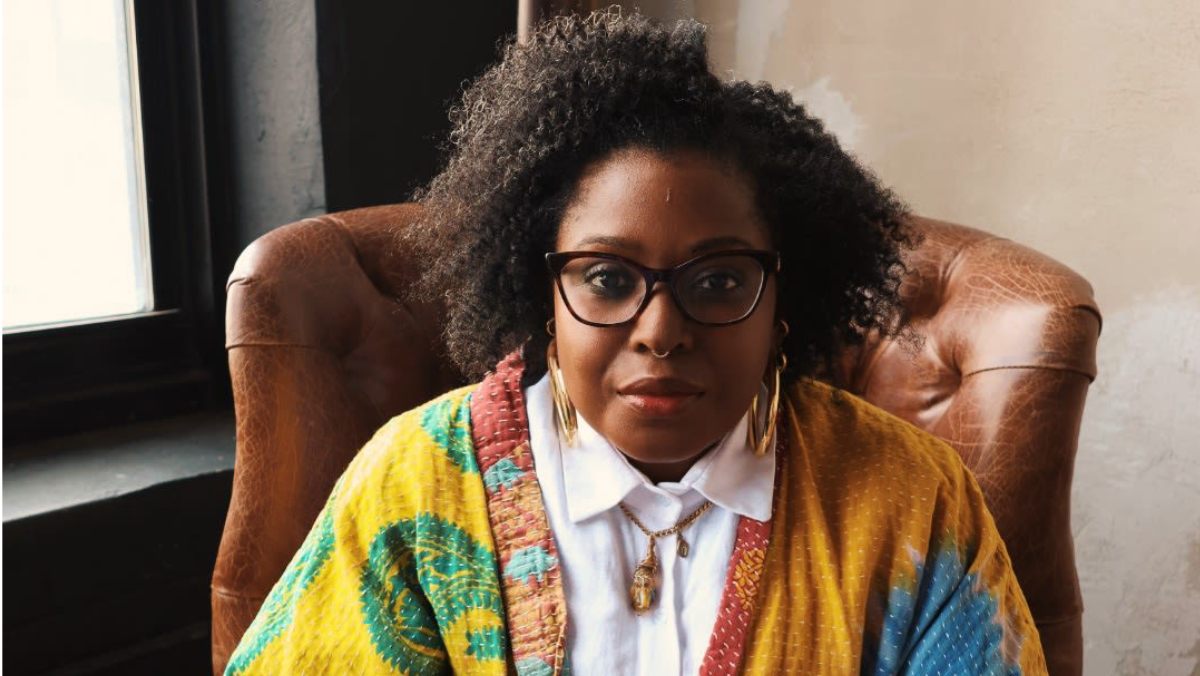
Connecticut is often seen as wealthy and suburban. However, filmmaker Majella Mark contends that this view neglects the experiences of many residents, especially Black communities whose histories and challenges are often excluded. In her documentary Connecticut Fault Lines, Mark reveals how the COVID-19 pandemic highlighted deep-rooted inequities in healthcare, education, housing, food access, and public policy in Hartford.
What first inspired you to create Connecticut Fault Lines, and why did you feel this story needed to be told now?
I think people often view Black history through major events and well-known figures, but they don’t always explore what happened before or after those moments. With Connecticut Fault Lines, I wanted to connect the past with the present in a way that helps people think about the future. One example is Martin Luther King Jr.’s connection to Connecticut. Before he became a national civil rights leader, he worked two summers in Connecticut tobacco fields alongside West Indian laborers while attending Morehouse College. That’s a story many people don’t know.
The pandemic also created a moment when underlying issues became impossible to ignore. People were at home, paying attention, and watching systems respond—or fail to respond—to a crisis. It became clear that many of the inequities communities had been talking about for years were real and deeply rooted. As someone born and raised in Hartford’s North End, I wanted to highlight both the city’s rich Black history and the challenges its residents have faced. Many people don’t even realize Connecticut has vibrant Black communities. That lack of awareness made this story even more important to tell.
The documentary examines healthcare inequities, food access, policing, and other systemic challenges. How did you decide which issues to focus on, and what connections did you see among them?
Healthcare and youth experiences emerged as two of the strongest themes. We heard stories about people who struggled to access medical care, as well as young people dealing with anxiety, grief, and disruption during the pandemic. Many of those stories never made the final cut, but they informed how we approached the project.
At the same time, we saw examples of people stepping up. Nurses organized testing efforts in Black neighborhoods and worked to address longstanding mistrust between residents and healthcare institutions. What connected many of these issues was access to resources. Hartford is one of Connecticut’s poorest cities, yet it sits among some of the state’s wealthiest communities. The contrast revealed how unevenly resources are distributed and who is often left behind during a crisis.
Oral histories and community testimony are central to the film. What did you learn from residents’ stories that challenged or expanded your understanding of Hartford’s experience during and after COVID-19?
The overwhelming lesson was pride. People spoke passionately about preserving community history and creating opportunities for future generations. There was a strong commitment not only to progress, but also to joy, dignity, and belonging. Organizations such as Ebony Horsewomen provide spaces where young people can connect with nature and feel safe in neighborhoods that are often misunderstood by outsiders.
Residents also shared difficult stories about violence, economic hardship, healthcare access, and fears surrounding policing. The pandemic didn’t create many of these issues; it amplified them. Through those personal experiences, we were able to show how longstanding inequities affected people’s daily lives during a moment of crisis.
The title “Connecticut Fault Lines” suggests underlying fractures or divisions. What are the most significant fault lines the film reveals?
One major fault line is the assumption that Connecticut equals wealth. While there are affluent communities throughout the state, there are also cities facing significant challenges related to poverty, housing, healthcare, and employment. That reality is often overlooked.
Another fault line involves race and class. Connecticut is frequently viewed as politically unified, but when you look closer, there are clear divisions shaped by access to resources and opportunity. Those divisions affect how communities experience education, healthcare, public safety, and economic mobility.

As someone whose work intersects storytelling, social justice, and community memory, how do you balance advocacy with documentary filmmaking?
For me, advocacy and documentary filmmaking are inseparable. My goal is to create spaces where people can tell their own stories and reflect on their experiences. While I care deeply about issues affecting communities throughout the African diaspora, my responsibility is to provide opportunities for people to speak for themselves. Documentary filmmaking allows me to highlight specific lived experiences and bring attention to concerns that are often overlooked.
Were there particular moments during production that were especially difficult, surprising, or transformative for you as a filmmaker?
The stories shared by young people were particularly difficult to hear. Many spoke about loss, anxiety, and grief. During the pandemic, Hartford had to scramble to provide resources because many students lacked internet access, computers, and even reliable food sources. Schools were not only places of learning; for many students, they were safe spaces and sources of daily meals.
When those spaces disappeared, young people were forced to adapt while already facing significant challenges. Hearing those stories was heartbreaking.
Your parents are immigrant artists from Grenada. In what ways has your family background influenced your approach to storytelling and documenting community experiences?
I am deeply passionate about Grenadian history and understanding how the past shapes the present. That perspective helps me think about how we can build a better future. My identity as a Black person within the African diaspora influences everything I do. When I tell stories, I do so with the understanding that the work is ultimately for our communities and our people.
The history of Grenada, including Maurice Bishop, the New Jewel Movement, and its connections to the Black Panther Party, emphasized solidarity and collective responsibility. That sense of connection informs my work. I believe we are all linked in some way, and I approach storytelling with a global perspective.
The film highlights voices that are often absent from public discussions about recovery and resilience. What responsibility do filmmakers have in amplifying underrepresented perspectives?
Filmmakers have a responsibility to seek truth and document it. That means talking not only to community members but also to public officials, advocates, and the people responsible for maintaining institutions. Understanding how systems function—and sometimes fail—requires hearing from multiple perspectives. The goal is not simply to identify problems. It’s to understand how those problems developed and what can be done differently in the future.
While the documentary focuses on Hartford, many of the issues it explores are national in scope. What lessons do you hope audiences outside Connecticut will take away from the film?
I hope they see the power of community. During the pandemic, people came together to solve problems, share resources, and support one another. Those efforts demonstrated resilience and creativity under difficult circumstances. The film may be rooted in Hartford, but the issues it explores exist in communities across the country.
After viewers watch Connecticut Fault Lines, what conversations, actions, or changes do you hope the documentary will inspire within communities and among policymakers?
I hope people who felt overlooked during the pandemic feel heard. I also hope policymakers, educators, healthcare providers, and community leaders reflect on the lessons of that period and use them to improve systems moving forward. Future crises are inevitable. The question is whether we learn from past experiences and build systems that better serve everyone, especially those who are most vulnerable. That is the conversation I hope Connecticut Fault Lines encourages.
Be’n Original