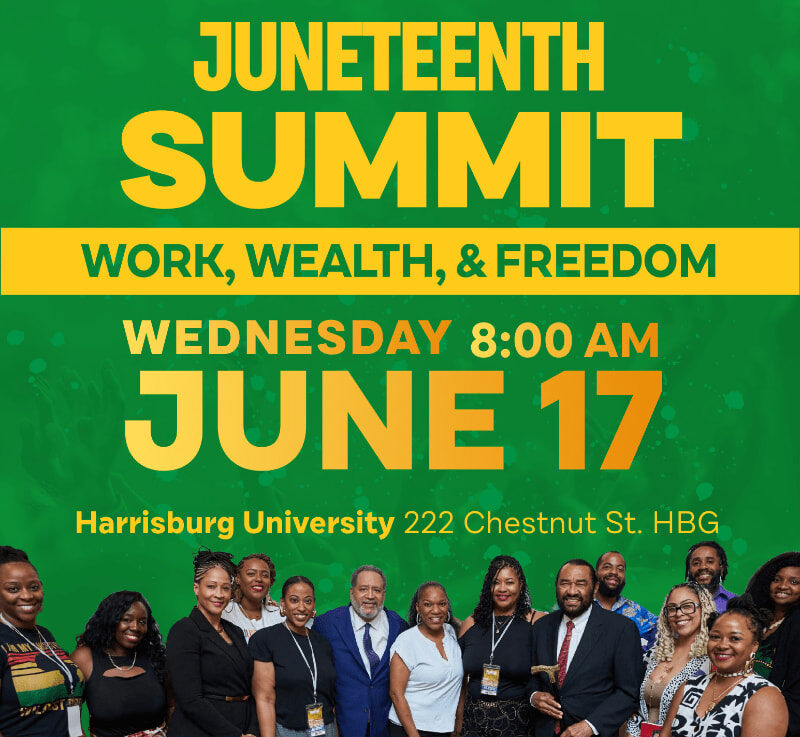
As preparations for Juneteenth begin across the country, here in Harrisburg, Pennsylvania, the capital of the first state to officially begin to abolish slavery, the holiday celebrating the end of America’s greatest crime against humanity carries a tremendous magnitude. While for most of the nation, it begins and ends on the nineteenth of June, this city celebrates Black history, culture, business, and civic engagement for an entire week.
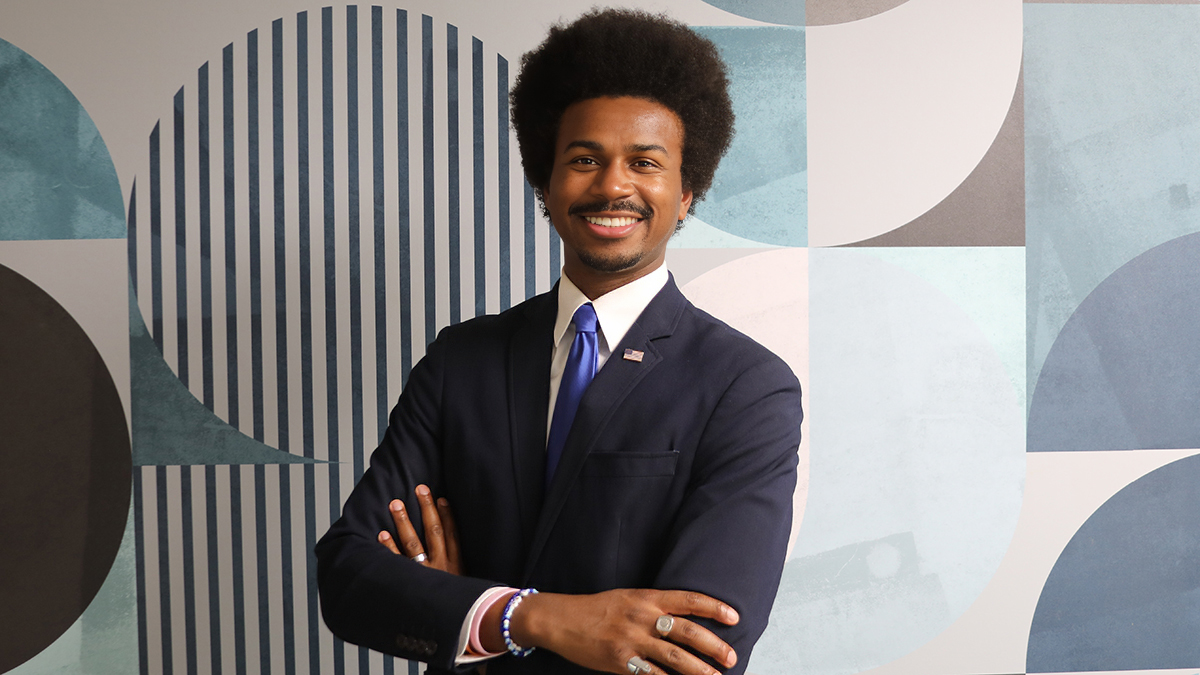
As the keynote speaker of the city’s 2026 Juneteenth Summit, Tennessee State Representative Justin J. Pearson, one of the Tennessee Three, spoke with us on his political journey, the power of Black unity, and the exemplary way Harrisburg’s community ensures we never forget how far we’ve come and how much further we still have yet to go.
Looking back on your time in Memphis, which experiences had the greatest influence on your decision to pursue public office?
In 2020, multibillion-dollar corporations came into our community—actually two of them, Valero Energy Corporation and Plains All American—to build a crude oil pipeline through Boxtown and Westwood. My family is seventh-generation Tennessean and fourth-generation Memphian, and we’re from Westwood.
During the pandemic, I learned about the project through an online newspaper called MLK50. The companies came to our neighborhood on Oct. 17, 2020, to explain the project at the urging of state Rep. Barbara Cooper, who was my predecessor. That’s what launched my activism and advocacy and led to the creation of our nonprofit, Memphis Community Against the Pipeline, now Memphis Community Against Pollution.
Rep. Cooper passed away in October 2022. I wanted to continue her legacy, so I ran in the special election in January 2023. Since then, whether it’s fighting gun violence, being expelled and returned to office, or working on voting rights, it’s been about answering a calling.
To what extent has your work with Memphis Community Against Pollution influenced your decisions on environmental issues in state government?
My experience with MCAP has been everything. I understand government, advocacy, and the failures of government much more clearly because the pipeline fight showed me how often people in politics and government remain silent while poor and working-class Black and white communities suffer. Even before I was elected, I learned that being an activist and advocate requires understanding how policies are shaped by people who are not proximate to the pain in our communities. They’re not proximate to environmental racism or environmental injustice.
The way I view my role is how do I bring the subject matter expertise I have to policymaking and legislation? How do I push laws that improve people’s quality of life while fighting legislation that does not?
What led you to participate in the Juneteenth Summit in Harrisburg, Pennsylvania, and why was it important for you to be part of the conversation?
What Harrisburg is doing is unique and important. A lot of places have Juneteenth celebrations, but to dedicate an entire week to Juneteenth, to invest in Black businesses, and to support a range of efforts — from business development to leadership summits to community celebrations — is meaningful. It also shows the strength and potential of a thriving Black community. You have a Black woman serving as speaker of the House here in Pennsylvania, which is not common across the country.
Dr. Michael Eric Dyson reached out to me and connected me with Dr. Kamika. I said I’d love to participate. Since then, with everything happening around voting rights, the timing has felt serendipitous. I’ve been meeting with leaders here about how they can support our work in the South. It demonstrates the connection of the Black diaspora across the country, and I consider it a privilege to be here.
How do you envision your contributions to the city’s Juneteenth Summit, and which audiences do you aim to engage?
I’m hoping to encourage and motivate Black people here in Harrisburg and throughout Pennsylvania to stay the course in the pursuit of justice. These are difficult times. They’re difficult and dangerous because there are dangerous people in positions of power across our country and in our states. It’s important for us to remember our history, remember the sacrifices of those who came before us, and recognize the sacrifices we’ll have to make ourselves. We also have to remain committed to the ideal of freedom.
Freedom wasn’t given to us. It’s something we’ve always pursued. That pursuit has required protest, advocacy, voting, and showing up even when it was difficult. I hope people leave inspired to stay in the fight for the long term.
In balancing grassroots activism and the legislative process, where do you see the greatest challenges?
The truth is you need both an inside strategy and an outside strategy. Protest is often an external strategy that helps influence what happens inside institutions. Sometimes, as happened after the Covenant School shooting, there needs to be protest on the House floor by people who hold office and possess power. Similarly, when lawmakers attempted to gut District 86, a majority-Black district, we protested again — but this time it wasn’t just three of us. It was the entire Democratic Caucus.
There are moments when you have to intentionally dramatize a deep-seated problem. You work through the legislative process as best you can, but when that process fails, you have to use every available tool. We don’t give up our First Amendment rights just because we’re elected.
How do you find the will to continue in the face of adversity, especially at a time when anti-intellectualism is so prominent?
My will to continue isn’t contingent on convincing people that I’m right or even motivating people into action. I feel convicted by my faith that if I choose silence or resignation, I do a disservice to God and to the people who came before me. I’d rather carry the burden of the fight and hold onto the hope that things can get better than resign myself to the idea that those opposing justice have won. I don’t think they win unless we quit.
For more than 400 years, we haven’t quit. It’s incumbent upon us not to be the generation that finally says, “You won.”
Do you ever feel disappointed when you see people empower systems that work against their own communities?
I get disappointed daily by Black people with power who act against the interests of their own communities because they’ve made it economically or politically. I think many people have been convinced that if they earn enough money or live in the right neighborhood, their Blackness will somehow affect them less. Some stop talking about Black issues. Some stop identifying with family members who are incarcerated or struggling.
As a result, an already fragmented society becomes even more fragmented. The people who could help unify us instead seek the ability to stand above someone else. The reality is that if you lift from the bottom, everybody rises.
What do you say to members of previous generations who are reluctant to embrace change?
I lovingly remind them of the failures of the status quo. We’ve tried things the way previous generations asked us to try them, and here we are. If this is the best America can be, then fine. But if we believe there’s something better, we’re going to have to do something different. By definition, insanity is doing the same thing repeatedly and expecting a different result. We’ve tried respectability politics. We’ve tried to be colorblind. We’ve tried putting Black faces on policies that don’t serve Black communities. We’ve tried billionaire-driven economic policies as a path to liberation.
Those approaches have failed. Black people remain disproportionately incarcerated. Communities continue to suffer from air, water, and soil pollution. Educational opportunities remain unequal. The only time we’ve made progress is when we’ve challenged the status quo. Going along to get along has never gotten us anywhere except getting got. And right now, we’re getting got.
As we conclude, if there was one message you would like our readers and the good people of Harrisburg, P.A., to take away from this interview, what would it be?
There’s no other way to be right now except fearless. Timidity is part of what got us here. Too many people were afraid to fight back because they were worried about invitations, status, or comfort. I grew up with four brothers and two parents. My family was everything we had. If that’s all I ever have, I’ll be fine. Some people get a taste of privilege and spend the rest of their lives chasing more of it. I’m good. One day all of this goes away. What matters is what you did, what you said, and why. That’s what you’ll have to answer for.
Be’n Original