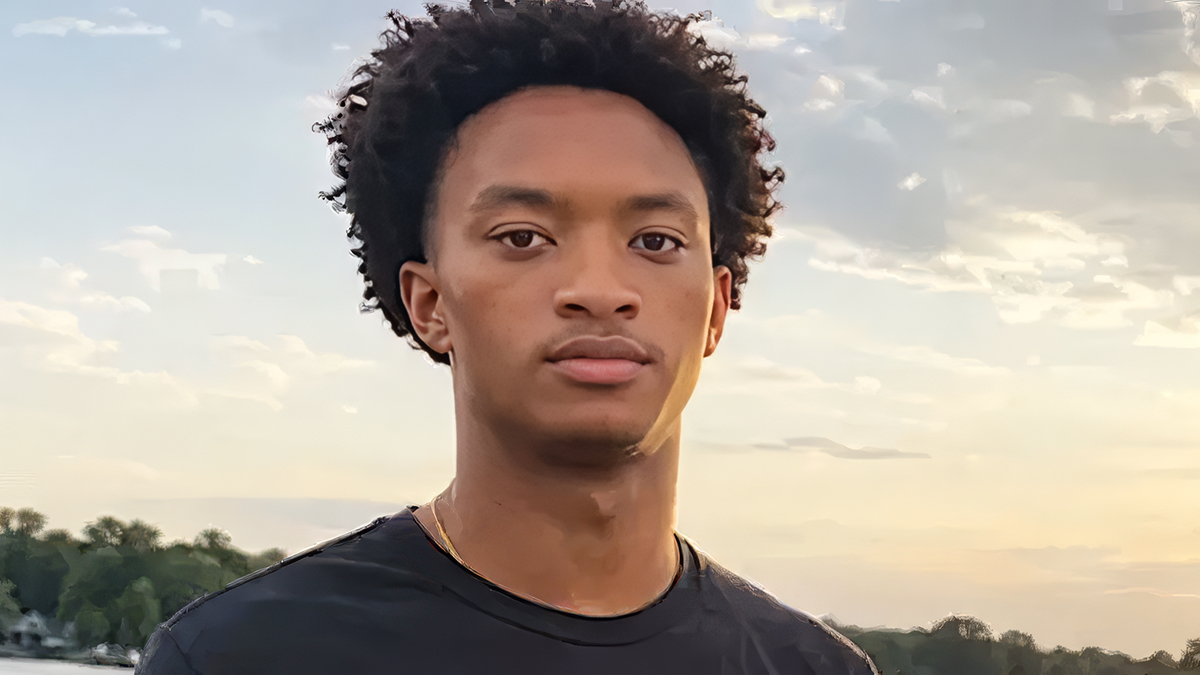
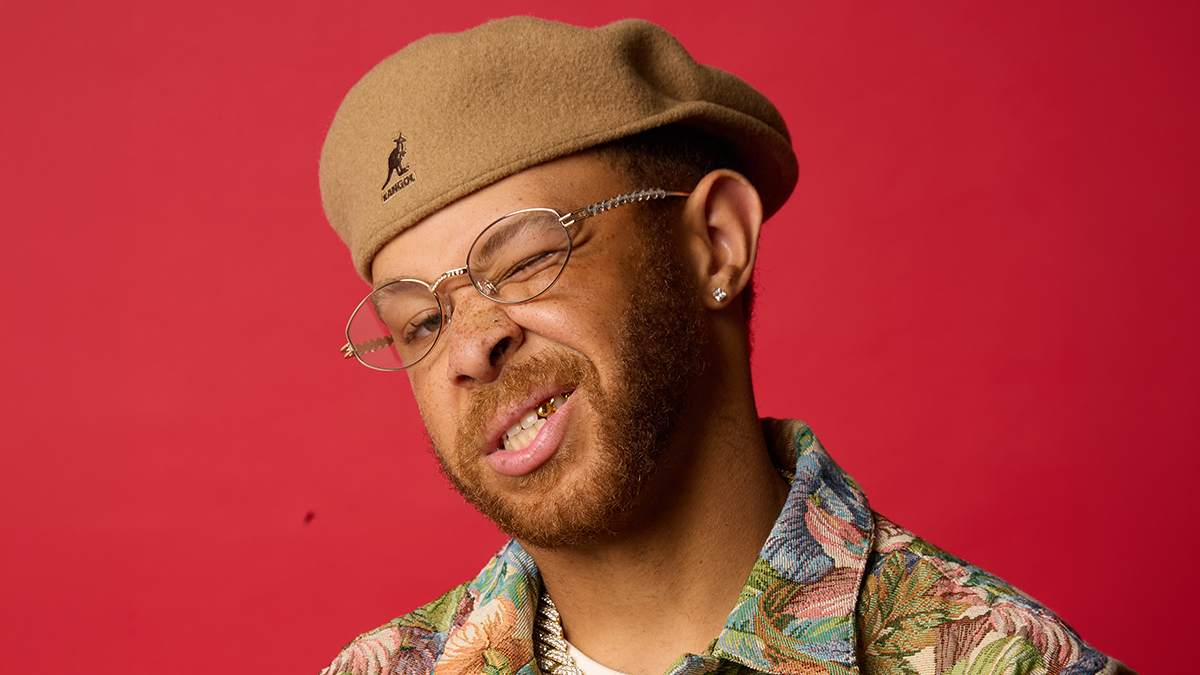
At 24, JWalt from Oakland is creating a legacy focused on his children rather than music charts.
There is a version of this story that writes itself. Young Oakland rapper. Grammy-considered. Co-signs from Lil Wayne and 50 Cent. Top 100 on iTunes. Part-owner of two professional sports teams before he can legally rent a car. That story is impressive. It is also incomplete.
Because the most radical thing JWalt has done at 24 years old is not charting, not co-signing, and not even graduating from NYU’s prestigious Clive Davis Institute of Recorded Music. The most radical thing he has done is sit down, strip away the beats, the bravado, and the formula, and make a spoken-word album about being a Black father.
How Love Grows is not the project the algorithm would have chosen for him. It is not the project a label would have greenlit. It is the project that chose him, born out of late-night poetry written after his daughter arrived and the quiet, relentless reshaping that fatherhood does to a man willing to pay attention.
In an era where Black fatherhood is still filtered through absence narratives and tired stereotypes, JWalt offers something disruptive: presence. Tenderness. A 24-year-old man standing flat-footed in his vulnerability and calling it strength. With production by ClayDough that weaves jazz, neo-soul, and hip-hop into a sonic blanket for the storytelling and features from Oakland hip-hop legend Mistah F.A.B. and Oakland Poet Laureate Tongo Eisen-Martin, How Love Grows is not just an album. It is a counter-narrative with a heartbeat.
We sat down with JWalt to talk fatherhood, legacy, creative risk, and why the most important hood he has ever navigated does not have a zip code.
You’re 24 with a spoken-word album about fatherhood. Most artists your age are rapping about everything but that. What made you decide this was the story worth telling right now?
Honestly, this is just the life I’m living. Before I’m an artist, before anything else, I’m a dad first. Fatherhood has completely changed the way I see time, love, responsibility, and even art. I’ve become really intentional about being present and appreciating the moment I’m actually in, and I think some of my best art comes from that place. After my daughter was born, I found myself writing a lot of poetry. I was processing so many different emotions and experiences, and a friend of mine eventually said, “You should do a poetry album with all the writing you’ve been doing.” That really sparked something in me and inspired me to actually create How Love Grows. I think of this project as a time capsule of this chapter of my life, who I am as a father, what I’m learning, what I’m feeling, and the love I’m experiencing in real time. It’s probably some of the most healing, creative, and present art I’ve ever made. I wasn’t trying to make something that sounded like what a 24-year-old artist is “supposed” to be talking about. I was just documenting the life I’m living for real.
The album is called “How Love Grows,” not “How Love Is.” That implies process, evolution, maybe even uncertainty. Was there a specific moment with your kids where you realized love wasn’t automatic, that it was something you had to grow into?
I think love itself is automatic, but learning how to love someone is a forever process. That’s really where the title How Love Grows comes from. Becoming a father made me realize that love isn’t just a feeling. It’s showing up, being present, having patience, listening, learning from your kids, and constantly figuring out how to be better for them.
There have been so many little moments with my kids where I’ve realized that I’m growing alongside them. I came into my son’s life when I was young, 19 and he was only 2 months old. We have seen each other grow tremendously. My daughter being born especially opened up a whole different part of me. I was experiencing a kind of love I hadn’t experienced before, but at the same time, I was learning what that love required from me.
I think that’s the beauty of fatherhood. You don’t have everything figured out when your kids are born. You’re growing, they’re growing, and your relationship grows with them. This album is really a documentation of that process. The lessons, the uncertainty, the joy, the vulnerability, and the everyday moments that start to shape what love becomes.
You have a track called “My Father’s Hands (Black Fatherhood).” Black men are statistically the most involved fathers in America, but the narrative hasn’t caught up. Who benefits from keeping that stereotype alive, and what does this track do to disrupt it?
I think everybody benefits from seeing Black fathers as whole human beings instead of stereotypes. When I think about Black fatherhood, I think about where I actually learned it: my own father. He’s a Black father who has always been very present in my life. He showed me what it looked like to be a great dad by simply being there, showing up, loving me, and supporting me. He still does, and I’m forever grateful for that.
That was my representation of Black fatherhood. Not the image portrayed in the media. “My Father’s Hands” is about honoring where I learned fatherhood and recognizing that the baton was passed down to me. I wanted to show the tenderness, responsibility, love, and presence that exists in Black fatherhood and now pass that representation on to my own children.
At the end of the record, my grandfather shares a powerful quote about how his goal in life was to give his offspring a better opportunity than he had. To me, that’s what passing the baton really means. Taking what the generation before you gave you, building on it, and giving your children something even greater to carry forward.
You named tracks after your children, Massaiah and Amirah Rae. What’s it like writing something that personal knowing the world will hear it, and knowing one day your kids will fully understand every word?
Yeah, it’s definitely vulnerable because I’m putting pieces of my relationship with my kids out into the world that are very personal and even telling some stories that the world doesn’t know, but at the same time, that’s what makes music and art meaningful. I get to tell these stories that other people can relate to while also creating something that my kids can come back to years from now and understand who I was, what I felt, and how much I loved them at this point in our lives.
They’re literally growing up alongside this album. There are things they might not fully understand today that they’ll hear differently when they’re older. That’s part of why I wanted to make it. How Love Grows is a time capsule, but it’s also a love letter to them. I hope one day they listen back and realize that they were always the reason behind the art.
You went from charting on iTunes and getting co-signs from Lil Wayne and 50 Cent to making a spoken-word poetry album. In an industry that rewards formula, how did you protect this project from people who wanted you to make it more “commercial”?
Honestly, I didn’t really let that pressure into the room. This is my first independent release in a while, so I had the freedom to really have the final say in what I wanted to create. I didn’t have to worry about what a label might want me to make or what would fit a certain formula.
I’ve already made music that charted and reached a lot of people, so I didn’t feel the need to make How Love Grows fit a traditional idea of what’s “commercial.” This project came from a very specific place in my life, and I wanted to honor that. Spoken word gave me the space to say things I couldn’t have said any other way.
I think sometimes the most commercial thing an artist can do is be completely authentic. If the story is real and the art connects, people will find it. I’d rather make something that lasts and means something to me and my family than make something designed to fit a moment.
You’re a part-owner of Oakland Roots SC and Oakland Ballers. You’re a Grammy-considered artist. You’re an NYU Clive Davis graduate. At 24. How does fatherhood compete with ambition, and have your kids ever made you question the grind?
I don’t really see fatherhood as competing with my ambition. If anything, it’s given my ambition more purpose. Before I had kids, a lot of the grind was about what I wanted to accomplish. Now I think more about what I’m building and what I’m leaving behind for them.
Fatherhood has definitely made me question the grind sometimes. I ask myself whether every opportunity is worth missing a moment with my kids. I’m ambitious, but I also want to be present. I don’t want to accomplish everything professionally and look back one day realizing I missed the years I can never get back.
My kids have made me more intentional with my ambition. I still want to accomplish big things, but now there’s a bigger “why” behind it. I want them to see me chase my dreams while also seeing me be there for them. That’s part of the legacy I’m building.
“Hood Like This” features Mistah F.A.B. and Tongo Eisen-Martin, Oakland’s current Poet Laureate. That’s hip-hop and high literature on the same track. What were you trying to say by putting those two worlds in conversation?
“Hood Like This” is me personifying fatherhood as a hood. I’m talking about how I’ve never been to a hood like this, because there’s really no place like fatherhood. It has its own rules, struggles, love, community, and lessons.
Having Mistah F.A.B. and Tongo Eisen-Martin on the record felt natural because I wanted to bring different sides of the Bay’s creative tradition into that world. FAB represents so much of Oakland’s hip-hop culture and storytelling, while Tongo brings this incredible literary and poetic perspective. Putting them together felt like a conversation between different forms of the Bay’s expression.
At the core, though, the song is about making fatherhood its own hood, its own place that I’m learning how to navigate while inviting other people into it.
You chose spoken word over traditional rap for this project. That’s a stripped-down, nowhere-to-hide format. What did spoken word let you access emotionally that bars over a beat couldn’t?
Spoken word gave me room to be a little more vulnerable and let the words breathe. With rap, there’s naturally a rhythm, structure, rhyme scheme, and production that can help carry the emotion. When writing raps I’ve also looked at it as a puzzle. With spoken word, it’s really just me and the words. There’s nowhere to hide.
I could sit with a feeling longer, tell a story without worrying about fitting it into a certain number of bars, and say things exactly how I wanted to say them. When recording certain records there were times where my producer would just say take your time, slow it down, let folks really hear what you’re saying. That felt important for a project about fatherhood because so much of it is about emotions that are hard to put into words.
I think that’s why this became some of the most healing and honest art I’ve made. Spoken word allowed me to slow down, be present, and really sit inside the moments I was writing about.
The album talks about the lessons of your own upbringing. Without putting anyone on blast, what’s the one thing you’re doing differently as a father, and what’s the one thing your parents got right that you’re carrying forward?
One thing I think I’m doing differently is being a little more patient and lenient with my kids, which of course has its ups and downs. My parents were definitely on me and made sure I was taking care of business and not playing around, and I think that discipline shaped me in a lot of positive ways.
My parents got a lot of things right. I carry so much of what they taught me, and now I get to pour those lessons into my own kids. A lot of who I am as a father comes from what they showed me. How to show up, take care of your family, work hard, and be there for your children. I’m taking what they gave me and building on it for the next generation.
If a young Black man who just found out he’s about to be a father pressed play on this album today, what do you want him to feel by the time the last track ends?
I want him to feel like he’s not alone and that he’s capable of doing this. I want him to understand that fatherhood doesn’t mean the end of your dreams, it can actually give them more meaning.
I also want him to feel proud of becoming a Black father. There are so many stereotypes around Black fatherhood, and I want him to remember his power and the legacy he has the opportunity to create. We get to redefine that narrative by how we show up for our children.
Most importantly, I want him to know it’s okay to be vulnerable, scared, or not have everything figured out. You learn as you go. There really isn’t a blueprint for this. If he finishes the album feeling more prepared to be present and more hopeful about the life he’s about to build, then I did what I wanted to do.
THE LAST WORD
There is no shortage of artists willing to talk about what they have. The cars, the chains, the co-signs. JWalt has those receipts. But How Love Grows is not about what he has. It is about who he is becoming. And that is what makes this project dangerous in the best possible way.
At 24, JWalt is doing what most artists twice his age have not figured out how to do: he is telling the truth without apology, choosing vulnerability over virality, and building a body of work that his children will one day hold as proof that their father loved them out loud, on record, for the world to hear.
The spoken-word format is not a retreat from hip-hop. It is an expansion of it. And in an industry that often confuses volume with value, JWalt’s quietest project might be the one that speaks the loudest.
How Love Grows is not just an album about fatherhood. It is fatherhood, documented in real time by a young man still learning, still growing, still showing up. And if that is not the definition of love, nothing is.
FOLLOW + SUPPORT JWALT
Stream How Love Grows
Available on all major platforms via Creative Theory LLC / Too Lost Distribution
Instagram: @official.jwalt
Label: Creative Theory LLC
Interview by Tonya McKenzie | Sand & Shores | sandandshores.com