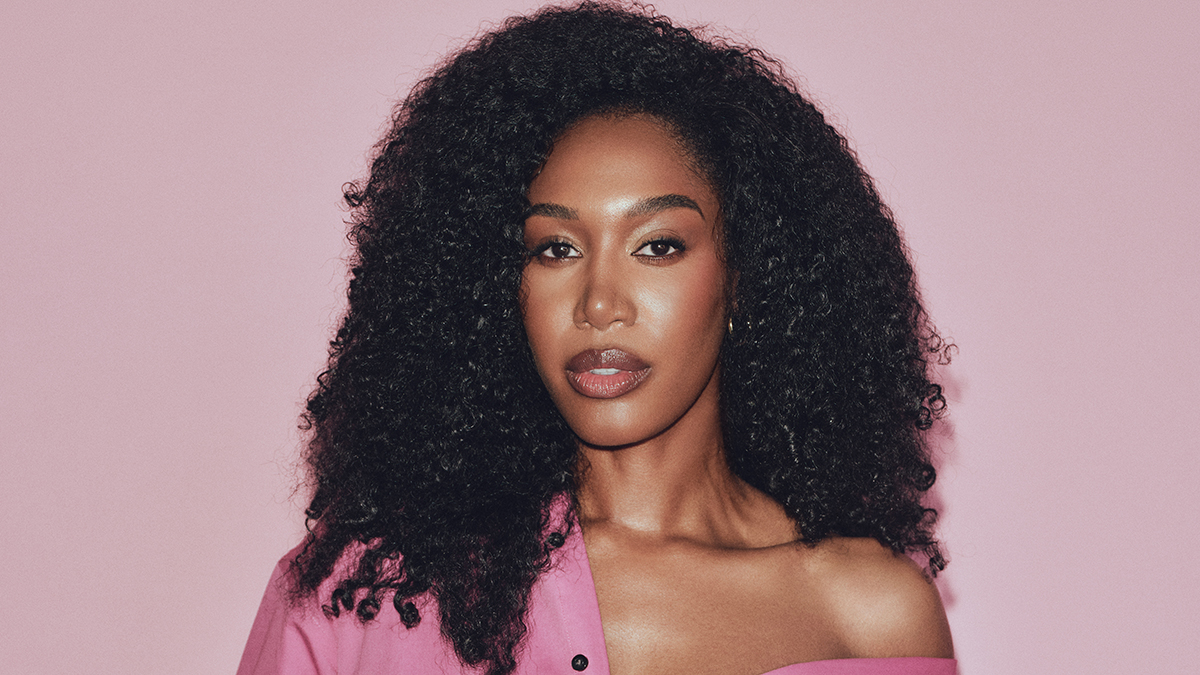
Through her remarkable portrayal of Tamar in The Chosen and her journey toward a purpose-driven life, actress Amber Shana Williams is discovering that true power emanates from a deep understanding of oneself and the courageous decision to stand tall, unapologetically embracing her identity without the slightest inclination to diminish her presence.
As The Chosen approaches one of its most anticipated chapters, how has your understanding of Tamar changed since you first stepped into the role?
At the beginning of the show, I wasn’t quite sure who she was. I looked her up in the Bible because I knew of a couple of Tamars, and I thought, ‘This can’t possibly be that Tamar because this is the New Testament.’ After doing some research and talking with the team, I realized she was a creative take on one of the friends who brought the paralytic to Jesus. Initially, I thought she was there to help move the story along.
But after spending so many years portraying her, she’s become like family. I’m her biggest advocate, and she’s taught me to take up space. There’s a beautiful scene in Season 3, Episode 6, when the women confront their differences. Tamar never apologizes for who she is. Instead, she apologizes that Mary didn’t feel she could be who she truly was and was constantly punishing herself. I’ve grown to respect Tamar almost as a peer. She’s shown me that compassion, empathy, and love can guide you, and that kindness and niceness are not the same thing. Being kind is much more important, and she exemplifies that in every way.
Tamar stands out as an Egyptian-Ethiopian character on the show. How much thought goes into ensuring that her cultural identity, strength, and humanity come through authentically?
I try to make that a priority. I have the utmost respect for any character whose background differs from mine, so I’ve tried to collaborate on her development wherever I can, from her hair and clothing to her language and the moments she experiences. A wonderful example came in Season 6. There was a scene involving several characters who spoke a different language, including Tamar’s mother tongue. Originally, Tamar’s lines were in English. I went to the writer-director and suggested that the scene would feel more authentic if she spoke her native language during such an emotional conversation. They trusted me, and we were able to honor her Ethiopian heritage and the experience of being an outsider. When people speak English as a second language, they don’t always think in that language during moments of heightened emotion.
Tamar connects with people who have had to fight to be seen, accepted, or understood. Why do you think audiences identify with her so strongly?
We don’t often get to see ourselves represented in these spaces, at least not authentically. Authenticity is imperfect. It’s flawed, doubtful, stubborn, and full of complexity. When we show someone being true to herself in all those ways, we see that people aren’t monoliths. Audiences relate to standing out in a room, sometimes for what other people see as the wrong reasons, and refusing to let that stop them. Tamar doesn’t just represent Black women. She represents women, religious differences, and the experience of being a foreigner trying to find her place. A lot of us are doing that every day, just trying to figure out where we belong.

What do you hope viewers take from Tamar’s story by the end?
I hope people understand that they belong, whether or not the space they’re in encourages them to believe that. Sometimes you have to show people how to treat you by example. I love that Tamar does that. She sets the standard for everyone around her.
You lived in Spain over ten years. How did that shape your fashion, lifestyle, and pace in life?
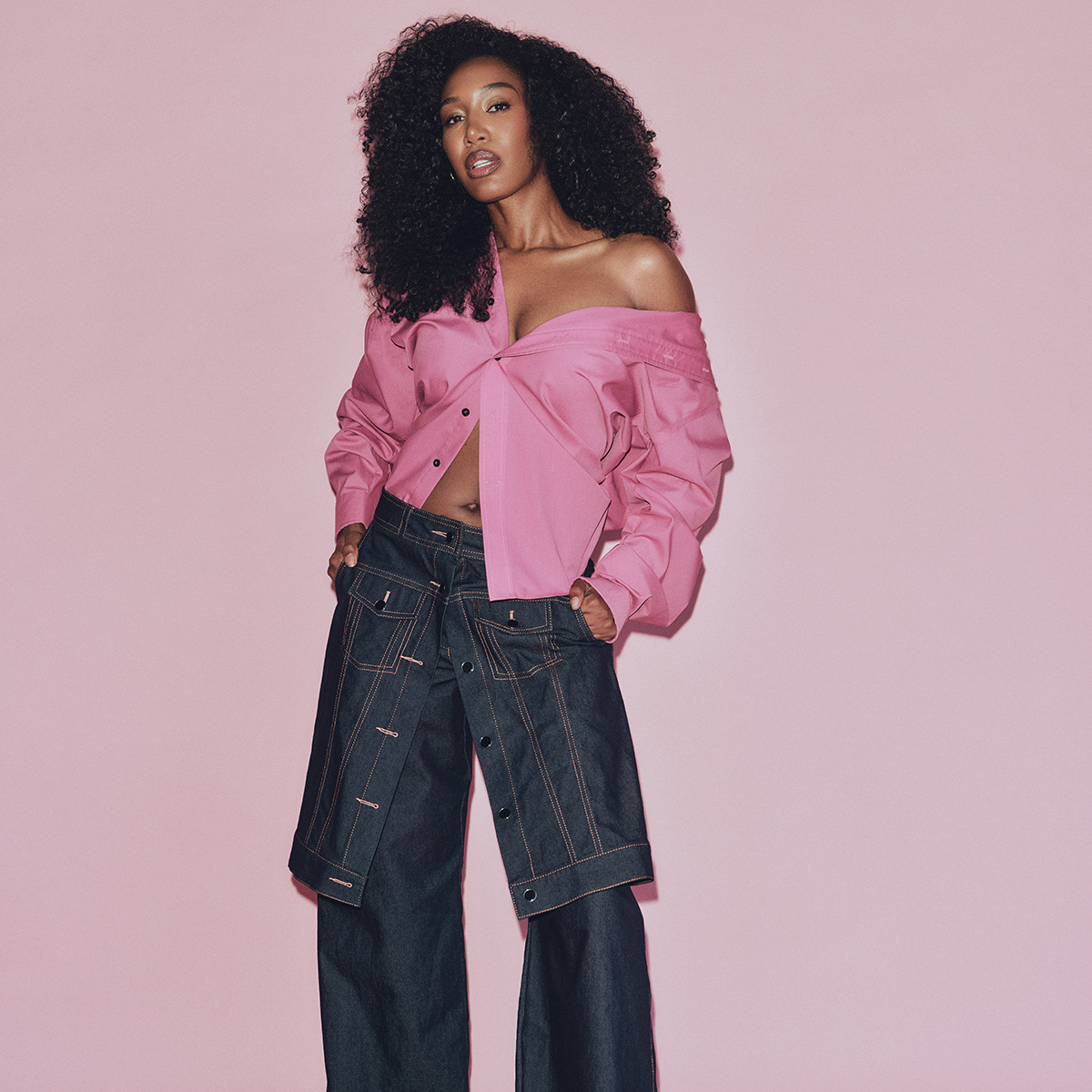
I’ve always loved that side of Hollywood: fashion, red carpets, and all the things that brought a sparkle to my eye growing up. As I’ve gotten older, I’ve realized that fashion is a much more important form of expression than I once thought. Living in Spain and traveling abroad taught me that you can say a lot with the simplest gestures and fashion choices. In the U.S., we tend to be bigger, louder, more colorful, and more sparkly. I’ve found a middle ground and developed an appreciation for simplicity and minimalism while still leaving room for drama and self-expression. Sometimes clothes can say what our words cannot.
What are you enjoying most about experimenting with fashion at this stage of your career?
I want to take risks. Sometimes you get it right, and sometimes you miss, but I want to have fun discovering different facets of who I am through fashion. I admire stars who take risks with their style. It shouldn’t feel like a burden. If you’re constantly fidgeting or uncomfortable, that look probably isn’t for you. I love when style feels like an extension of who you are. It’s an opportunity to play with color and texture. I always say, whether I’m going to an event or just going out with the girls, ‘You may not hear me, but you’ll see me.’ You may not hear what I have to say, but you will see me when I walk into the room. I carry that everywhere.
You’ve mentioned learning to slow down and reject a culture that sees rest as a reward. How has this changed your work and life?
It’s taught me to set boundaries, not just with other people, but with myself. There are times when I’m thinking, ‘I have to send this email. I have to do this work. I have to do this and that.’ Suddenly, you’re up late, you haven’t slept enough, and you haven’t eaten. Then you realize it could have waited. What you actually needed was rest and peace of mind.
You can’t care for yourself when you’re so focused on pleasing other people. Even though I love my job, I’ve learned to say no, sometimes even to work I want. I used to feel guilty and worry that if I passed on an audition or a job, people wouldn’t see me or I wouldn’t work again. But there will always be another opportunity. There’s only one me. If I run myself ragged, I won’t be able to enjoy the things I’ve worked so hard for.
Managing an autoimmune disorder, you’ve created self-care habits beyond usual wellness. What have you learned about tuning into your body?
It took a lot of mistakes and trial and error to learn to listen to my body with respect. I’ve pushed myself so hard that I became quite ill. I’ve carried burdens that triggered disorders I didn’t even know I had. I remember my rheumatologist emphasizing that I needed to focus more on my physical health.
After playing a graceful character for years, you’re ready to try grittier roles. What stories or risks will you explore next?
I want to play someone who feels completely different from me. We’ve spent so much time seeing other people, situations, and cultures as ‘the other.’ But when you have to embody someone through storytelling, you realize how much you may have in common, even with characters whose morals you strongly disagree with. I want a role that challenges me in that way and helps me understand both myself and other people more deeply.
Be’n Original
Photography: Jonny Marlow | Stylist: Anna Schilling | Hair Stylist: LaRae Burress | Makeup Artist: Dion Xu