It doesn’t take a rocket scientist to understand that a joke is supposed to be funny. The punchline does not have to be repetitive or obvious. But when the same group of people is constantly made the laughingstock, it is worth asking who the jest is really for.
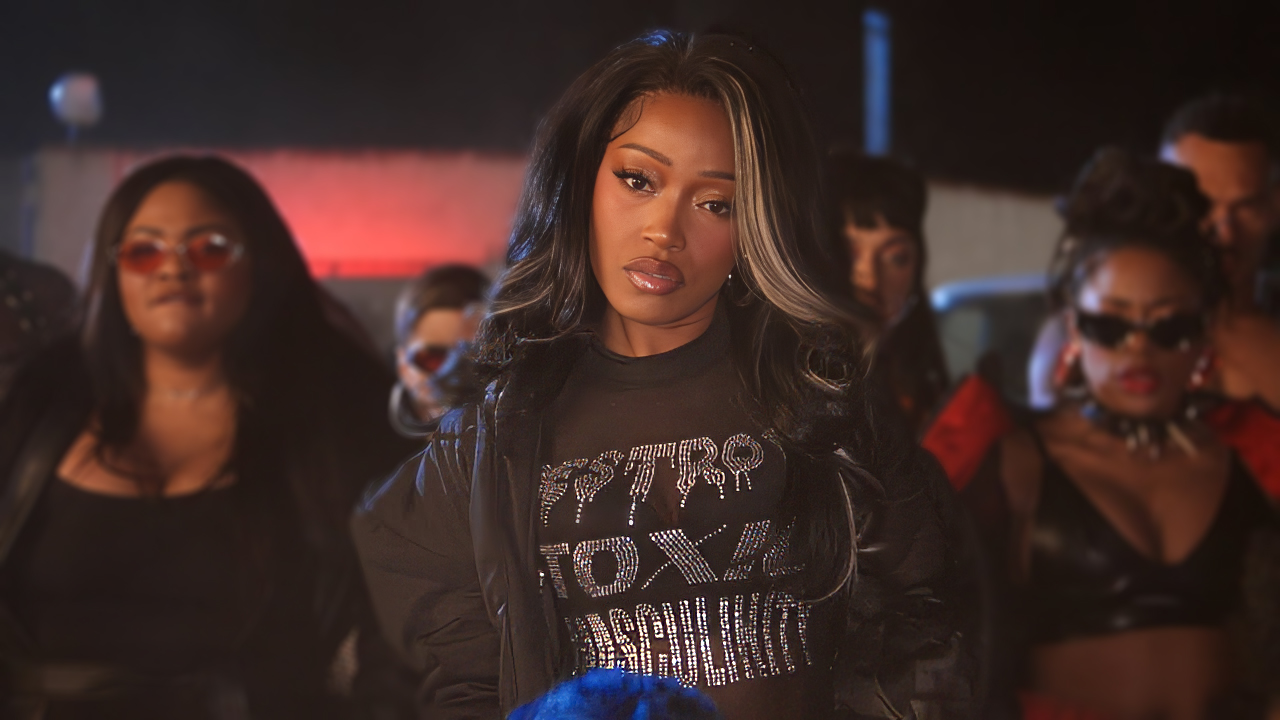
East London native KWN recently found herself in the hot seat after explaining that naming Keke Palmer as her celebrity crush was “kind of a joke.”
During a 2025 interview with Angie Martinez, KWN designated the Black actress who has been a cultural favorite since her breakout role in the 2006 classic film Akilah and The Bee at age 12 after being asked who she fancied. More than a year later, KWN told Complex that she and her team discussed naming someone because she wanted to keep her dating life private.
According to KWN, her team suggested Palmer as a “safe answer” because “everyone loves Keke.” Whom was the answer safe for? Her brand, her image, or her career? The original Complex interview has since been taken down, though clips of the exchange have continued circulating online. KWN later apologized, saying, “Using the word ‘joke’ was the wrong choice of words.”
This is less about the word “joke” and more about the choice behind it.
If KWN’s actual celebrity crush is Alexa Demie, the Mexican-American actress from Euphoria, so be it. Black women are not standing at anyone’s door demanding to be desired. But when KWN’s music videos repeatedly position dark-skinned Black women as romantic interests, while the only Black woman she publicly presented as her own romantic interest was later revealed to be a manufactured answer, the disconnect becomes difficult to ignore.
When unprovoked conversations like these happen, are Black women expected to prove why they are worthy of attention?
That is where the questions of pandering and colorism begin to surface. They are inqueries, not conclusions. When KWN says Palmer was the “safe answer,” the audience is allowed to ask what made a Black woman the safest option in the first place.
This discomfort is bigger than KWN. French Montana’s 2013 “light skin is the right skin” lyric and Chris Brown’s 2019 “nice hair” lyric both drew backlash, with critics viewing the lyrics through the lens of colorism and the standards placed on Black women. Both artists have faced criticism over those comments and have disputed or defended the interpretations surrounding them.
The circumstances are different, but the recurring discomfort is familiar: Black women can be central to the audience, the aesthetic, and the culture surrounding an artist, yet somehow become disposable when desirability enters the conversation.
Black women are not props, steppingstones, marketing devices, or punchlines. We can support, amplify, and make room for an artist without ignoring the moments that make that support feel less like connection and more like convenience.
KWN is entitled to her preferences and choices. But choices have consequences, especially when they involve an audience that has helped carry her work. She made the choice to participate in a disingenuous, unnecessary “joke” for the benefit of her career.
Now, she has to face the awkward silence that follows.
Na’ilah Burston