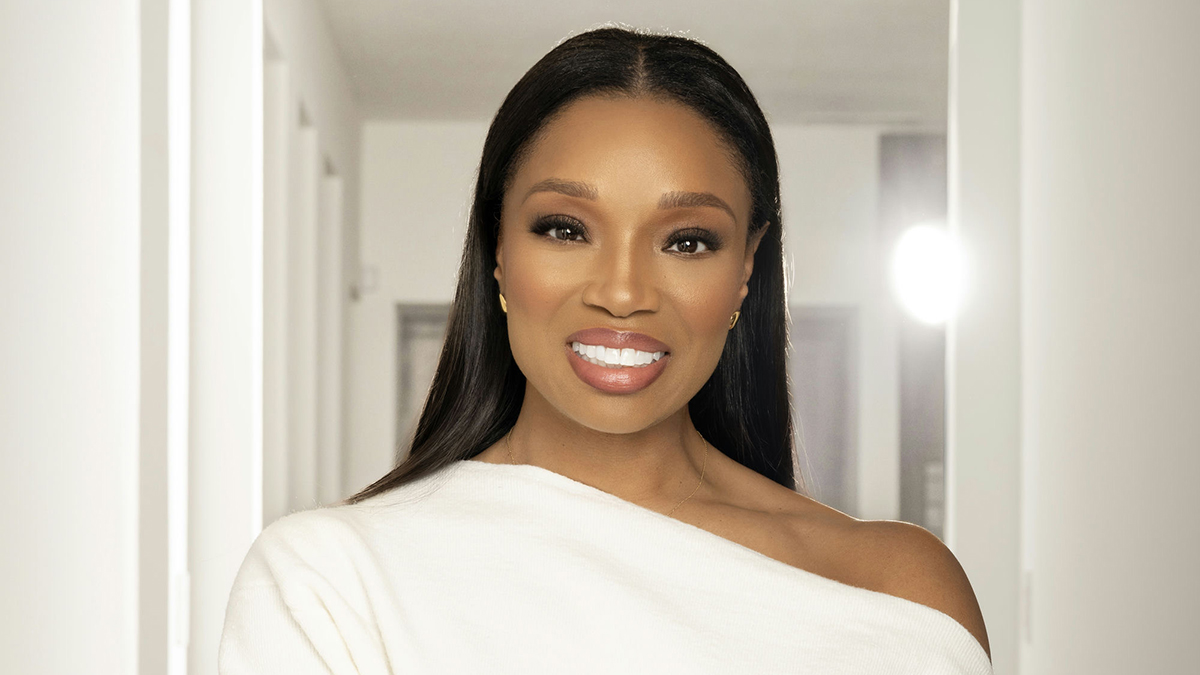
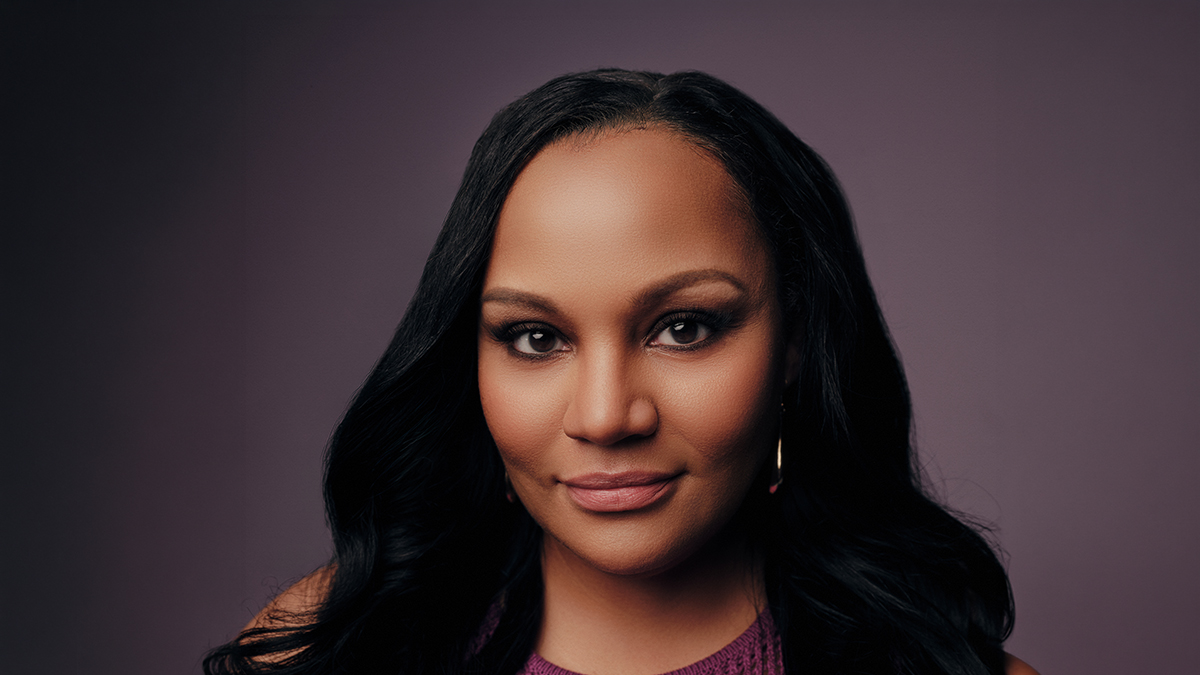
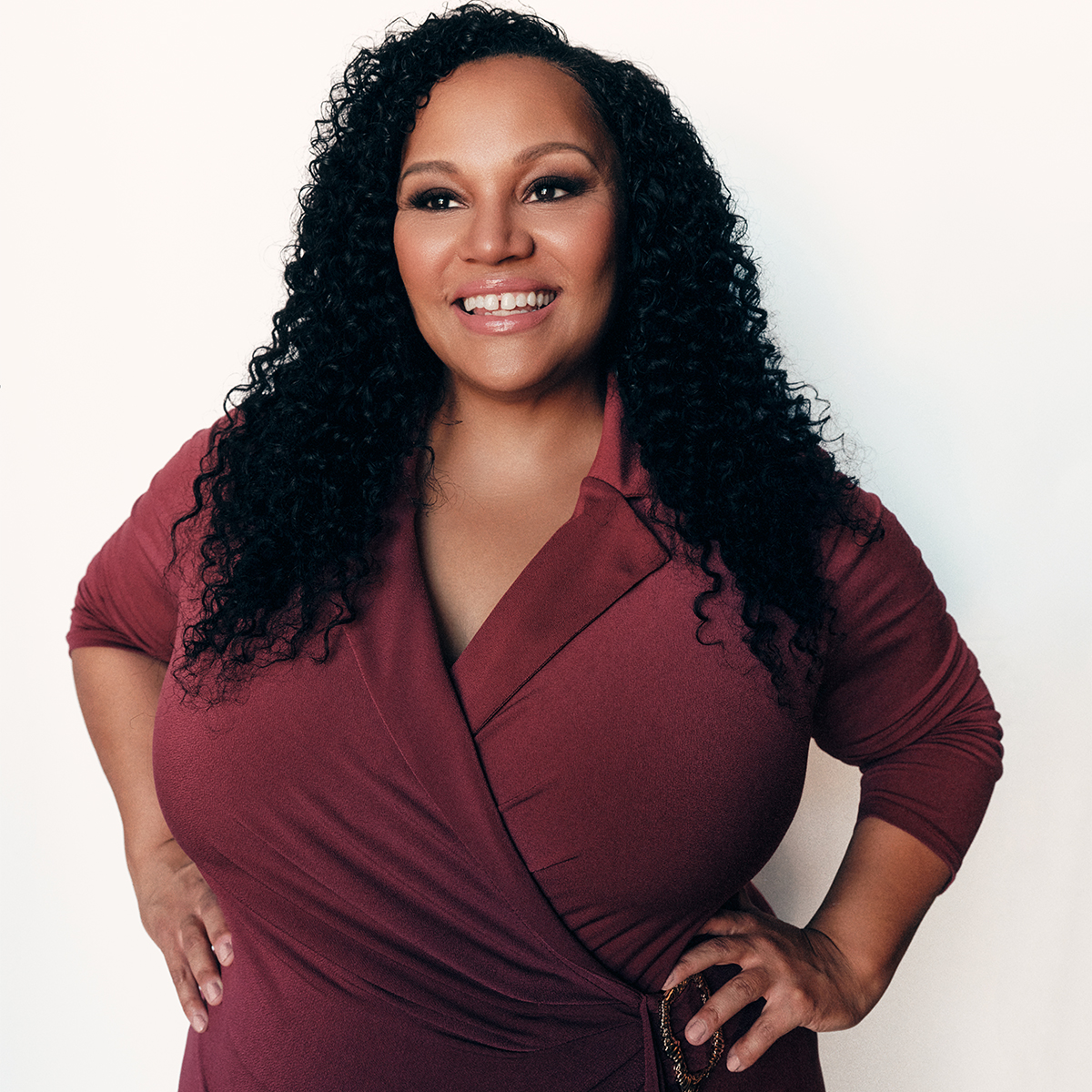
Dana Gourrier has spent years building a résumé filled with recognizable film and television credits, but her latest role marks a shift in both responsibility and perspective. After appearing in projects including Django Unchained, The Hateful Eight, The United States vs. Billie Holiday, American Horror Story, and True Detective, Gourrier steps into Prime Video’s The Greatest as a series regular—a milestone she describes as a new level of pressure, preparation, and growth.
In conversation with Lís Bryant, Gourrier opens up about the discipline behind her work, the lessons she learned from Quentin Tarantino, the impact of meeting Lonnie Ali, and the adjustment that came with appearing in all eight episodes of The Greatest. She also reflects on confidence, leadership, and the importance of learning when to trust the preparation already in place.
Let’s start with Django Unchained. After your work there, Quentin Tarantino wrote the role of Minnie Mink in The Hateful Eight specifically for you. What did it feel like to know you were specifically placed in that project?
When I first heard about the role, it was from our producer, Stacey Sher. She told me, “Quentin wrote the most incredible part for you.” At first, my excitement was tempered because we didn’t think the project was going to happen. Then we found out we were going to workshop it in downtown L.A. and read it in front of around 1,800 to 2,000 people. Playing Minnie was so much fun, but there was pressure. Quentin is very specific. He knows what he wants, and you have to execute that vision. You also have to genuinely want to be on his set and bring that childlike excitement and energy.
I’ve always been excited to go to work. I had my first audition when I was 11, and that feeling has never left me. What I love is the communal process of creating something with actors, directors, producers, hair, makeup, and everyone involved. Any kind of artistic expression interests me. Minnie Mink was an incredible experience, and I was outrageously honored that Quentin wrote the role with me in mind.
I think it’s beautiful that you still love what you do. You’ve been part of so many major projects, from Django Unchained and The United States vs. Billie Holiday to a long list of television shows.
I’m grateful for all of it. Sometimes the public knows the projects but doesn’t necessarily connect the dots and realize, “Wait, I saw her in that, too.” I think I tend to merge into the tapestry of a piece. They’ve been supporting roles, and I’m not shortchanging that because I did my thing every time. But I had been waiting for the opportunity to see if I could handle more responsibility. With The Greatest, Jaalen Best carries the show, but becoming a series regular showed me the difference between that and being a guest star. I felt the responsibility of delivering consistently and being a leader on set, particularly as one of the women and mothers represented in the series.
Earlier in my career, I also learned a lot from seeing how people treated me when I was a local hire compared with later in my career. I’ll never forget that, and I’ll never treat people that way.
You’ve been part of shows like American Horror Story and True Detective. Do you go back and watch your work?
Not always. If I’m not personally into the content, I probably won’t watch it, even if I’m in it. I used to have a hard time watching myself, but a mentor asked me, “How do you know you’re getting better if you’re not watching?” That changed my perspective. Now, I’ll watch clips for educational purposes and study the choices I made. But outside of that, if the content isn’t my thing, I’m probably not watching it.
I want to get into The Greatest. Muhammad Ali’s wife, Lonnie Ali, is an executive producer. Did you get to work with her?
I did. Lonnie is one of the kindest people I’ve met. She is incredibly dedicated to Muhammad Ali, his memory, and his legacy. Before Jaalen and I did one of our earlier scenes, she told me she was excited to see our work together. Afterward, she was so moved she couldn’t find a word at first. That was the kind of validation you hope for when you’re portraying someone’s real life and their family is right there watching.
She and I became very close after that. I have a lot of love for Lonnie, and she was wonderful to work with.
That kind of acceptance can mean a lot with this kind of project. Is The Greatest your first biopic?
No. My first was probably Lee Daniels’ The Butler. I played Helen Holloway, the wife of Lenny Kravitz’s character. Most of my scenes were with people like Oprah Winfrey, Forest Whitaker, Terrence Howard, and Cuba Gooding Jr. That was very early in my career. After I graduated from CalArts with my MFA in 2010, I moved back home to New Orleans. One mentor told me to get in line in L.A. immediately, while another told me to shine in a smaller pond first. I knew being a curvy Black woman in Hollywood was going to be an uphill battle, so I chose New Orleans. It proved to be the right decision. That’s how I eventually met filmmakers like Lee Daniels and Quentin Tarantino.
Even before that, I portrayed Maria Kizito in Soulographie, a series of plays about genocide. I traveled to Kigali, Rwanda, and Kampala, Uganda, for that work. It remains one of the most challenging and transformative performances I’ve done.
With The Greatest, how did the project change your process compared with the other work you’ve done?
The Greatest has eight episodes, and it’s the first time in my career that I’ve appeared in eight out of eight episodes. I’m very proud of that. I initially thought being a series regular would feel like an extended guest-star role. I quickly realized it was completely different. When you’re a guest star, you enter someone else’s world for a short time. As a series regular, you’re submerged in that world. You’re carrying more responsibility, but there’s also more connection with the cast. For years, I was the new person walking onto somebody else’s set. With this show, I became part of the home base. When new actors came in, I wanted them to feel welcomed because I remembered exactly what it felt like to be in their position. The workload was also different. I love breaking down scripts. Normally, my scripts are covered with tabs, notes, highlighting, and dog-eared pages. I’m constantly looking for clues about the character.
But The Greatest moved so quickly that I had to adjust my process. I couldn’t spend the same amount of time dissecting every page. That taught me to trust myself more. I realized some of my preparation came from loving the work, while some came from fear of making mistakes. On this show, there were moments when I had to choose between staying up late to prepare more or getting the rest I needed for the next day. I learned that sometimes you have to put the preparation down, trust what you already know, and allow yourself to figure things out in real time.
Lís Bryant
Photographer: Storm Santos
Hair Stylist: Richard Norman Grant
Makeup Artist: Beau Nelson