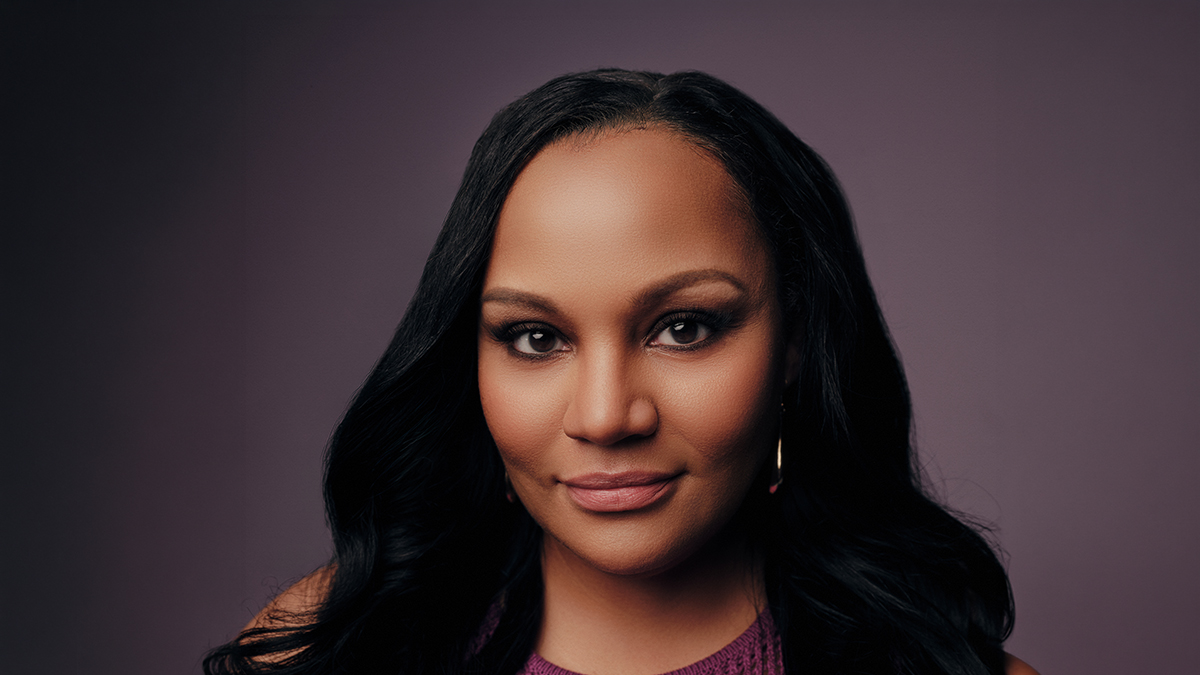
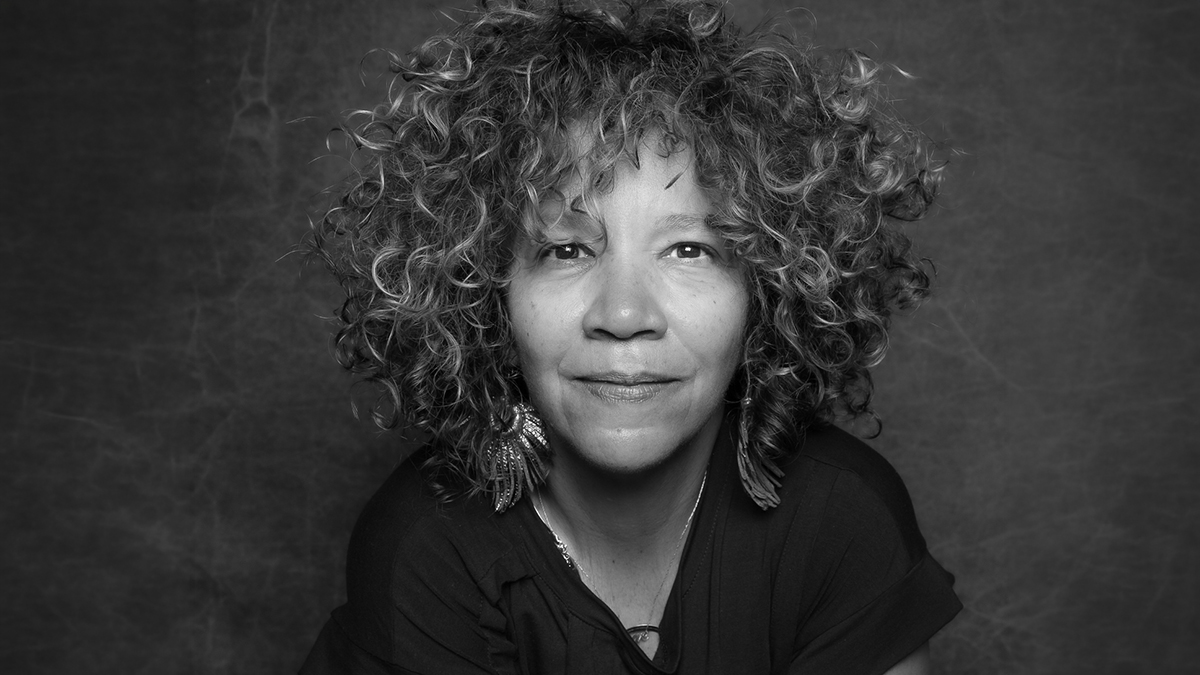
For LaFrae Sci, music is more than sound; it is memory, technology, resistance, and possibility. From Dayton’s deep funk roots to New York’s creative landscape, the drummer, educator, and executive director of Willie Mae Rock Camp has built a life around expanding what music can mean. Through performance, mentorship, and her Bluesology methodology, Sci empowers young people to honor Black musical traditions while discovering the confidence to shape futures of their own.
You grew up in Dayton, surrounded by funk, spent time in Detroit during the emergence of techno, and eventually left Ohio for New York with $600, some clothes, and your drum set. Looking back, what did growing up in that environment teach you about Black music as both an art form and a way of understanding the world?
I wasn’t aware of the things I had learned until I moved farther away and looked back. What I came to understand was that the blues is the roots and everything else is the fruits, very much connected to Willie Dixon, the blues manifesting itself into the funk sound, and the Black sound evolving forward.
There’s one more thing about Dayton. Because I’m from Dayton, when I moved to New York and met Greg Tate, he found out I was from Dayton and put me in his band. We became very close friends and musical collaborators. Greg was from Dayton originally, as was Jared Michael Nickerson. They were like, “Wait a minute, you’re from Dayton? Come on and get down with the Burnt Sugar Orchestra.”
I didn’t even realize that I had already been given the keys to the kingdom and the richness that I would later come to appreciate.
You’ve said that you eventually realized what drew you to music was not simply entertaining people, but its ability to heal, mourn, build community, and empower people. Was there a particular moment when you understood that your purpose as a musician extended beyond the stage?
It happened when I started bumping my head up against the ceiling of reality with the changing tides of the music business for a working artist. I was playing and being offered opportunities to play with arguably some of the most prominent names in the game, but I was still looking at the possibility of having trouble making my rent. I also saw how the industry had shifted to become more producer- and artist-centered.
At one point, you were auditioning to become Beyoncé’s drummer while also working as a music director in New York. What did turning away from that conventional definition of success teach you about defining achievement on your own terms?
When I realized that path was not for me, I began to ask questions. It was a journey. I wasn’t sure at that moment, but I began to explore what truly drew me to music. It was the things you mentioned earlier. I loved the way music built community, brought people together, and had the power to heal. The blues plays a big part in that.
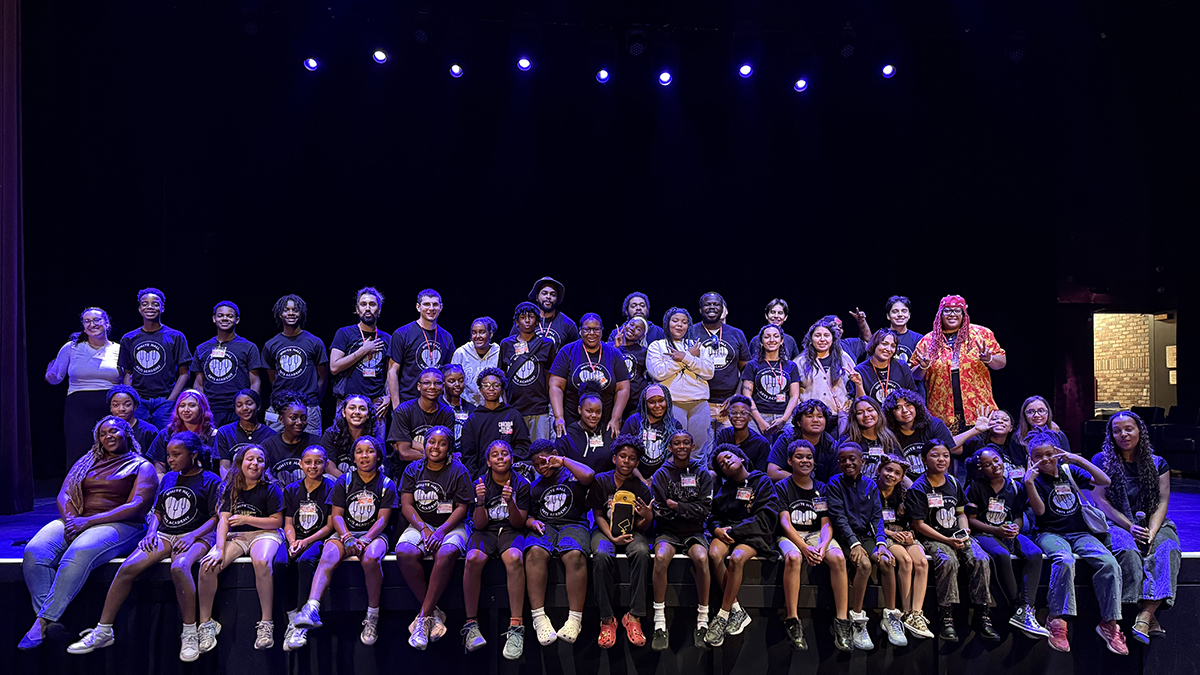
Growing up and going to Mount Pisgah AME Church down South with my grandmother—all of those experiences came together. Then, being one of the founding volunteers who created Willie Mae Rock Camp, I saw how music could bring so much out of young people in such a short period of time. It was a one-week camp. I saw kids who had never played an instrument get onstage with their band and perform a song at a New York City rock club at the end of the week. It forever changed my perspective.
How important is it for young musicians to understand not only how to make music, but also who created the musical traditions they’re inheriting?
It’s 100% important. We spend so much time making sure the broader community understands the Black origins of music, but I’m really focused on making sure the innovators of the future understand that they are the architects of a foundation that has been built for them.
What began as a summer rock camp has evolved into a year-round program incorporating synthesizers, recording technology, coding, sound design, and the physics of sound. What made you recognize that STEM belonged naturally within the organization’s approach to music education?
I started thinking about math. First of all, I have a math and science background. Then I started considering how, in Black culture, there are certain types of algorithms and equations that are very clear—like “mess around and find out.” That’s an algorithm. That’s an equation, actually. Beyond that, I started looking at Black technology and realized that the blues was Black technology. When Willie Mae Thornton sings, “You ain’t nothing but a hound dog, snooping around my door,” that’s the problem, right? It’s such a problem that she sings it again. Then comes the solution. That’s an algorithm. The solution is, “You can wag your tail, but I ain’t gonna feed you no more.” The blues creates a change.
We call our science “Bluesology.” Bluesology connects Black musical innovation to math, physics, technology, and creative expression. It positions the blues as a living algorithm—a process of experimentation, adaptation, and invention. African American culture is built on resilience, but do we use it as a framework to teach our students to be innovators in the future? Those were the questions I started asking. When I was given the opportunity to make this shift, I created this program. We are the only program with this type of methodology currently.
How do you teach students to trust their own ideas and develop a voice that belongs uniquely to them?
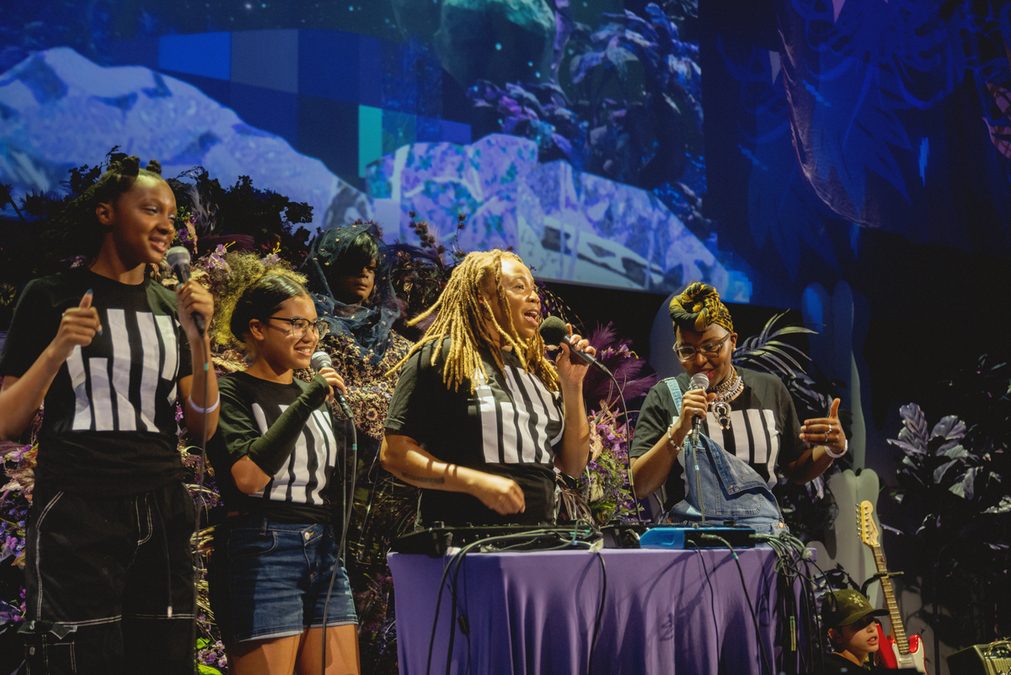
The first thing is that our programs engage students over a long arc. We work with them over the course of a full year. The first thing we teach is community. We have agreements and a mutual understanding of respect for one another in the space. We also collaborate. The next thing we teach is listening. It’s essential for young people to follow the sounds and listen to each other. The third thing we do is give them a framework for critiquing sounds so that we move away from “I like it” or “I don’t like it,” which is generally how most people approach music: “I like this song. I don’t like this song.” End of story.
What we say to the students is, “Describe the vibe.” We ask them to develop language around emotional impact, energetic qualities, and peace and transcendent states. Once they develop language around that, when we’re listening to sounds together and saying, “Describe the vibe,” everyone is sharing from a thoughtful, intentional space, as opposed to saying, “Your song is good” or “Your song isn’t good.”
When our students are working with experimental sound, we ask them to follow the sound. If they don’t feel a sound, we ask them to unpack the reason. Over time, I’ve seen young people say, “Well, this sound sounds scary to me now, but actually, that is a sound that can be part of my greater creative palette.” By the end of the year, when they’re creating their culminating project, they might say, “I need this color in my sonic tapestry.” Now they’ve identified it instead of throwing it away. They have a rich range of sonic ideas to draw from as they intentionally source their story and create their narrative.
What do you believe has to change culturally and institutionally for young people to see themselves as producers, engineers, technologists, and innovators?
We tell our students that they already are producers, that they are innovators, that they are scientists, and that they are sound scientists. We let them know that they already are. Our program also centers them with mentors, so they work with professional artists, musicians, technologists, and scientists who are actively working in their respective fields right now. Our students get used to being around them, working with them, asking questions, and learning from them.
When you work with young people now, how do you balance teaching them the history and discipline behind musical traditions while giving them permission to dismantle genres and create something that has never existed before?
We actually have them think outside of genres. We ask them to follow the sound, as opposed to saying, “I want to make a hip-hop song.” We believe that Black sound is constantly evolving. Because of improvisation—and because the blues is about putting sound and intention together — it allows someone to create something that sources their own personal story or narrative, which is a very blues-based thing.
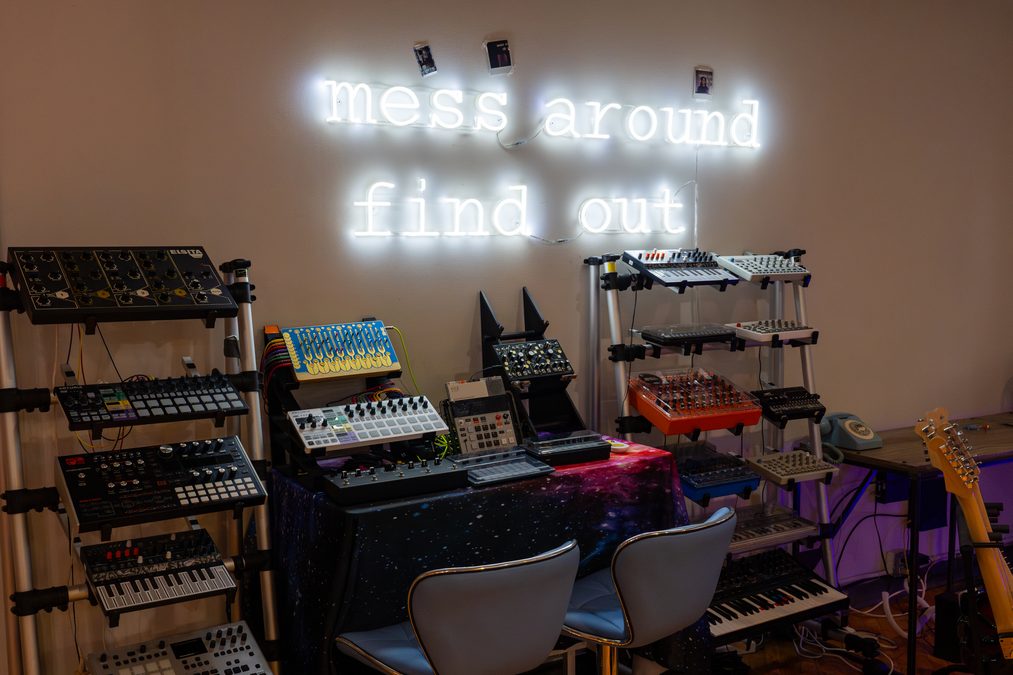
Our students understand the history of this music and Black sound and how it has evolved over time as technology has moved it forward. They also get a chance to take a deep dive. For instance, this year is the centennial celebration of our namesake, Willie Mae Thornton. We’re also taking a deep dive into Stevie Wonder’s journey through The Secret Life of Plants.
One of the things our students are learning is not just Stevie Wonder’s eco-futuristic perspective, but the fact that he used technology that was cutting-edge at the time to sound organic and develop a sound that’s firmly rooted here. Other groups in that same era were using synthesizers to sound like outer space. Our students get a chance to learn about that history, and Black music gives them permission to find their voice and use it. That’s a sense of agency that, when developed, they can use anywhere in their lives, whether they continue to be a musician, a technologist, a creative, or whatever they go into.
When you imagine a Willie Mae Rock Camp student 10 or 20 years from now, what do you hope they carry with them from your program?
A sense of agency—the feeling that they can show up anywhere and use their voice—but also the ability to listen deeply, which I believe is something our society is lacking overall: people listening and listening to each other.
Is the goal to create musicians, or is music ultimately the vehicle for developing something larger than themselves?
That’s right. That’s the goal. Music is the vehicle for developing something larger, so they feel like they can dream big and achieve.
Be’n Original