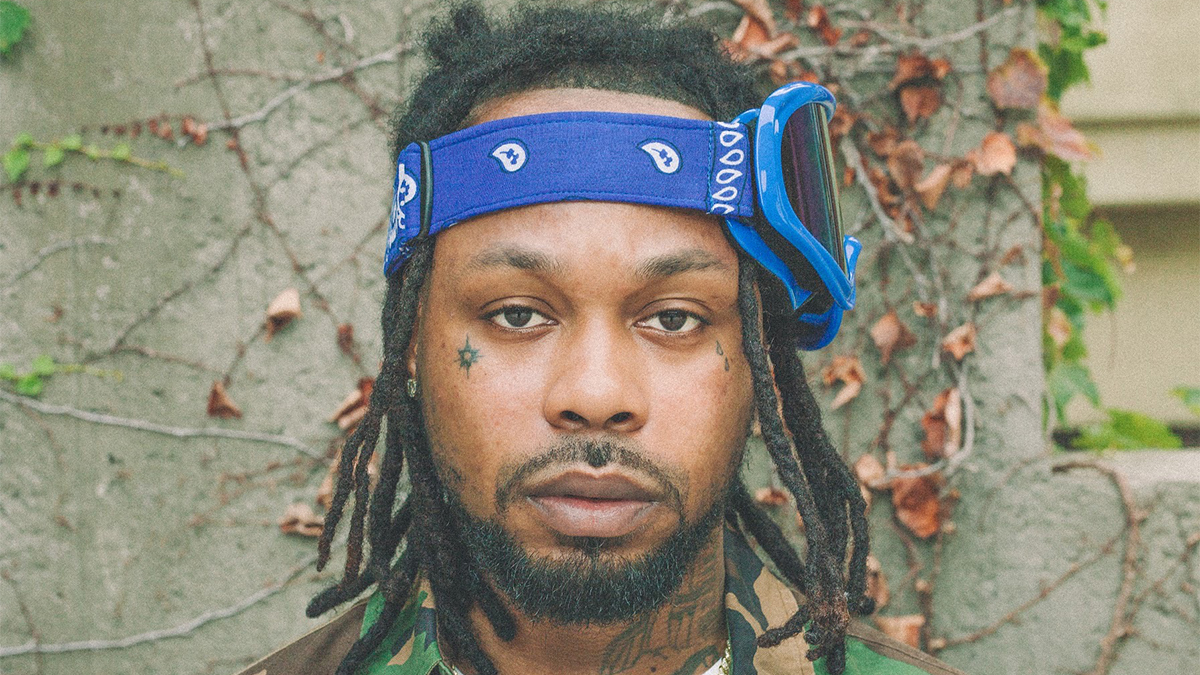
For T-Dubb-O, hip-hop has always been tied to real life. The St. Louis emcee, activist, and community organizer has built his career around music, politics, survival, and independence. His latest album, “Sets on the Wall,” reflects the neighborhoods, losses, pride, and contradictions that shaped him, while underscoring his commitment to making music that has meaning.
From national media and major collaborations to community organizing and the Oval Office, T-Dubb-O has expanded his reach without abandoning his roots. In this conversation, he discusses activism, independence, legacy, and what comes next.
You’ve built a career that combines hip-hop with commentary on social and political issues. When did you realize music could serve as more than entertainment and become a platform for change?
I mean, that’s the essence of hip-hop and really all revolutionary culture. Grunge was the same way. I knew the power of hip-hop from the time I was first exposed to it. I could see how everybody around the world wanted to be Black. That confirmation became even more real once I was able to travel to other countries and see the impact of hip-hop firsthand. So imagine if conscious music didn’t sound so blah. Imagine if the streets became conscious.
There are more of us with full rides to prison than college. This art, this culture, can change the world if we want it to. And that doesn’t mean everything has to sound like Public Enemy or smell like sage. It just means we make dope music with a message. But naturally, that’s just who I am. I rap about my life, past and present. I rap my thoughts, my experiences, and my hopes. I’m not sitting around trying to figure out how to make some politically conscious record. I’m telling my story.
That’s what I give you, my life in the form of art.
You were the first hip-hop artist selected for the Kranzberg Arts Residency for Individual Artists. What did that opportunity allow you to explore or develop that you had not been able to do before?
First, it was an honor to be the first and hopefully not the last. As far as hip-hop in this city, I’ve placed myself in the conversation of being one of, if not the greatest, emcee to ever come out of St. Louis. I’ve dominated in every aspect. Battle rap, musically, everything. So it’s always a great thing to be recognized at home. St. Louis is a very hard city to do this from. We don’t praise nothing. But an artist from here can go anywhere and thrive because this city makes you cold-blooded and prepared.
That residency gave me opportunities that independent artists don’t always have access to. I was able to reach different audiences, perform in spaces that traditionally haven’t embraced hip-hop, and actually make real money through bookings. I also had access to venues and resources that allowed me to put together some amazing live events.
More than anything, it helped me continue down the path of being a truly professional independent artist without needing some major label machine behind me. And that’s important because independence means something to me. I don’t want to have to sacrifice my art, my politics, or my identity just to make a living doing what I was born to do.
You hold the record for the most Slumfest Award wins, with eight. What does that recognition mean to you, particularly as an artist from St. Louis?
It means I was right. Chasing this dream, where we come from, we had to overcome some of the worst odds imaginable. Rappers die in my city. Sometimes it feels like the most dangerous job you can have in St. Louis is being a rapper. And I don’t make the typical street music or trendy Chitlin’ Circuit-style rap that’s pushed on smaller markets like St. Louis. I never tried to fit into what people thought an artist from here was supposed to sound like.
So to accomplish that feat with everything stacked against me from day one just proves that I was right. I believed in my talent. I believed in my vision. I believed I could be successful without compromising who I was. And I’m thankful those flowers came while I was still here to smell them instead of being placed on my grave.
Because where I’m from, too often people don’t celebrate you until you’re gone.
Your work has been described as a mix of raw energy and thought-provoking poetry. How has your writing process evolved as your career and perspective have changed?
My writing process changes every time I write. Inspiration leads to the creation of different things. Sometimes I may not write anything down at all. Sometimes I just hear a cadence, and I go in. Sometimes I have a strategic idea that requires me to sit down and formulate the perfect word after the perfect word. My heart guides me. Music is in me. I was born to do this.
They say after 10,000 hours you become a master. My technical skill set is amazing at this point. I can sit down and write whenever I want to. I understand the mechanics of rapping at an extremely high level. Cadence, breath control, delivery, wordplay, structure- all of it.
But just because you know how to do something technically doesn’t mean you should allow the technical side to control the art. Art should have soul in it, not just calculations. I don’t want to make music that sounds like somebody solved a math problem. I want you to feel something. So regardless of how much my skills evolve, I lead with my soul.
You have collaborated with artists including Wiz Khalifa, Berner, Freeway, Crooked I, and Tef Poe. What have those collaborations taught you about maintaining your own artistic identity while working with other voices?
Nothing about maintaining my identity because I knew who I was before I ever stepped in a studio with any of them. I think that’s where a lot of artists get it confused. They think proximity to somebody else’s success somehow validates their own talent. I never needed that. I’ve been in rooms with legends, and I’ve been in rooms with people nobody ever heard of who could rap circles around some of your favorite artists.
What those collaborations did was reinforce that talent is talent, regardless of the machine behind it. I can stand next to anybody in this industry and hold my own. Period. But I also understand that collaboration is about creating something bigger than yourself. You have to respect what another artist brings to the table without compromising what makes you who you are.
I’m not trying to sound like Wiz, Freeway, Crooked, or anybody else. They called on T-Dubb-O because of what T-Dubb-O brings. And that’s what you’re going to get every time. I don’t care if it’s a record with a platinum artist or somebody recording in their bedroom on the north side of St. Louis. I’m showing up as myself.
Your community work has taken you to the White House and to communities around the world. How do you translate the ideas you address in your music into work that produces results beyond the studio?
My music is experience. So I’m able to take theory and turn it into something that can actually be effective because I’ve lived the practice. When I do community violence intervention work, I’m not some scholar who studied crime trends and created a program they think will help lower crime numbers. I’m from the streets. I lived it. I know why we’re in the streets. I know what keeps us there. And I know what it takes to help us get out.
The pain of our communities gave me the tools I needed to create a path toward changing those conditions. I’m not some blue-vest-wearing, paid professional activist who parachutes into communities to take pictures, collect a check, and disappear. I’m a real person from these communities with the mind of a strategist who also went and got the training, education, and political development necessary to do the work effectively. That’s the difference. I don’t have to imagine what poverty feels like. I don’t have to imagine what violence does to a family. I don’t have to imagine what it means to be targeted by systems that were never designed to protect you.
I’ve lived those things. And I’ve taken those experiences and helped build programs, organize people, create opportunities, and develop solutions that actually address the conditions producing the problems. That’s what revolutionary work is supposed to look like. It’s not just about identifying oppression. It’s about organizing people to change the conditions that allow it to exist.
You met with President Barack Obama in the Oval Office to discuss systemic issues in America. What stayed with you from that conversation, and did the experience change how you approached activism afterward?
I’ve been to the White House a few times. But that particular meeting was history. The Oval Office was filled with nothing but Black people in a house built by slaves. Think about that. The White House represents America perfectly. A house built by enslaved people, designed to house white men in power, while homeless people sleep right outside the gates. That contradiction is America. President Obama told me he was proud of us in St. Louis and the work we were doing. And I appreciated that. But he’s also a politician. So a lot of his answers to the systemic issues we were raising centered around voting and political participation. I left that particular meeting motivated to prove a point.
We went back to St. Louis and helped change the Ferguson City Council to half Black. And shortly after, the Ferguson Police Department shot another Black person. So what did changing the representation actually change about the system itself? That’s the question. I’m not saying representation doesn’t matter. I’m saying representation without structural change isn’t liberation. You can change the faces sitting in those positions of power and still have the same systems producing the same outcomes.
So that meeting didn’t necessarily change how I approached organizing. It confirmed that we were doing exactly what we needed to be doing. And it reinforced something I’ve always believed. The same systems designed to oppress us won’t be the key to our liberation. No matter who’s in office.
Your latest album is “Sets on the Wall.” What does the title represent, and what were you trying to communicate through this project that differs from your previous releases?
Sets on the Wall is bigger than an album title. It’s about identity, survival, loyalty, and the environments that create us. Where I come from, what’s written on those walls tells stories. Stories about neighborhoods, people, affiliations, people who made it, people who didn’t. Some of those names belong to people who never got the opportunity to become anything other than a memory. That’s the world that produced me.
I’ve spent my career telling the truth about where I come from, but I also wanted this project to reflect the evolution of somebody who survived that environment without pretending he was never part of it. I’m not one of these artists who gets a little success and starts talking down on the same streets that raised him. I understand the conditions that created those streets. I understand the politics behind the poverty, the violence, the desperation, and the survival.
This album is about all of that. The contradictions. The pain. The pride. The consequences. The beauty that still exists in places the rest of America only wants to discuss when somebody gets killed. And musically, I wanted to remind people that this shit is an art form. You can have substance and still make incredible hip-hop. You can talk about real life without sacrificing lyricism, production, or replay value.
I don’t make music to fit into whatever algorithm is popular this week. I make records that I want people to be able to revisit twenty years from now and still feel something. I’m not interested in making disposable music. I’m interested in leaving something behind. And all in all, I was writing St. Louis on the industry’s wall. I’m set tripping. We got amazing artists and creatives here, too. Not just what you’ve heard, but greats! Lyricists. Stop playing with my city.
You have appeared in outlets ranging from Rolling Stone and The New York Times to CNN, MSNBC, XXL, and Ebony. How do you balance increased media visibility with staying connected to the communities and experiences that shaped your music?
I understand the purpose of media. I don’t let that make me. I know it’s necessary to push your products, build visibility, and reach audiences that may never have been exposed to your work otherwise. But I’ve also watched the media do some terrible things. I’ve seen how narratives get manipulated. I’ve seen how people get celebrated one day and destroyed the next. I’ve seen how the same media that claims to care about our communities can help perpetuate the conditions that harm them.
So I understand what it is. Again, I love the flowers, and I’m grateful that a lot of my highlights came from actual talent and the work I’ve done, not because I paid some public relations company to manufacture an image. But my real light comes from the people. When somebody comes up to me and tells me my music helped them through one of the hardest times in their life, that’s something you can’t put a number on.
When somebody tells me the work we’ve done in their neighborhood changed something for their family, that’s real. That impact can’t be measured by streams, impressions, or magazine covers. And the truth is, I don’t have to work to stay connected to my community because I never left it. These aren’t people I visit when I need inspiration for an album. These are my people. This is my life.
After millions of streams, major collaborations, awards, activism, and national media exposure, what does success look like to you now, and what is the next chapter you want people to understand about T-Dubb-O?
Freedom. That’s what success looks like to me. Freedom to create what I want, say what I want, provide for my family, and live life on my own terms without having to compromise who I am to make somebody else comfortable. I’ve done shit they told me was impossible. I’ve sat in the Oval Office with the president of the United States, and I’ve sat in jail cells. I’ve stood on stages in front of thousands of people and I’ve stood in the streets watching people I love get swallowed by the same conditions I’ve spent my life fighting against.
I’ve been celebrated by institutions that wouldn’t have even let somebody like me through their front doors a generation ago. And through all of that, I’m still me. People see the awards, the streams, the headlines, the accomplishments. They don’t always see what it costs to get there. They don’t see the sacrifices, the doors slammed in your face, the relationships you lose, the people you bury, or the nights you question whether any of this shit is worth it.
But I kept going. And I think that’s the part of my story that matters most. Not that I made it into certain rooms, but that I never allowed those rooms to determine my worth. The next chapter is about ownership, legacy, and building something that exists beyond me. I’ve already proven I can rap with anybody. I’ve already proven I can organize communities, build institutions, and create real change without waiting on permission.
Now it’s about taking everything I’ve learned and building something that my children and the next generation can inherit. I don’t need the industry to crown me. I don’t need the establishment to embrace me. I know what I’ve done. I know what I’ve survived. And I know what I’m capable of. I always say I’d rather die standing on the hill I climbed than live at the bottom of yours. That’s not just a quote. That’s how I’ve lived my entire life. And the crazy part is, after everything I’ve accomplished, I still feel like I’m just getting started. So what’s next? Wait and see.
Be’n Original