
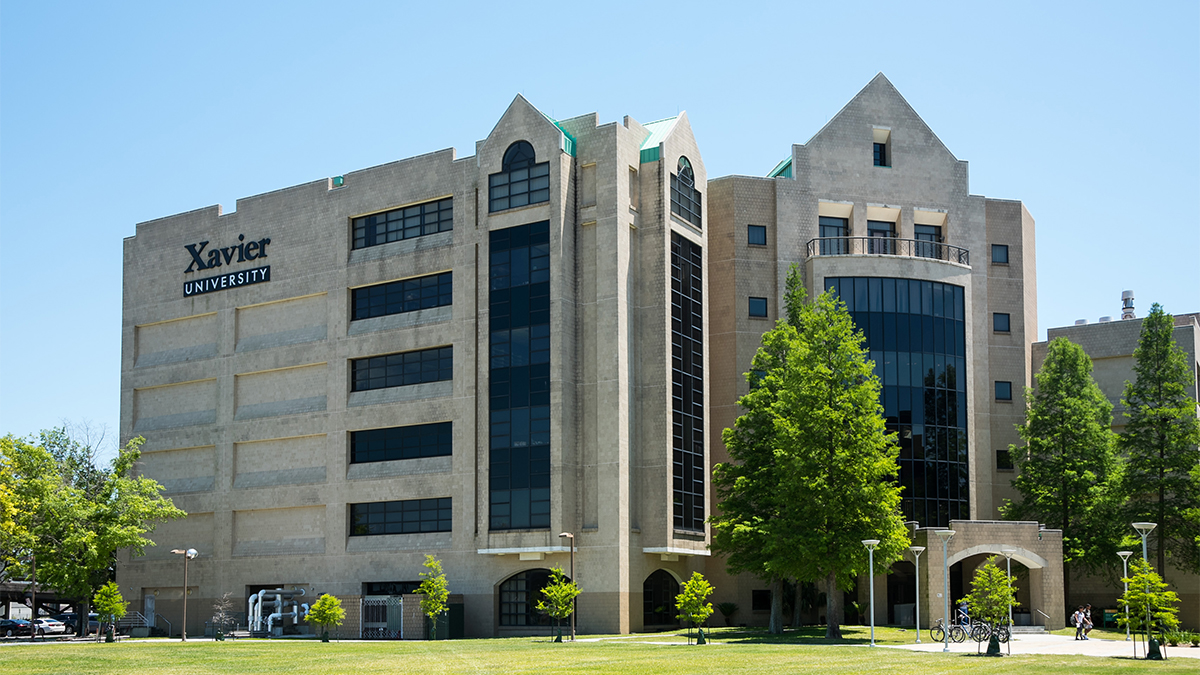
For Black students who dream of becoming physicians, the path into medicine can be filled with barriers long before they ever enter a hospital. But in New Orleans, one historically Black university is working to make that journey more attainable. And its latest achievement deserves to be celebrated.
On October 14, Xavier Ochsner College of Medicine received preliminary accreditation from the Liaison Committee on Medical Education (LCME), the organization responsible for accrediting U.S. medical schools that award Doctor of Medicine degrees. The milestone clears the way for the college to recruit its inaugural class, expected to begin in summer 2027.
Developed through a partnership between Xavier University of Louisiana and Ochsner Health, the college will become the fifth medical school affiliated with an HBCU in the United States and the only HBCU medical school in the Gulf South.
For Xavier, this is more than an expansion of its academic offerings. It is an extension of a legacy that has already helped generations of Black students pursue careers in medicine.
Xavier has long been recognized for preparing African American students for medical school. Yet, until now, students who wanted to become physicians still had to leave the university to complete their medical education elsewhere. The new college creates another pathway: students will have the opportunity to pursue medical training through an institution connected to Xavier’s longstanding commitment to Black education and scientific achievement.
In a country where Black Americans remain underrepresented among practicing physicians, that distinction matters. According to figures cited by Harvard Law School’s Petrie-Flom Center, Black Americans make up approximately 13.7 percent of the national population but only 5.7 percent of physicians. HBCU medical schools also play an outsized role in training Black physicians, preparing nearly 70 percent of the nation’s Black doctors, according to Xavier Ochsner’s announcement.
Increasing access to medical education does not automatically resolve the inequalities that shape healthcare. But expanding the institutions where aspiring physicians can train creates additional opportunities for students while strengthening the potential pipeline of doctors serving communities with significant healthcare needs.
The partnership’s public timeline began in January 2023, with the college formally established in 2024. It received candidate status in October 2025 before undergoing an accreditation survey in June 2026. Preliminary accreditation followed in October.
That timeline also raises questions about what it takes to establish a medical school. Beyond securing accreditation, institutions must develop curricula, recruit faculty, establish clinical training partnerships and secure the resources necessary to sustain a program of this scale. How Xavier and Ochsner brought those pieces together offers an opportunity to better understand what it takes to expand medical education at an HBCU.
For now, the milestone offers a reason to celebrate what happens when institutions invest in expanding access to professional education. Xavier is not beginning its work in medicine from scratch. It is building upon a century of academic preparation and creating another avenue for aspiring physicians to turn their ambitions into careers.
The university’s recent accreditation of its Medical Laboratory Science program further demonstrates its expanding commitment to healthcare education, preparing students for careers that support diagnosis, research and patient care.
Black students have always had the talent and ambition to become physicians. What they need are meaningful opportunities to pursue that ambition. With the Xavier Ochsner College of Medicine, Xavier is helping create another one.
For the students who will walk through those doors in 2027, this milestone could mark the beginning of a future where their dreams feel closer than ever.