Loss can change a child’s world in an instant, leaving questions that are often difficult for adults to answer. In Love Lives On, author, faith leader, parent, and grandparent Dorena Williamson confronts that reality with honesty, care, and hope. Drawing from her own family experiences and years of supporting others through grief, Williamson created a story that encourages children to name their emotions and understand that love can endure beyond loss.
Through Will’s journey, Love Lives On explores memory, family support, therapy, and healing. In this interview, Williamson discusses helping children face grief, the value of trusted adults, and why love remains long after goodbye.
What inspired you to write Love Lives On, and what did you hope young readers would feel or understand after reading Will’s story?
I had a few inspirations for this story. First, my own cherished memories of summers spent with my grandparents. Also, conversations through the years with congregants struggling to talk with kids about grief before and after funerals. And finally, my own fumbles with parenting through these sensitive subjects. Like a puzzle, those pieces came together to form this story that I hope will bring joy, comfort, freedom, and love to young readers.
Grief can be difficult for adults to talk about, let alone explain to children. What guided you in finding language that would be honest about loss while still being comforting and accessible for ages 4–8?
We all walk through a chapter of grief in life. Even fairytales and kids’ movies include characters who experience grief! I wanted to offer an opportunity to be strategic in approaching these necessary conversations—guided by love, using age-appropriate language, and providing space for questions. Many of us were never given the tools to process grief ourselves, so giving ourselves grace is key as we walk alongside the kids in our lives.
Will tells his dad that he is scared, and his dad acknowledges that he feels scared, too. Why was it important to show adults validating rather than trying to immediately “fix” a child’s difficult emotions?
It’s so hard as a parent when we can’t fix broken things or circumstances. I wanted to model how powerful it is to be present in pain. This offers honesty to our kids because we do feel pain, and it is important for them to grow up knowing how to handle painful times and difficult emotions.
As a faith leader, I know all too well the temptation to say “the right thing.” Often, silence and solidarity are the better choices. Togetherness and taking hard things one moment at a time will benefit your young ones as they grow.
The phrase “Love lives on” becomes an important source of comfort for Will. What does that phrase mean to you personally, and how did its meaning shape the story?
“Love Lives On” gives a tangible way to honor the memory of someone we loved who has died or is no longer present in our life. It is a reminder that love does not end just because someone has died or moved away. It also is a refrain for intentional living. I hope it motivates readers to make memories, enjoy the good times, and cherish every day we have to live and love.
The book emphasizes that grief and fear are normal responses to loss. What do you hope parents, educators, and counselors take away from the way the story portrays those emotions?
I hope this book will be a useful tool for educators and counselors as they guide children through grief. Modeling is so important for children, and a picture book can help kids of all ages. I trust it will aid parents in being prepared to respond to tragedy and death in healthy ways and keep the door open for continued conversation with their children.
Will and his family continue to cherish memories of his cousin through family traditions and shared experiences. Why is remembering and honoring a loved one such an important part of the healing process?
Remembering is an act of intentional love. I have a friend who hosts an annual dinner on the anniversary of her husband’s death as an ode to his legacy and space for remembrance. Asking someone to share memories of their loved one is a gift we can offer others in their time of grief. This creates space for joy, love, and even laughter to accompany the healing journey.
Family plays a central role in helping Will navigate his grief. What did you want to communicate about the importance of community and having trusted adults around children during times of loss?
In addition to parents and caregivers, relatives and proximate adults can offer companionship in children’s grief journeys. I hope this story will help them be a good neighbor to kids in all their seasons of life. Also, it was important to include therapy as a useful tool for helping kids navigate loss. Finally, I trust this book will inspire adults to be good role models and use care with how they speak to kids particularly in times of grief.
How did your experiences as a parent and now a grandparent influence the way you approached writing a story about childhood grief and emotional healing?
I definitely fumbled the ball while walking with my now-adult kids through some of our experiences with funerals and loss. Fortunately we have unpacked those moments and even found humor in the memories. That motivated me to craft this book as a tool for parents today to be more prepared and intentional than I was.
I had no way of knowing years ago when I first wrote this story that I would be a “Gigi” when the book was published. The message has come full-circle as I get to make memories with my favorite two-year-old. I dedicated this book in memory of my grandparents and their “Love Lives On” in this next generation of my family.
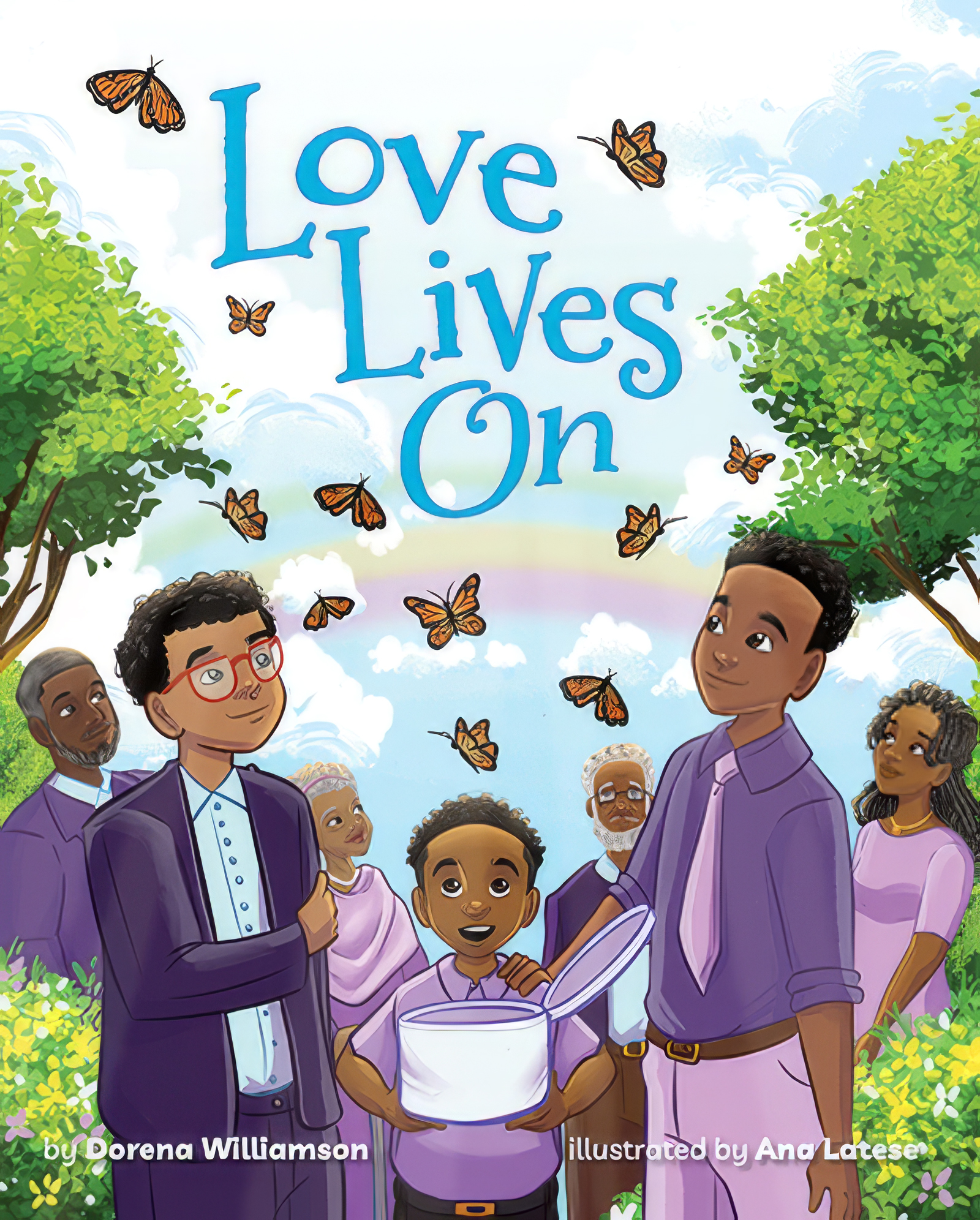
Ana Latese’s illustrations bring vibrant color, Black joy, and family connection to the story. What was it like seeing her visual interpretation of your words, and were there any illustrations that especially moved you?
With every book I look forward to seeing how the illustrator connects their creativity to my words, and Ana did a masterful job illustrating this story. A book’s cover is a big first reveal, and Anna’s decision to use purple resonated powerfully with many of my followers. I didn’t ask her to portray the child going to bed with a durag, but that is one of MANY sweet affirmations that come with using a Black illustrator who is culturally aware!
One of my favorite illustrations is the child noticing his father’s tears. It is a moving image that models sorrow and love.
For a child who has recently experienced the loss of someone they love, what is the one message from “Love Lives On” that you hope stays with them long after they close the book?
I hope the power of unending love is very present after a child reads the book. Love is a feeling to enjoy, a memory to treasure, and a gift to share with others. That ripple effect would be my greatest hope for young readers of this book.
Be’n Original