
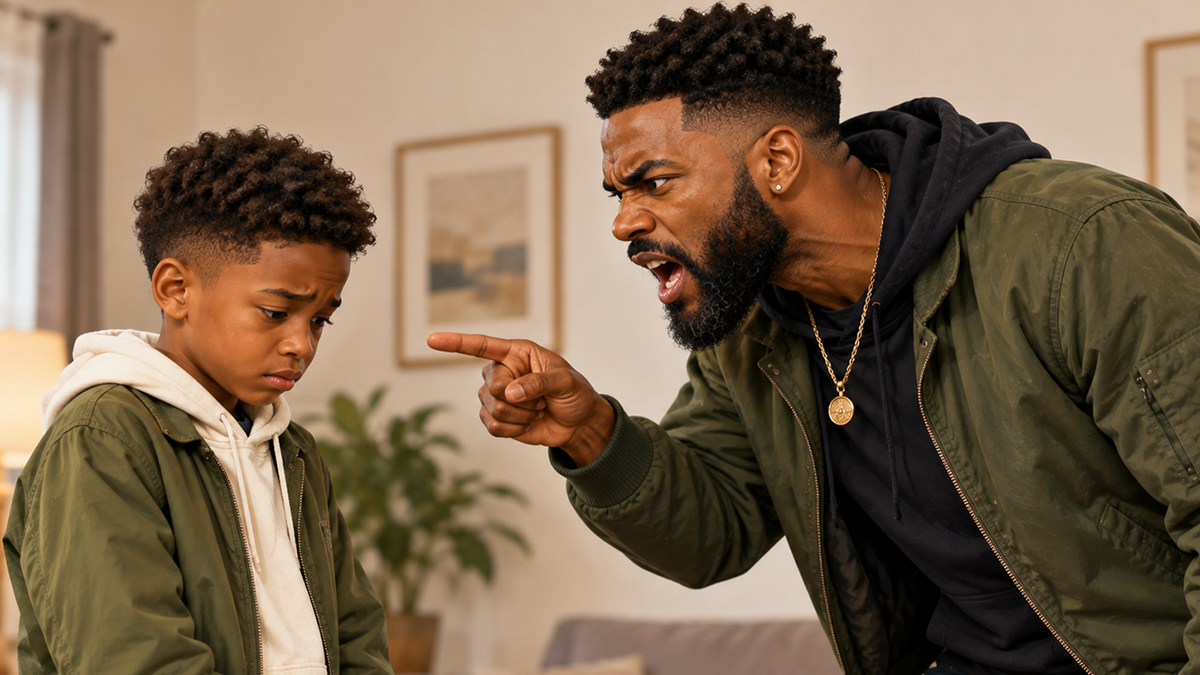
There was a time when being a Black man seemed to come with a rulebook written long before a boy was old enough to read it. Musiq Soulchild captured one of its lessons plainly: a man was supposed to “never cry.” Be strong. Provide. Protect. Keep your feelings tucked beneath your pride.
When a boy is taught that sexual attention proves his manhood, recognizing that same experience as abuse can become its own battle. Sometimes, the very identity meant to make him strong becomes part of the reason he stays silent.
On Sept. 27, streamer Reginald “Reggie” Travers, known as “Lil Rodney Son,” publicly alleged that his brother sexually abused him as a child. During an emotional livestream, Reggie said the experience left him questioning himself and his sexuality for years.
“My brother took advantage of me,” Reggie said.
He is not alone.
Other Black men have described childhood sexual experiences they initially understood differently.
YG revealed in his 2025 song “2004” that he was sexually assaulted by a 30-year-old woman when he was 14. He has said that, at the time, he viewed the encounter with pride rather than recognizing it as abuse. Looking back as an adult allowed him to understand the experience differently.
That reaction reflects a larger problem surrounding the sexual victimization of Black boys.
A 2018 study by Tommy Curry and Ebony Utley examined sexual violations involving Black boys and older women, teenage girls, and male perpetrators. The researchers argued that Black boys are too often viewed as sexual aggressors rather than potential victims, making their victimization easier to overlook or minimize.
The Rape, Abuse & Incest National Network notes that male survivors of sexual abuse may experience shame, self-doubt, low self-worth, emotional difficulties, confusion surrounding masculinity or sexuality, relationship problems, and pressure to “man up” and move on.
Those pressures can make it difficult for a boy to understand what happened to him.
A child may know that someone touched him. He may even remember experiencing a physical response. But a physical response does not equal consent, and a child does not have the maturity or power of an adult to fully understand or agree to a sexual encounter.
When boys are taught that sexual experience is evidence of masculinity, exploitation can be mistaken for achievement. Attention from an older woman may be treated as something to celebrate. A boy may receive praise instead of concern. What should be recognized as victimization can instead become a story he is expected to tell with pride.
Ye, formerly known as Kanye West, has also spoken publicly about sexual activity involving a male cousin when both were minors. In a 2025 interview, Ye said the behavior began after they were exposed to sexual material and continued into his early teens.
That situation differs from cases involving an adult abusing a child, but it raises another issue surrounding childhood sexualization: children exposed to sexual material or behavior before they are developmentally prepared may struggle to understand boundaries, consent, and what happened to them.
Masculinity can complicate those questions even further.
The same cultural messages that tell boys they should always want sex can also influence how some men later think about status, intimacy, and sexual expectations. That does not mean childhood sexual abuse causes a survivor to mistreat future partners. Survivors respond to trauma in many different ways.
But broader ideas about masculinity can encourage some men to treat sexual attention as proof of status.
In those environments, a woman can become something to display to other men. Dating can become transactional. Money may be treated as leverage for sexual access. Affection or attention may be viewed as something that must be repaid with intercourse.
The problem in those situations is not simply sex. It is the belief that masculinity must constantly be proven through sexual access, dominance, or approval from other men.
That same belief system can hurt boys long before they become adults.
If a boy is taught that a man always wants sex, how does he explain an encounter he did not understand?
If he is taught that male vulnerability is weakness, how does he admit that someone violated him?
If sexual experience is treated as a badge of honor, how does he recognize that something praised by others may have actually harmed him?
Reggie’s disclosure adds language to something many Black men may have spent years trying to understand.
For survivors beginning to see their childhood experiences differently, finding the language to understand what happened can become part of healing. Disclosure, when and if a survivor chooses it, can also challenge the silence surrounding the sexual abuse of boys.
What happened was not a rite of passage.
It was not proof of manhood.
And it was not their fault.
Na’imah Burston